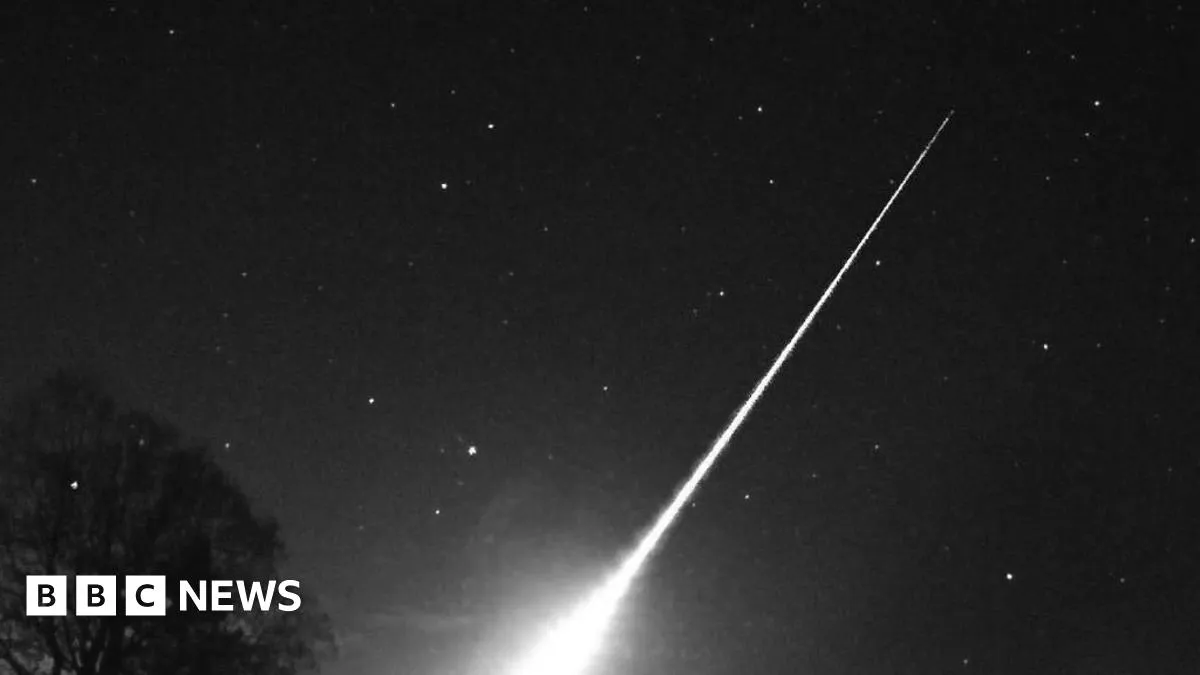
In the early hours of the morning, precisely at 00:24 BST, a brilliant meteor lit up the skies above East Yorkshire and Lincolnshire, captivating the attention of local residents and stargazers alike. This fireball, confirmed by the UK Fireball Alliance, has sparked excitement and wonder in the community, reminding us of the stunning celestial phenomena that occasionally grace our skies.
Witnesses described the meteor as a dazzling streak of light, a momentary glimpse into the vastness of our universe. While the exact details of the event are still being pieced together, astronomers have noted that meteors like this one typically burn up in the atmosphere, making it unlikely that any material will be recoverable. Charlotte Bays from the UK Fireball Alliance stated, “Based on the fireball trajectory, the event occurred over the North Sea so, sadly, we do not expect any recoverable meteorites.” This highlights the ephemeral nature of such occurrences, where beauty is often fleeting.
As the community buzzes with excitement over this meteor sighting, it is also a timely reminder that the Lyrids meteor shower is just around the corner. Scheduled to begin on April 14 and run until April 30, 2026, the Lyrids are known for producing a medium rate of shooting stars, particularly peaking on the night of April 21 into the early morning of April 22. Stargazers can expect to see about 5-6 meteors per hour during this period, making it an exciting time for astronomy enthusiasts.
The Lyrids meteor shower is composed of debris left behind by Comet Thatcher, and it is best viewed in the Northern Hemisphere. Observers are encouraged to look towards the east after 10 p.m. local time on the peak night, when the moon will be approximately 27% full. This means that conditions will be relatively favorable for viewing, as the moonlight will not overpower the visibility of the meteors.
Interestingly, meteors seen during the Lyrids usually lack the long, glowing tails that many associate with shooting stars. Instead, they often appear as brief flashes of light, adding to the mystery and allure of these celestial events. As NASA advises, “The best time to see the meteor shower is during its peak, in the dark hours after the moon sets and before the sun rises.” This is a perfect opportunity for families and friends to gather outdoors and enjoy the wonders of the night sky.
As anticipation builds for the upcoming Lyrids meteor shower, local astronomy clubs and organizations are likely to host viewing events, encouraging community members to come together under the stars. Such gatherings not only foster a sense of community but also promote a shared appreciation for the beauty of our universe. As one expert noted, “You want to ensure you have a clear view of the entire night sky, especially once multiple showers begin to occur simultaneously, and a falling star can come from any direction.”
In the wake of the recent meteor sighting, the excitement surrounding the Lyrids meteor shower serves as a reminder of the wonders that await us in the night sky. Whether you are a seasoned astronomer or a curious newcomer, the upcoming celestial events provide a wonderful opportunity to connect with nature and with each other, as we all gaze up in awe at the universe’s spectacular displays.