Introduction to the Periodic Table
The periodic table is one of the most significant tools in chemistry, providing a systematic way to understand the relationships between various elements. Its importance extends beyond the realm of chemistry, impacting fields such as physics, biology, and environmental science. As we advance scientifically, the periodic table continues to evolve, adapting to new discoveries that deepen our understanding of the elements.
Historical Context
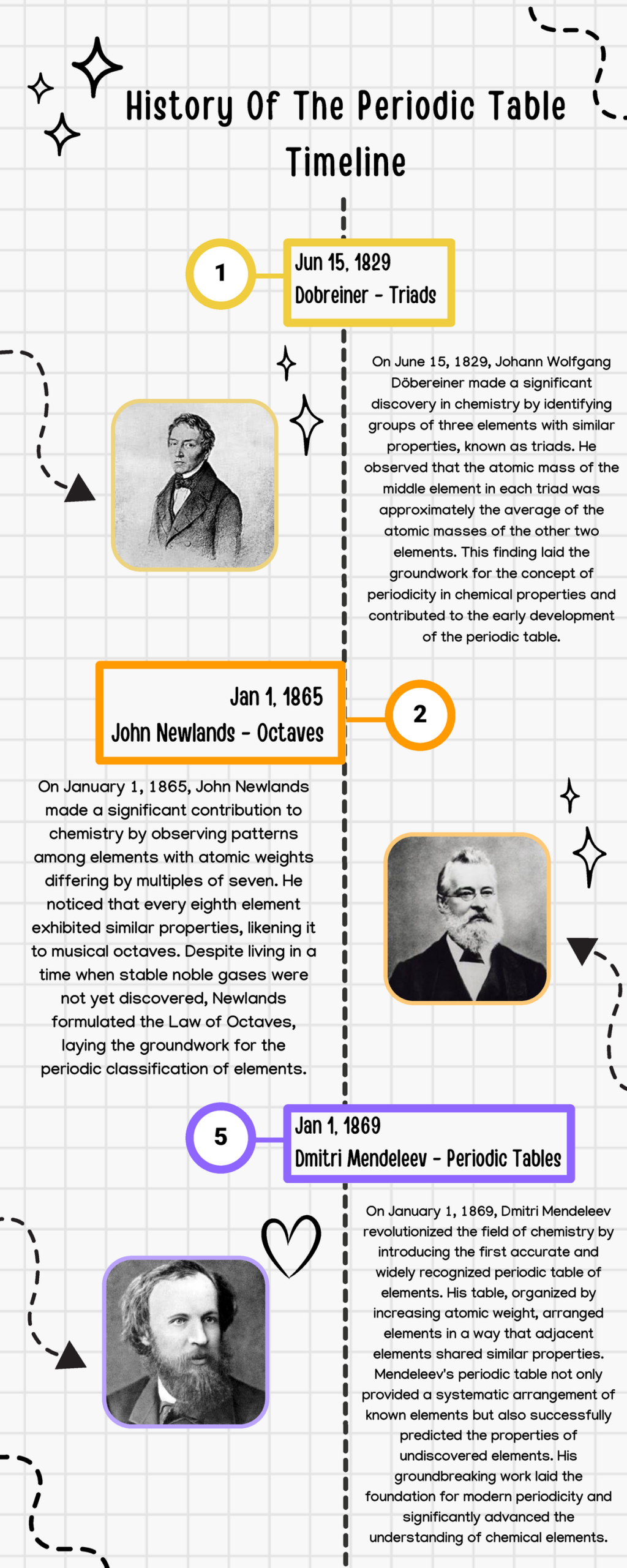
First developed by Dmitri Mendeleev in 1869, the periodic table arranged elements based on increasing atomic mass and similar properties. Mendeleev’s work was revolutionary, as it not only showcased elements but also predicted the existence and properties of undiscovered elements, demonstrating the table’s predictive power. Over the years, additional research has led to the discovery of new elements, including the recent confirmation of four additional elements in the late 20th and early 21st centuries, expanding the table further.
Current Structure and Trends
Today’s modern periodic table is organised in rows (periods) and columns (groups) where elements are arranged according to their atomic number. The trends that emerge from the table, such as electronegativity, ionisation energy, and atomic radius, serve as critical indicators for scientists when predicting the behaviour of elements in chemical reactions. Elements in the same group typically share similar chemical properties, making the table an essential study tool in chemistry classes around the world.
Applications and Future Developments
The applications of the periodic table are vast. In medicine, for example, knowledge of elemental properties aids in developing new treatments and drugs. In environmental science, it helps understand the composition of pollutants and their effects on ecosystems. As more elements are studied, potential new elements may be added, and research into existing elements, especially synthetic ones, continues to provide insight into their practical uses.
Conclusion
The periodic table is more than just a collection of elements; it is a living document representing humanity’s ongoing quest for knowledge. The future may hold various innovations in how the periodic table is applied across scientific fields. For students and scientists alike, an understanding of this fundamental tool is crucial in unlocking the mysteries of the natural world.