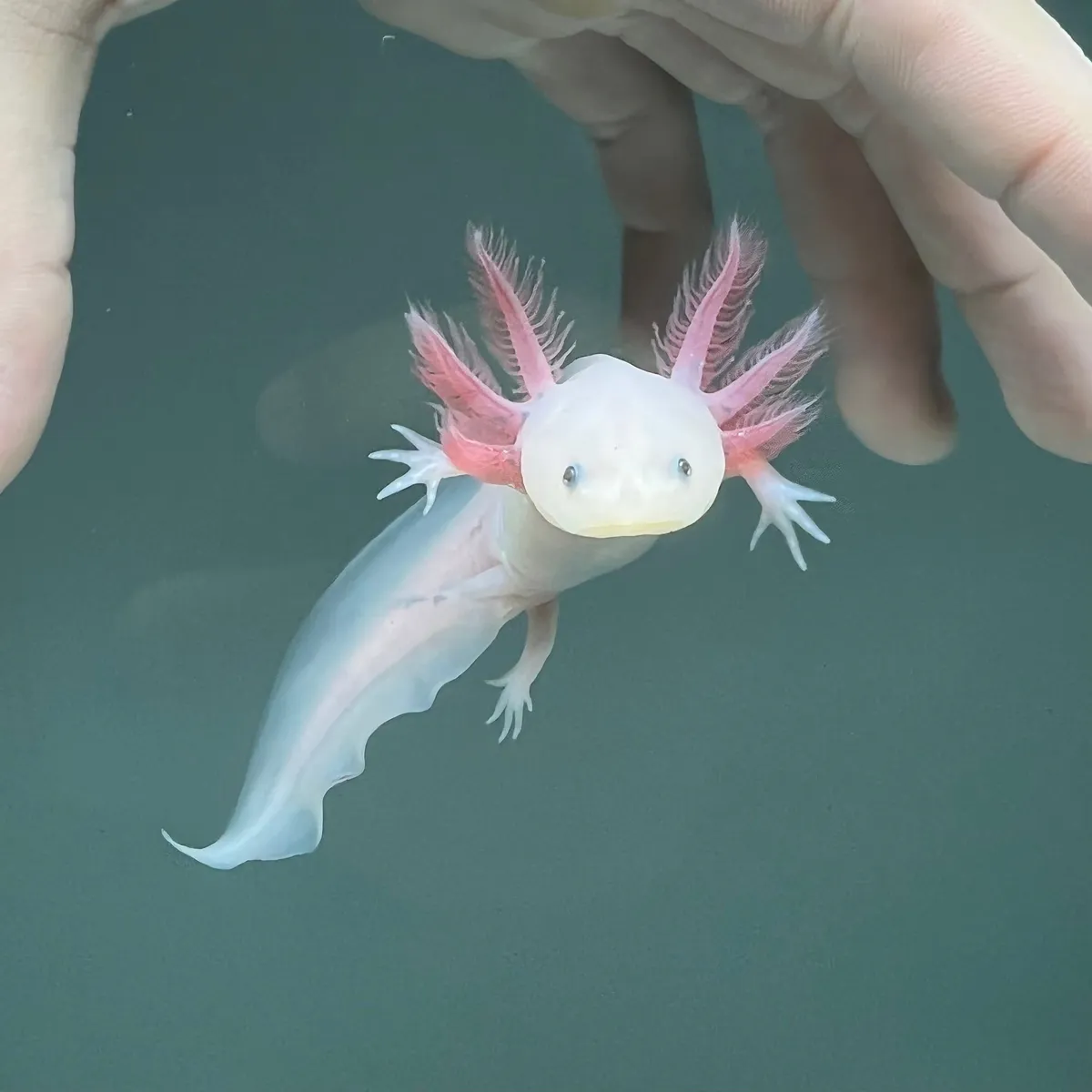
A ten-year-old girl named Evie Hill made a surprising discovery recently—she found a rare Mexican axolotl in the River Ogmore near Bridgend. The axolotl, affectionately named Dippy, measured 22 centimeters (about 9 inches) long and was hidden under a discarded mat.
Evie recounted her excitement: “I lifted it up, I saw an axolotl and shouted ‘there’s an axolotl!'” Her mother, Melanie Hill, shared her astonishment as well. “You can imagine my surprise; I couldn’t believe it,” she said.
This remarkable find is significant not just for Evie but also for conservationists. Wild axolotls are critically endangered, primarily found in Lake Xochimilco near Mexico City. Estimates suggest there are only about 50 to 1,000 remaining in their natural habitat.
Dippy showed signs of injury—specifically to its tail and stomach—which experts believe were likely caused by a predator. It’s crucial to note that releasing axolotls into the wild is illegal due to their vulnerable status.
Evie’s discovery marks the first documented finding of an axolotl in the UK. This underscores a growing interest in these unique creatures, which have gained popularity as pets and through social media platforms.
Axolotls are known for their incredible regenerative abilities; they can regenerate tissue and even grow a new spinal cord within a new tail. This fascinating trait makes them subjects of scientific study as researchers seek to understand their regenerative processes.
The community response has been one of curiosity and concern. Local wildlife experts are now monitoring the area to ensure Dippy’s safety and to learn more about how this rare creature ended up so far from its native habitat.
What remains uncertain is how Dippy will adapt to its new environment or if it can be safely relocated back to a more suitable habitat. For now, Evie’s discovery has sparked discussions about conservation efforts and the importance of protecting critically endangered species like the axolotl.