
England manager Thomas Tuchel faces ongoing questions regarding his team’s attacking strategy, particularly how to maximise Harry Kane‘s output while encouraging other players to contribute more. Recent performances, especially from Jude Bellingham, suggest a potential solution to this challenge.
Kane has been a primary goalscorer under Tuchel, netting 13 goals. However, there has been a notable disparity in contributions from other players. Data indicates that in the initial matches, the delivery of the ball to Kane often came from unexpected sources, such as goalkeeper Jordan Pickford or defender Marc Guéhi, rather than the attacking midfielders.
Bellingham’s Impact on Attacking Play
Despite their shared time on the pitch, Real Madrid midfielder Bellingham and Kane had not frequently combined for goals in major tournaments. Before a recent match against Panama, Bellingham had created only three chances for Kane in 1,154 minutes of play together. Their only prior international goal combination occurred during a friendly in 2023 at Hampden Park.
The dynamic shifted significantly against Panama. England had generated 0.54 expected goals in the first 56 minutes of the game. Bellingham then delivered a through ball that set up Kane for what was identified as England’s first major chance of the contest. Within a short period, Bellingham assisted Kane for England’s second goal.
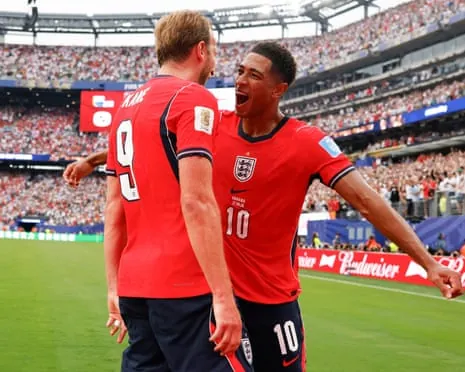
Bellingham’s passes against Panama registered an expected assists value of 0.57, the highest for any England player in a group stage match. This figure was a substantial part of his overall contribution, with the chances he created for Kane ranking as the second and joint-fourth highest value opportunities any England player set up for another in the group stage. The only other squad member to exceed this mark across three games was Noni Madueke, with 0.66.
Tuchel’s Tactical Considerations
Tuchel acknowledged Bellingham’s individual quality, stating, “He buys fully into all the things we demand as a team player, and then he brings his own individual quality to decide football games.” However, the manager also expressed a desire for the team to combine for goals more effectively, rather than relying solely on individual brilliance.
The manager highlighted the importance of patterns and units in attacking play. He noted that runs from other players, such as Nico O’Reilly, can create space for Bellingham to operate. Tuchel believes that developing a better understanding of these patterns will lead to a higher and more consistent attacking threat.
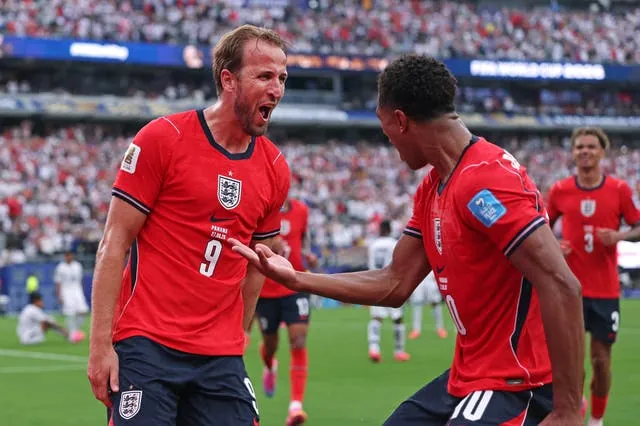
Tuchel’s tactical approach has faced scrutiny, with some suggesting England might be overly dependent on Kane and Bellingham, who have scored five of England’s six goals in the tournament. Bellingham has scored two crucial goals, one to regain the lead against Croatia and another to break the deadlock against Panama.
Concerns have also been raised about the team’s overall creativity and quality, particularly when facing teams that employ a low block. The challenge for Tuchel is to ensure that moments of individual brilliance, like those from Bellingham, become a regular feature of England’s play, especially with their upcoming match against the Democratic Republic of the Congo on Wednesday.
Several players have shown promise, with Marcus Rashford scoring against Croatia and looking bright against Panama. Bukayo Saka has provided two assists, including the corner that Bellingham converted. However, the team’s wide forwards have been a point of discussion, with Tuchel needing more from these positions. Elliot Anderson has also been highlighted for his impressive performances in midfield.
The team finished at the top of Group L after an undefeated campaign, securing seven points from their three matches.
Read Also
- La Guaira: Argentine footballer Lucas Trejo's wife and children found dead after earthquakes
- Wimbledon day one sees British players in early action
- Ben Stokes retires from international cricket, prompting calls for leadership changes
- Scotland: Steve Clarke steps down as head coach after World Cup exit
Source: theguardian.com