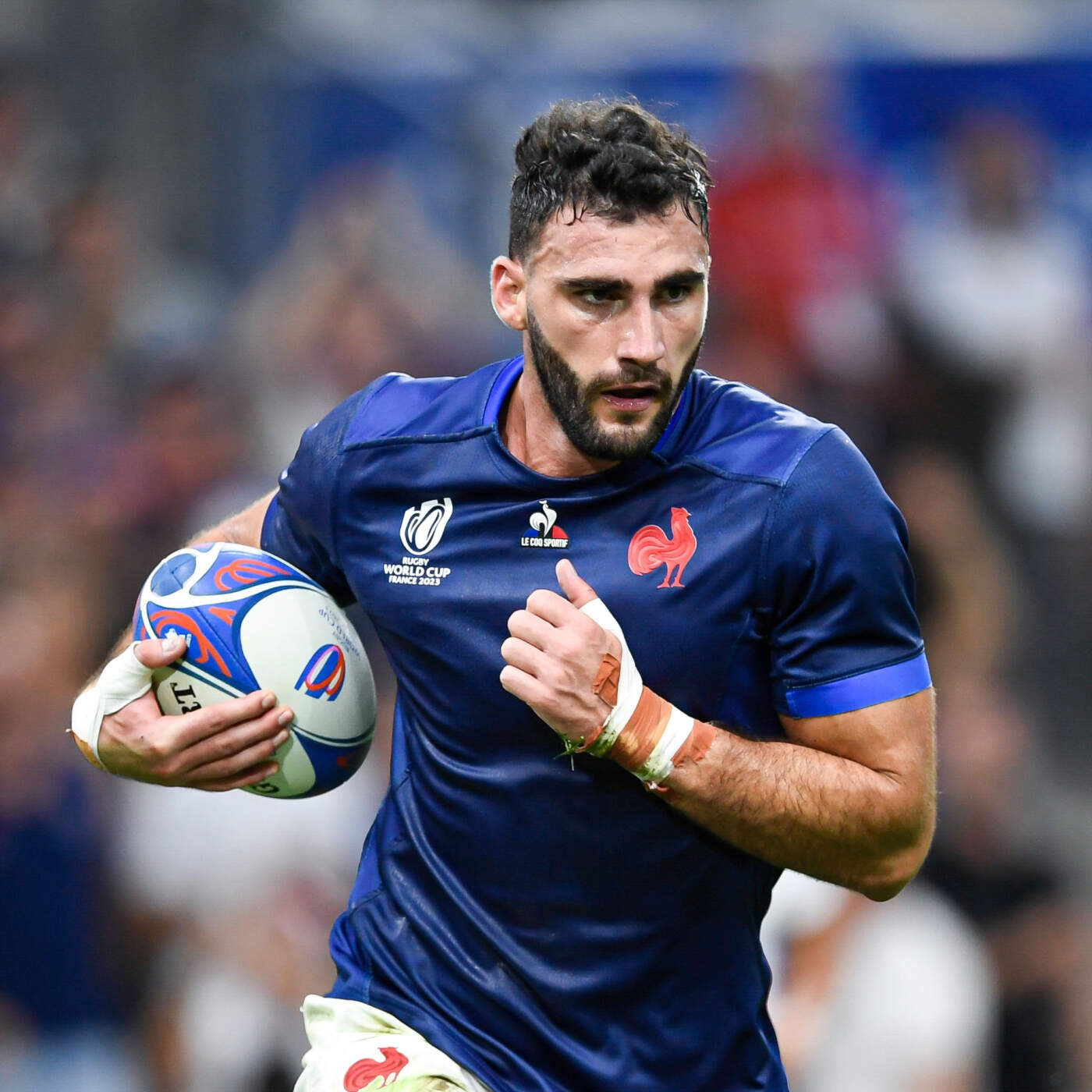
Charles Ollivon has not taken the neat route to rugby prominence. His rise has run through Bayonne, Toulon, France captaincy, major injuries and comeback seasons that have made him more than just another powerful back-row forward. For UK rugby followers, his name is tied closely to Six Nations battles with England — and to France’s wider resurgence.
Charles Ollivon’s rise began in the Basque Country
Charles Ollivon was born in Bayonne on 11 May 1993 and grew up in Saint-Pée-sur-Nivelle, a part of south-west France where rugby carries deep local weight. Toulon’s official profile says he started the game at US Saint-Pée before later playing for Aviron Bayonnais, then joining RC Toulon in 2015.
That path matters. Ollivon’s game has never looked manufactured by an academy system alone. At 1.99m and 114kg, he has the frame of a modern forward, but his best rugby has often come from timing rather than bulk: arriving in support, reading lineouts, staying alive when attacks appear to have slowed. Toulon list him as a French international third-row forward, and the Six Nations profile records him as a flanker.
At Toulon, he found the stage that turned promise into profile. The club’s demands are blunt: perform at Stade Mayol, deal with expectation, front up in Europe. Ollivon did enough of all three to move from useful forward to national figure.
The England match that changed his profile
For many UK viewers, Charles Ollivon properly arrived on 2 February 2020.
France beat England 24-17 at the Stade de France that day, and Ollivon, newly installed as captain, scored twice. Sky Sports reported that he had been named France captain ahead of that Six Nations, replacing Guilhem Guirado after his Test retirement.
It was not a quiet captaincy debut. France raced into a 24-0 lead, with Ollivon crossing in the 20th and 55th minutes before England fought back through Jonny May.
The match stuck because it came against England, but also because of what it signalled. France had been searching for authority. Ollivon gave them some. Not in the theatrical, speech-heavy way captains are sometimes imagined, but through presence: lineout work, support running, defensive bite and a knack for being where the move needed him.
Why his playing style stands out
Ollivon is not simply a bruising back-rower. That is the easy shorthand, and it undersells him.
His height makes him valuable at the lineout. His stride gives him unusual open-field range for a forward. Close to the try line, he is dangerous because he does not need much space to finish. France have had more explosive carriers and more destructive tacklers, but few forwards in their recent setup have matched his blend of reach, timing and leadership.
That balance explains why coaches have trusted him across back-row roles. In March 2026, Reuters reported that France shifted Ollivon to No 8 for a Six Nations decider against England, with François Cros and Temo Matiu named on the flanks.
That positional flexibility is not decorative. In Test rugby, it keeps a player selectable when combinations change around him.
Injuries became part of the story
Ollivon’s ascent has also been interrupted, repeatedly.
In January 2025, Reuters reported that he would miss the Six Nations after sustaining a knee injury while playing for Toulon against Racing 92. Le Monde later described the diagnosis as a ruptured cruciate ligament in his right knee and noted previous injury problems involving his shoulder in 2017 and left knee in 2021.
That is a lot of disruption for any forward, especially one whose game depends on range and timing as much as collision power.
Still, the injuries have changed how Ollivon is viewed. Early in his career, he looked like a player with high-end tools. Later, he became a measure of resilience inside a France squad full of younger, quicker headlines. The comeback element is now inseparable from the reputation.
Toulon gave him permanence
International rugby can make a player famous quickly. Club rugby usually tells the truer story.
Ollivon’s long association with Toulon has given his career a stable base. He arrived in 2015, after his Bayonne years, and became part of a club culture that expects forwards to carry weight in big matches. Toulon’s profile also lists the 2023 Challenge Cup among his honours with the club.
That European success is important in judging his career. Ollivon is not only a Six Nations figure who appears in bursts for France. He has lived through the week-to-week grind of the Top 14, where away matches are awkward, packs are heavy, and reputation counts for very little after the first scrum.
Toulon hardened him. France benefited.
What his ascent says about modern French rugby
Ollivon’s career has overlapped with France’s shift from inconsistency to genuine force. Antoine Dupont became the global face of that change, but the pack needed its own leaders.
Ollivon filled that space at a delicate time. His appointment as captain in 2020 came under Fabien Galthié, as France began to reset the squad with younger players and a sharper identity. Sky Sports described the captaincy call as the first key playing appointment of Galthié’s reign.
He did not remain the only leader, and France’s dressing room has since grown around several major personalities. That does not reduce his place in the story. It probably clarifies it.
Ollivon became a bridge: old enough to carry scars from the previous era, good enough to belong in the new one.
What comes next for Charles Ollivon
The next phase of Charles Ollivon’s career depends on two familiar questions: fitness and role.
When available, he remains a forward who can reshape a back row, especially if France need height, experience and a third-rower comfortable operating at No 8. Reuters’ 2026 report on France’s reshuffle against England showed that he was still being used in a major Six Nations selection context, not treated as a fading squad name.
For Toulon, the calculation is different but just as direct. Keep him fit, manage the load, use the leadership. A player with his injury history cannot be treated as indestructible.
His ascent has already happened. The question now is how long he can keep adding chapters.
FAQ
Charles Ollivon is a French rugby union forward who plays for RC Toulon and France. He is primarily used in the back row, especially as a flanker, and has also been selected at No 8.
He joined RC Toulon in 2015 after playing for Aviron Bayonnais.
Yes. He was named France captain ahead of the 2020 Six Nations, with his first match in charge coming against England at the Stade de France.
His two-try performance as France captain against England in the 2020 Six Nations made him a prominent name for UK audiences. France won that match 24-17 in Paris.