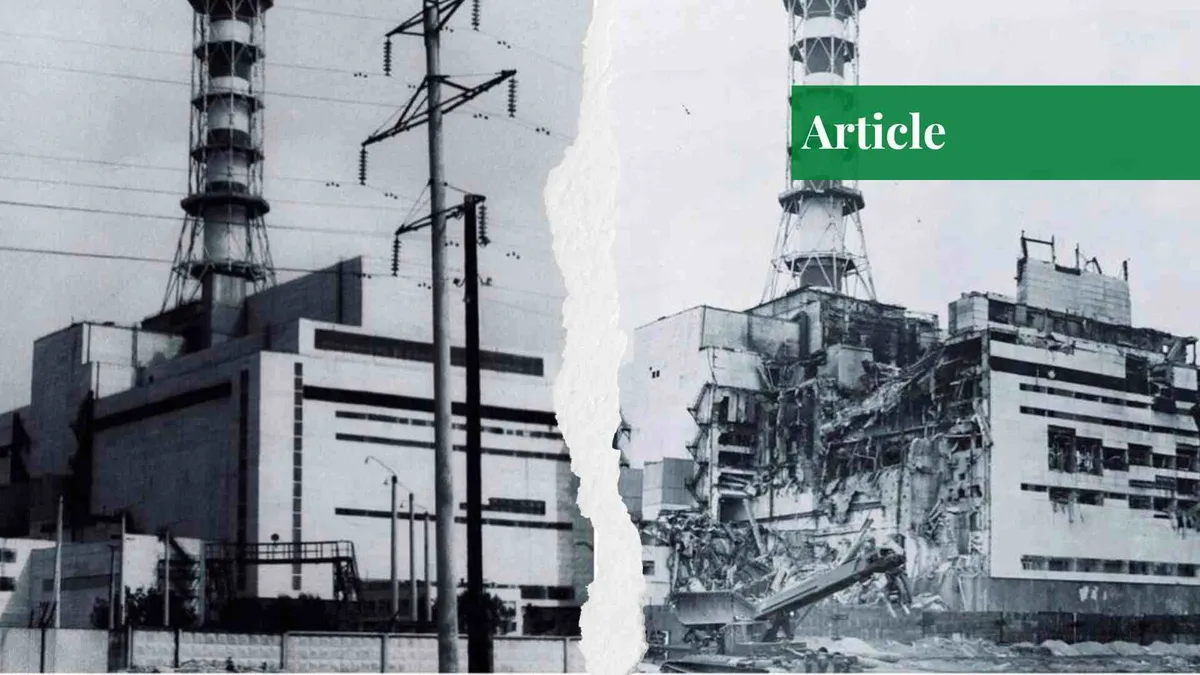
The recent Russian drone attack on Chernobyl has raised alarms about the potential for another nuclear disaster in Ukraine. This incident, which occurred last year, jeopardizes international collaboration efforts aimed at ensuring nuclear safety.
On April 26, 1986, Chernobyl’s reactor No. 4 was completely destroyed in an explosion, marking the site as the world’s most serious nuclear accident. Fast forward to today, and concerns about radiation release linger as Russian forces continue to occupy critical facilities.
Since March 2022, Russian troops have also occupied the Zaporizhzhia Nuclear Power Plant, which has experienced its 13th blackout since the invasion began. Experts warn that despite all six reactors being turned off, the situation remains highly concerning.
A drone attack last year pierced the protective outer shell around Chernobyl’s reactor No. 4, prompting officials to express their worries about future risks. As Volodymyr Kholosha noted, “Russia has failed to learn the lessons of Chernobyl.” This sentiment echoes throughout the international community.
Key warnings from experts:
- Alexandra Bell emphasized, “We are extremely close to any number of potential catastrophes in the nuclear space.”
- Shaun Burnie stated that “Rosatom must be prevented from trying to restart one or more of the reactors.”
- Concerns over a lack of urgency among global policymakers were highlighted by Bell: “What we’re seeing right now is not a lack of understanding… it is a lack of urgency and will to take on these challenges.”
The Doomsday Clock was placed at 85 seconds to midnight in January 2026—the closest it has ever been—underscoring the gravity of current nuclear risks. As ordinary people in Ukraine watch these developments closely, their lives remain intertwined with the fate of these power plants.
With many workers at Zaporizhzhia coming from Russian facilities rather than Ukraine’s Energoatom, local communities feel increasingly vulnerable. The ongoing conflict exacerbates fears that history may repeat itself if appropriate measures are not taken.