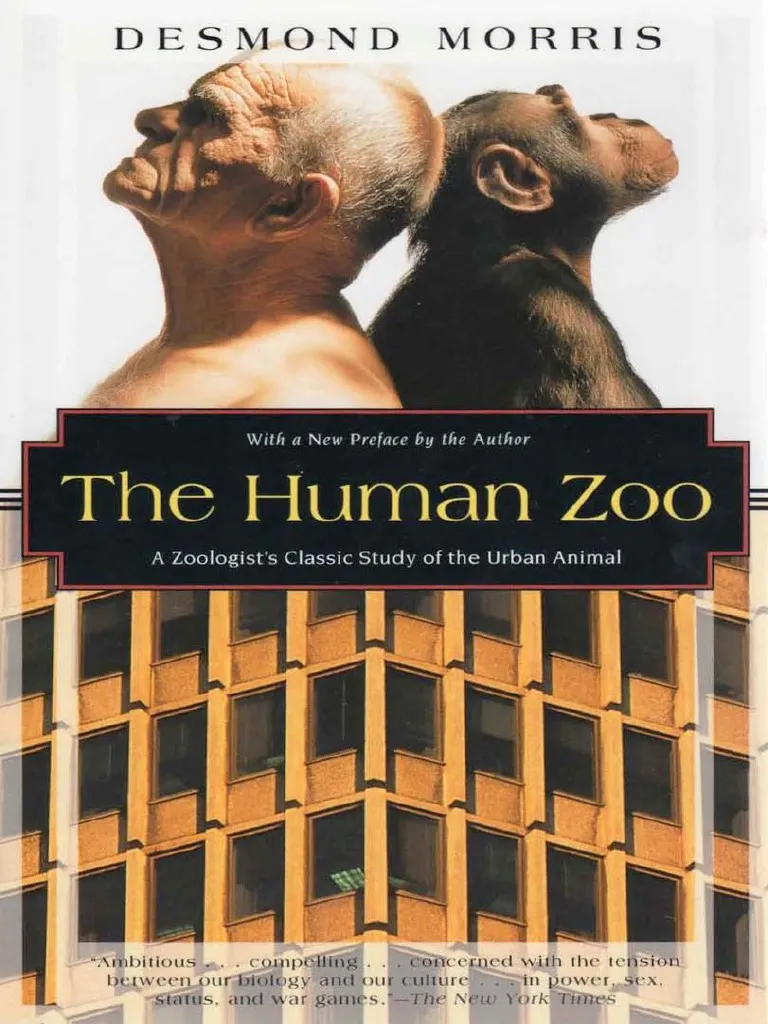
Desmond Morris, the celebrated zoologist and author, passed away on April 19, 2026, at the age of 98. Over his remarkable 60-year career, he authored more than 50 books, with his most famous work, The Naked Ape, selling an estimated 18 million copies.
Born on January 24, 1928, in Purton, Wiltshire, Morris began exploring the natural world early in life. He completed his doctorate in animal behaviour at Oxford and later became the curator of mammals at the London Zoo from 1959 to 1967. His television program Zoo Time, which aired from 1956 for over a decade, brought animal behavior into living rooms across Britain.
“His was a lifetime of exploration, curiosity and creativity,” said Jason Morris, reflecting on his father’s profound impact. Indeed, Desmond’s passion for animals was evident not only in his writing but also in his artwork—he had a solo exhibition at Farleys House & Gallery in 2019.
Morris’s career was marked by a unique blend of science and art. He once stated, “I tried to create a private world in which my own, invented organisms evolved.” This imaginative approach allowed him to bridge the gap between academic rigor and creative expression.
His first book was published in 1958, focusing on the ten-spined stickleback. As a pioneer in understanding animal behavior—he identified over 4,237 species of warm-blooded mammals by 1965—Morris’s contributions were foundational.
Throughout his life, he maintained a close friendship with fellow broadcaster David Attenborough. The two shared a commitment to wildlife education that resonated with audiences worldwide.
Yet despite his success, Morris acknowledged an internal conflict: “If I am honest,” he wrote, “it is a struggle I have never fully resolved.” This tension between being an entertainer and an academic shaped much of his work.
Morris’s legacy will endure as future generations continue to explore animal behavior through both scientific inquiry and creative storytelling. Observers expect that discussions around his influence will grow as people reflect on how he changed perceptions of human-animal relationships.