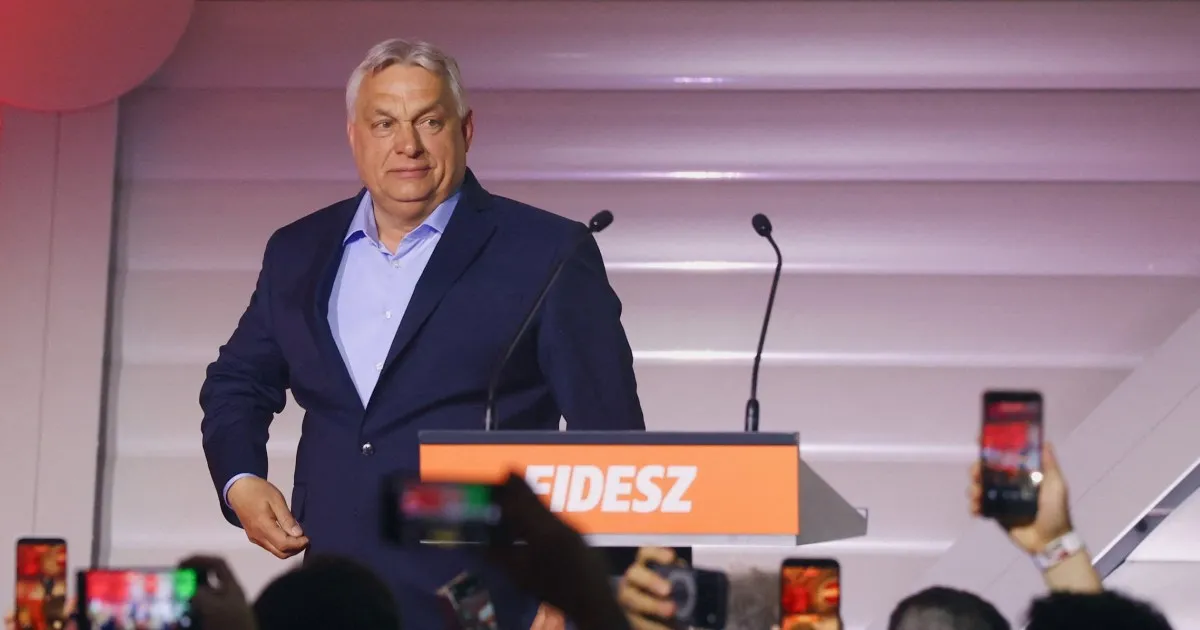
“Hungary has chosen Europe and that it returns to its European path,” declared Ursula von der Leyen, President of the European Commission, following the recent legislative elections in Hungary. This statement encapsulates a significant shift in the political landscape of the country, which has been under Viktor Orban’s leadership for 16 years until his recent defeat.
The new Hungarian government is expected to unblock a crucial 90-billion-euro loan to Ukraine, a move that signals a renewed commitment to European solidarity. This change comes at a time when the EU is facing its worst geopolitical crisis in history, making Hungary’s decision particularly impactful.
Peter Magyar, a prominent voice in Hungarian politics, remarked, “Nobody wants a pro-Ukrainian government in Hungary,” highlighting the complexities of public sentiment regarding Ukraine within the region. However, the new leadership appears poised to align more closely with EU objectives, especially in supporting Ukraine’s sovereignty and territorial integrity.
In the broader context of the EU, Belgium’s Prime Minister Bart De Wever has emerged as a new Ukraine-sceptic leader, while Slovakia, under Prime Minister Robert Fico, shares similar views with Orban. Czechia, led by Prime Minister Andrej Babis, also reflects a coalition skeptical of Ukraine’s integration into the EU.
Poland’s President Karol Nawrocki has clashed with the pro-Ukrainian government of Prime Minister Donald Tusk, illustrating the varied perspectives within the EU regarding support for Ukraine. This divergence of opinions underscores the challenges the EU faces in maintaining a unified front.
Kaja Kallas, Prime Minister of Estonia, emphasized the importance of the EU’s support for the United Nations, stating, “The EU’s support for the UN now is more vital than ever.” This sentiment resonates as the EU continues to provide 42 percent of Official Development Assistance and finances a quarter of the UN’s regular budget.
The EU’s role in the Western Balkans, particularly through the Belgrade-Pristina Dialogue, remains crucial as the region navigates its own path towards stability and integration. The EU’s commitment to peace and international law is reflected in its ongoing support for Ukraine amidst the breakdown of international norms.
As Hungary embarks on this new chapter, the implications for its relationship with the European Union will be closely monitored. The upcoming UK-EU Summit in 2025 may serve as a platform for further discussions on these evolving dynamics.