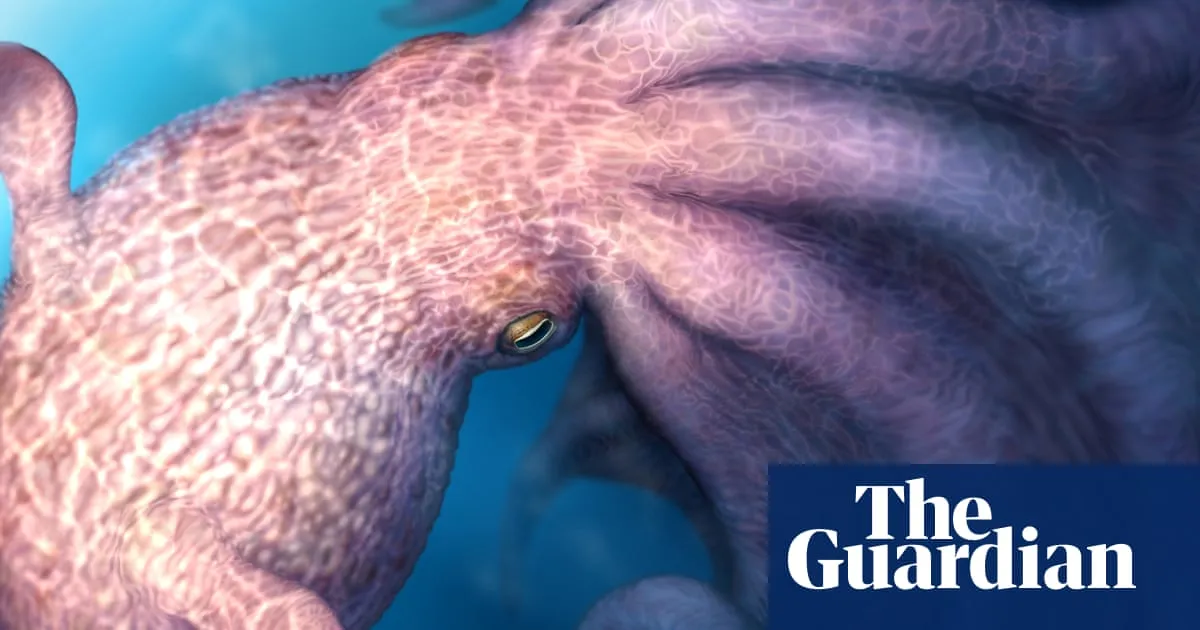
“To see a beak this size is quite amazing, to be honest. It was a massive animal,” said Dr. Thomas Clements, reflecting on the discovery of ancient octopus fossils. New research has revealed that these giant octopuses were not just creatures of myth; they were among the top predators in the Cretaceous oceans, reaching lengths of up to 19 metres.
The species Nanaimoteuthis haggarti emerged as a dominant force in the Cretaceous marine food web, preying on fish and crustaceans with remarkable efficiency. Fossil analysis indicates that their beaks displayed distinct wear patterns, suggesting they crushed hard prey—an indication of their predation strategies.
Fossilized remains of N. haggarti have been discovered in Canada and Japan, dating back between 72 to 100 million years. This period was characterized by ocean giants, including mosasaurs and plesiosaurs. Yet, these ancient cephalopods were formidable rivals to those large marine reptiles.
Dr. Yasuhiro Iba emphasized the sophistication of these creatures: “This indicates that these animals were not only powerful but also behaviourally sophisticated predators.” Their ability to adapt and hunt effectively contributed greatly to their success in a competitive environment.
Interestingly, researchers identified 15 large fossil beaks previously misclassified as vampire squids. These findings challenge previous assumptions about the size and capabilities of ancient octopuses. Zoe Hughes remarked, “Most Cretaceous octopuses that I’m aware of are about the size of my hand, but this is so much bigger!”
The beaks of Nanaimoteuthis haggarti suggest a level of behavioural complexity—evidence shows lateralized behaviour indicating preferences in feeding strategies. With their tentacles and suckers, they could perfectly hold on to prey animals with no escape possible.
This new understanding invites further exploration into the role of giant octopuses within their ecosystems. As we continue to uncover more about these ancient predators, we gain insights into how they shaped the marine landscapes millions of years ago.