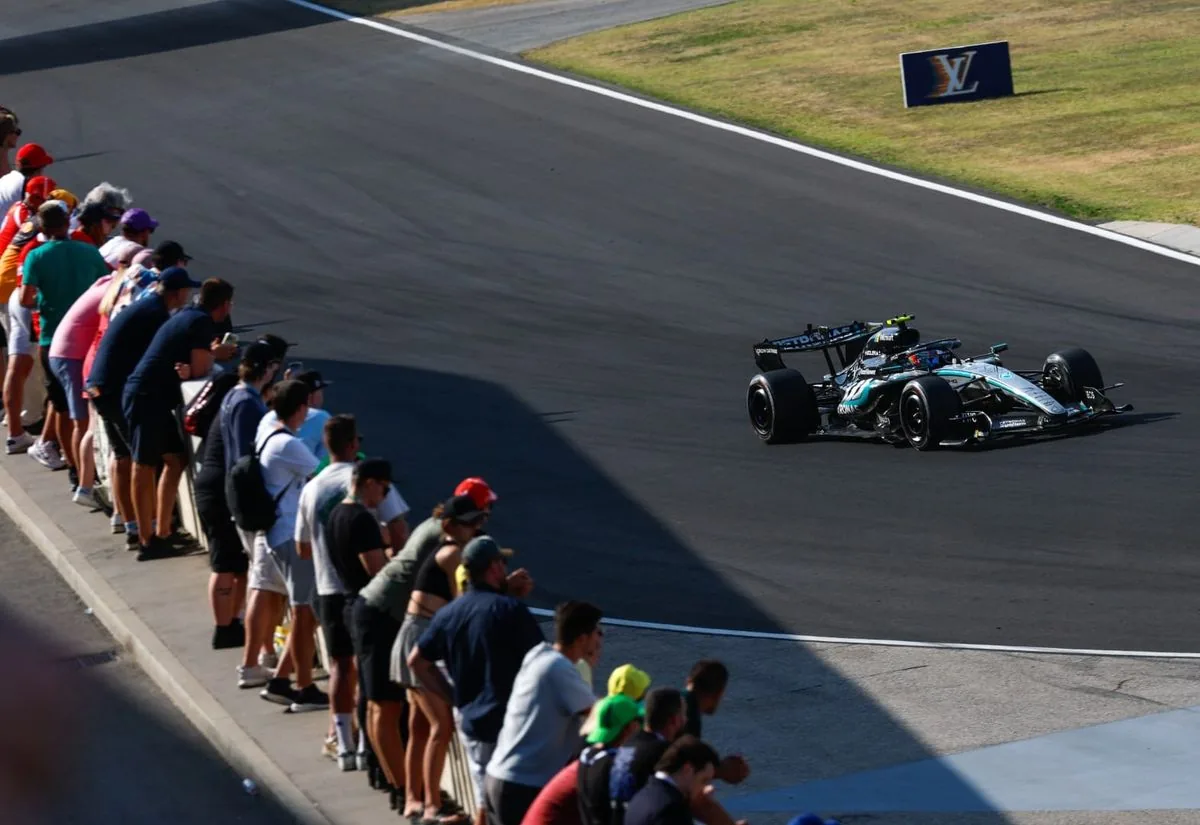
Russell’s Difficult Start
George Russell experienced a significant drop in position at the start of the Hungarian Grand Prix, moving from sixth on the grid to 21st. This early setback forced him into a recovery drive during the race. Mercedes later provided further details regarding the incident, clarifying that Russell’s car went into anti-stall due to “much too little throttle” at the start, an issue they stated was “through no fault of his own.”
Russell began the Sunday race at the Hungaroring in sixth place, having moved up a spot due to a grid penalty for his teammate. However, his initial hopes for a strong performance were quickly diminished as his car failed to launch effectively.
Technical Explanation of the Issue
Bradley Lord, Mercedes Deputy Team Principal, explained the technical problem in a post-race debrief video. He noted that as drivers hold their “wait revs” at a specific engine RPM before the start, Russell’s revs unexpectedly rose disproportionately to his throttle input. The revs then hit the rev limiter, the maximum RPM allowed by the engine at that point.
Russell attempted to regain control and optimise his start, but he was unable to do so. As he was lifting off the throttle to below 10% demand, the lights went out, resulting in a start with insufficient throttle. This led to the anti-stall system engaging, causing him to fall to the back of the field.
Initially, there was a suspicion that the problem might have been related to a “top of the pack” issue, which involves the battery becoming fully charged and affecting the MGU-K‘s ability to provide load against the engine. This theory was even considered by teammate Kimi Antonelli after watching the start. However, subsequent analysis by Mercedes ruled out this possibility, confirming that the poor start was due to a problem with the car’s rev control management on the grid.
The fluctuation in revs was something Russell himself had noted and was trying to manage by adjusting his throttle application. He ended up at 10% throttle when the lights went out, which was insufficient for a successful launch and triggered the anti-stall.
One potential contributing factor to the problem was the longer-than-usual start sequence in Hungary. The time from the pre-start blue lights flashing to the five red lights going out was approximately 13 seconds, which is at the upper end of the typical window. In contrast, the Belgian GP the previous weekend had a start sequence of just over 10 seconds.
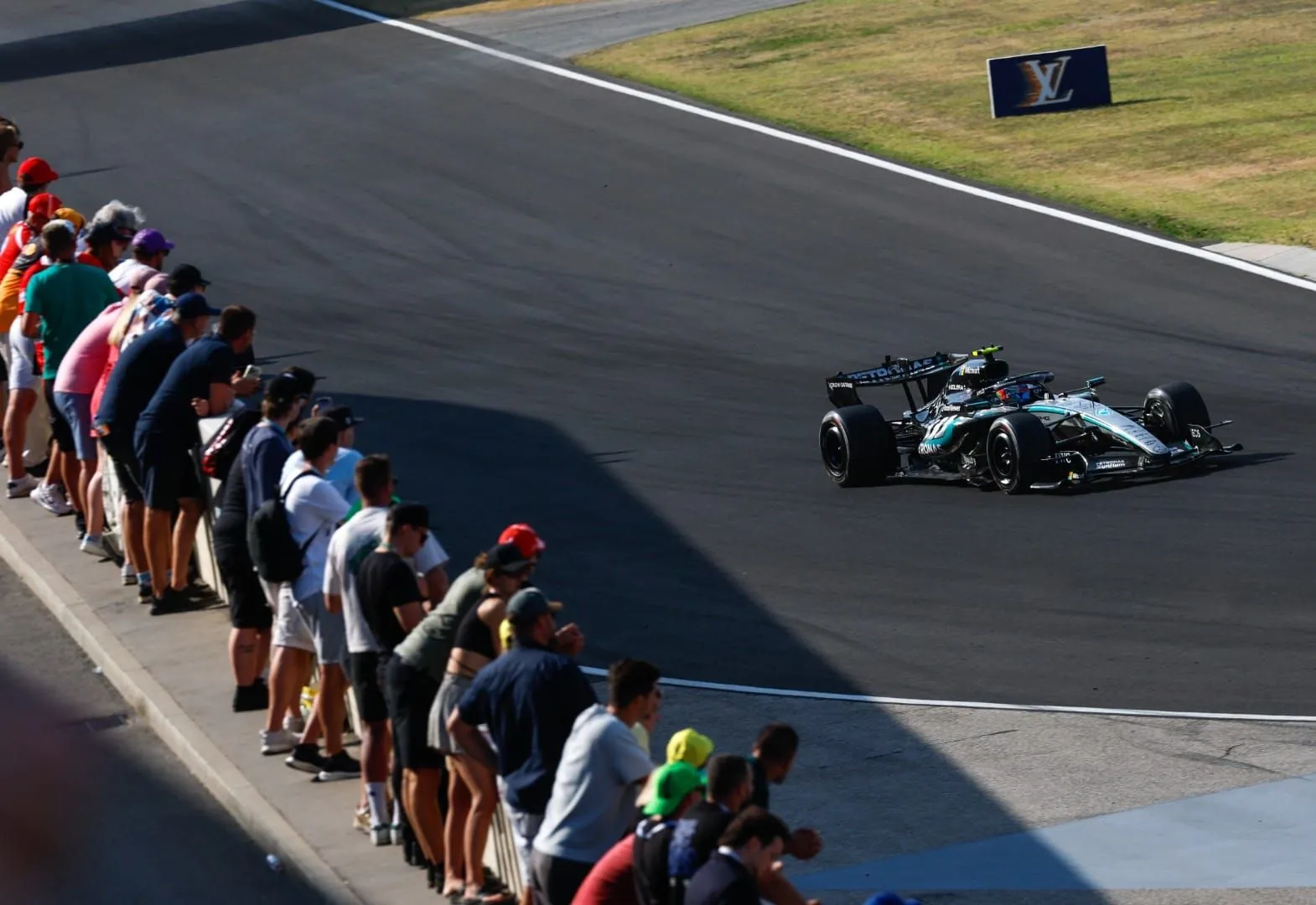
Recovery and Championship Standings
Despite the challenging start, Lord commended Russell for an “incredible recovery drive.” Russell managed to advance through the field, ultimately finishing in seventh place and securing points for the team. He finished a few seconds behind Red Bull‘s Isack Hadjar.
Lord also mentioned that Russell was unfortunate with the timing of the Virtual Safety Car (VSC) towards the end of the race. The VSC was deployed one lap after Russell’s second pit stop. Had he been able to benefit from a “free stop” under the VSC, he might have achieved an even higher finishing position than his eventual seventh place.
As drivers and teams head into the summer break, Russell holds third position in the championship standings. He is currently behind Ferrari‘s Lewis Hamilton in the overall standings.
Read Also
Source: formula1.com