Introduction
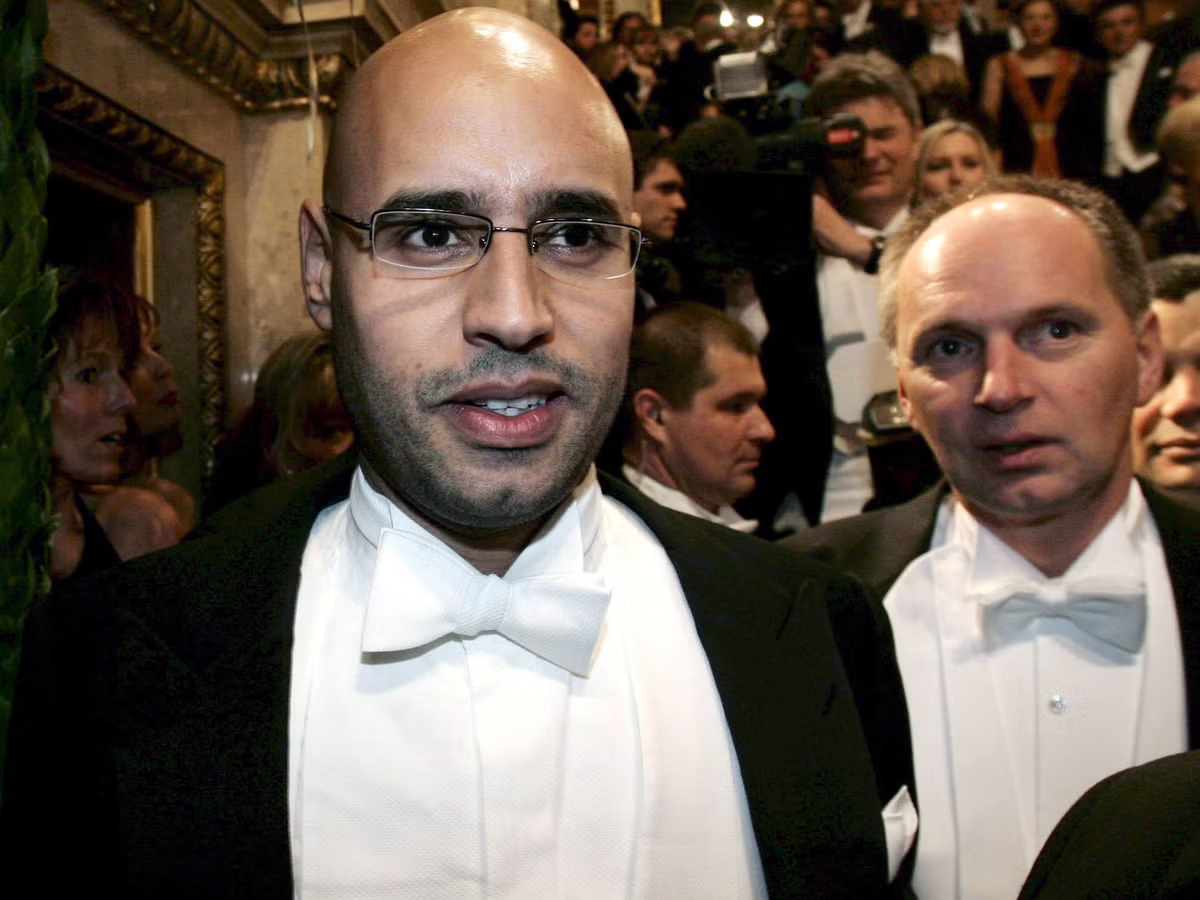
Saif al-Islam Gaddafi, the son of the late Libyan leader Muammar Gaddafi, is re-emerging in Libya’s turbulent political landscape. His recent activities suggest a potential bid for power as the country grapples with ongoing instability, lawlessness, and the legacy of his father’s controversial regime. Understanding his comeback is crucial for analysing the future political trajectory of Libya, a nation still recovering from the 2011 civil war.
Current Political Climate
Following years of conflict and political fragmentation, Libya has been seeking stability through a variety of governance models. The nation is currently governed through a fragile peace agreement forged in 2020, but it remains vulnerable to violence and power struggles among various factions. Amid this backdrop, Saif al-Islam has made strategic public appearances, calling for national unity and offering to reconstruct Libya’s political framework. His words resonate with a segment of the population disillusioned with the current leadership.
Background and Recent Developments
Saif al-Islam was once seen as a reformist and a potential successor to his father before the fall of Gaddafi’s regime in 2011. After being captured in 2011 and spending years in detainment, he was released in 2017 under mysterious circumstances. Since then, he has steered away from outright political aspirations until recently, when he began to actively engage in Libya’s political discourse again.
In 2023, Saif al-Islam has intensified his efforts to rally support, focusing primarily on the youth demographic. He has been active on social media and has addressed public gatherings, highlighting issues of economic hardship, unemployment, and the need for a unified national identity.
Challenges Ahead
Despite his growing presence, Saif al-Islam faces significant challenges. His connection to the Gaddafi regime is both a burden and an asset, as many Libyans remember the corruption and oppression of his father’s rule. Additionally, rival factions, many of whom have deep-rooted animosity towards the Gaddafi family, are unlikely to support his political resurgence. Regional powers and international stakeholders also remain sceptical concerning the potential for a Gaddafi return to power.
Conclusion
The road ahead for Saif al-Islam is fraught with complexities as he attempts to revive a legacy overshadowed by decades of conflict. As Libya continues to navigate its post-revolution identity, his potential political ascent could either bridge gaps or widen divides among the populace. Observers are keenly watching his moves, as his success could herald a new chapter for Libya, while his failures may perpetuate the cycle of instability. The upcoming months will be critical in determining whether Saif al-Islam can genuinely reshape Libya’s political future or if he will remain a relic of a bygone era.