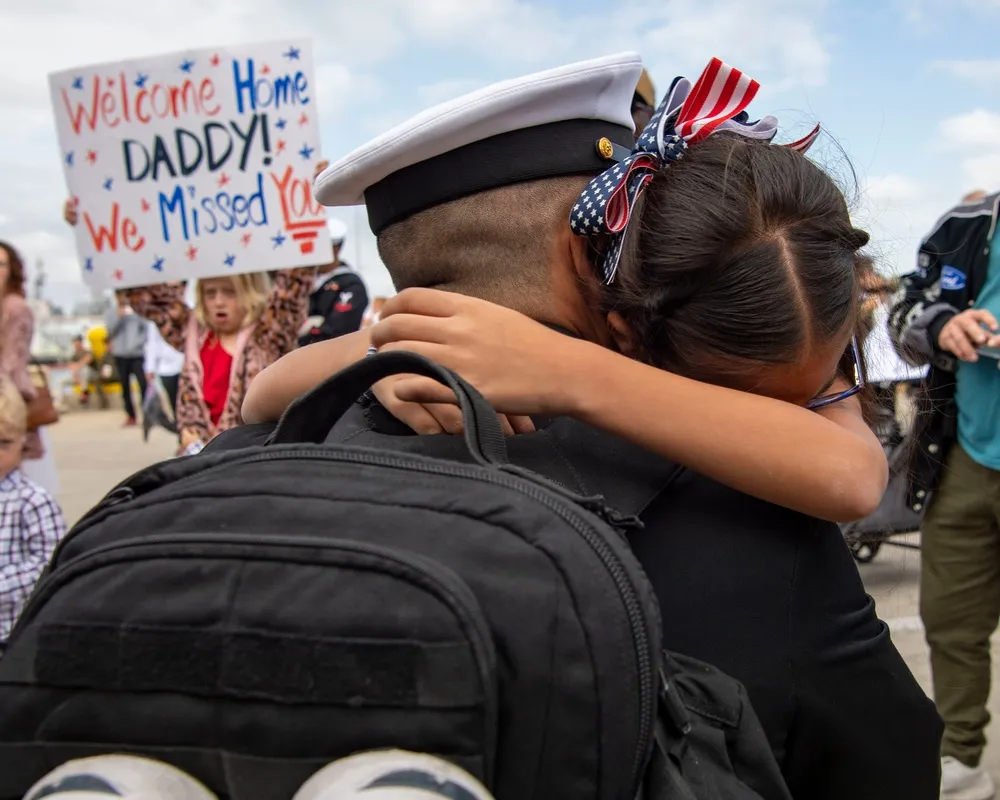
“Morale is going to be at an all-time low,” a Navy sailor aboard the USS Tripoli expressed, reflecting the growing concern among service members about their current situation.
Since April 2026, mail delivery to military ZIP codes in the Middle East has been suspended due to ongoing conflicts related to the Iran war. This suspension has left many families feeling helpless, as care packages sent to loved ones are stuck in transit.
Dan F., whose daughter is a Marine on the USS Tripoli, voiced his frustration: “We have the strongest military in the world. You shouldn’t be running out of food.” His words resonate with many who feel that basic needs should be prioritized during deployments.
Reports indicate that service members aboard the USS Tripoli are rationing food supplies. A Texas mother shared her experience of spending over $2,000 on care packages for her son, only to find out none have reached him.
“The food is tasteless and there’s not nearly enough and they’re hungry all the time,” said Karen Erskine-Valentine, echoing sentiments from others aboard. The ship, which has been deployed for over a month since leaving Japan, is home to approximately 3,500 sailors and Marines.
The Pentagon remains silent on both the mail stoppage and reported food shortages aboard U.S. vessels. Meanwhile, Maj. Travis Shaw of the U.S. Postal Service explained that resuming mail service depends on regional stability and airspace reopening—factors beyond their immediate control.
As of now, more than 50,000 American service members are stationed in the Middle East during this conflict. The USS Gerald Ford recently broke records for its lengthy deployment—295 days—highlighting just how stretched resources can become in extended operations.
Community support has poured in with multiple boxes of care packages sent to sailors aboard various ships, including 18 boxes intended for those on the USS Abraham Lincoln. Yet these efforts remain unfulfilled as they too are caught in the mail suspension.
The ongoing struggles surrounding food supplies and communication highlight a broader issue: maintaining morale amidst adversity. As families await news from their loved ones, they grapple with feelings of uncertainty and concern.
Details remain unconfirmed regarding when mail services might resume or how conditions will improve on ships like the USS Tripoli. For now, service members continue to navigate these challenging circumstances with resilience.