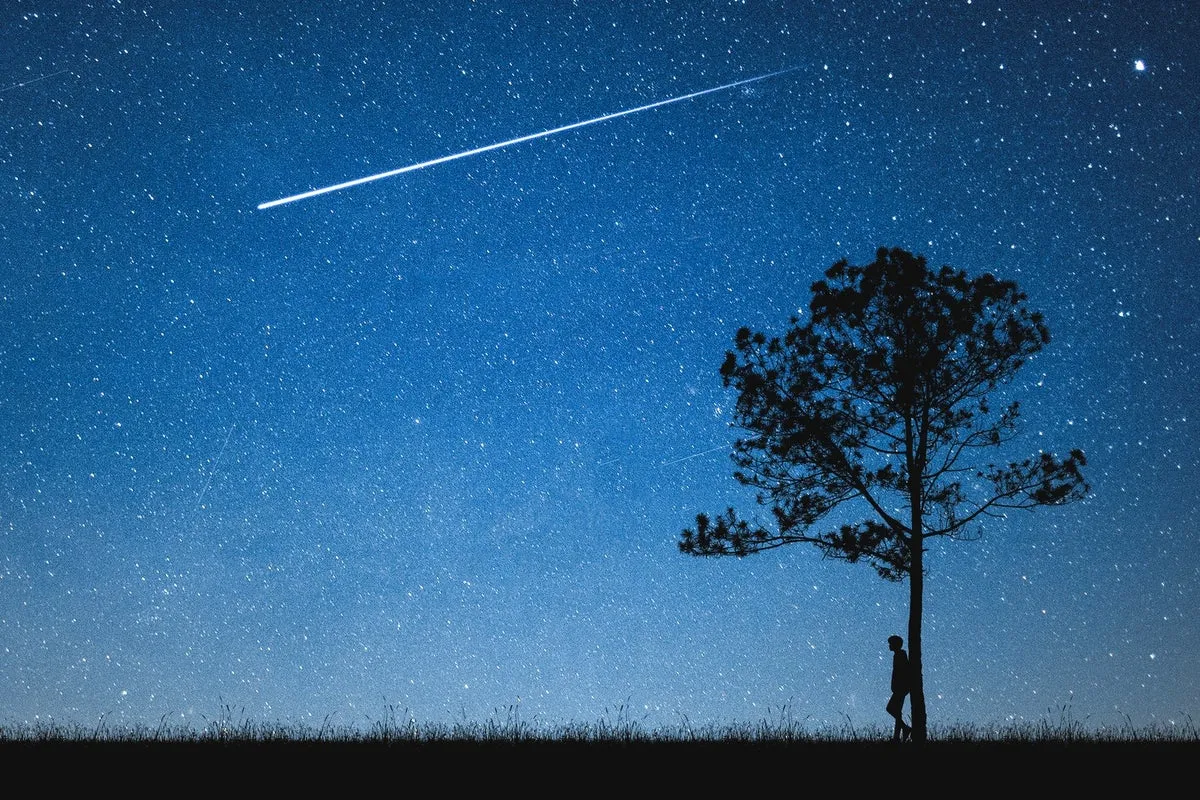
The upcoming Eta Aquarid meteor shower peaks on May 6, 2026, but its visibility will be significantly impacted by a bright moon. Stargazers in the Northern Hemisphere can expect fewer than 10 meteors per hour, while those in the Southern Hemisphere could see up to 50 under ideal conditions.
The shower is active from April 19 to May 28, but the moon will be 84% full during its peak. This brightness can create challenges for those hoping to catch a glimpse of the shooting stars, particularly in areas affected by light pollution.
“For us in the Northern Hemisphere, it’s not going to be as impressive,” said Teri Gee from the American Meteor Society. Many local enthusiasts might find themselves disappointed as they set out for a night of stargazing.
In contrast, observers in regions like Kielder in Northumberland can look forward to a more spectacular display. With darker skies and less artificial light, they stand a better chance of witnessing the meteors streak across the sky.
According to experts at Barlow Planetarium, the best time to view the meteors will be during predawn hours—from midnight until around 4:25 AM. They emphasize that patience is key when hunting for meteors. “Hunting for meteors, like the rest of astronomy, is a waiting game,” they noted. “It’s best to bring a comfy chair to sit on and wrap up warm as you could be outside for a while.”
As Earth passes through trails of debris left by Halley’s Comet—last seen in 1986—the Eta Aquarids remind us of our connection to these celestial events. Halley’s Comet orbits our sun approximately every 76 years, with its next anticipated visit scheduled for 2061.
Nico Adams, an astronomy enthusiast, described the experience: “You’re looking for bright streaks that appear in the corner of your eye for a fraction of a second.” This fleeting nature adds to the excitement and challenge of meteor watching.