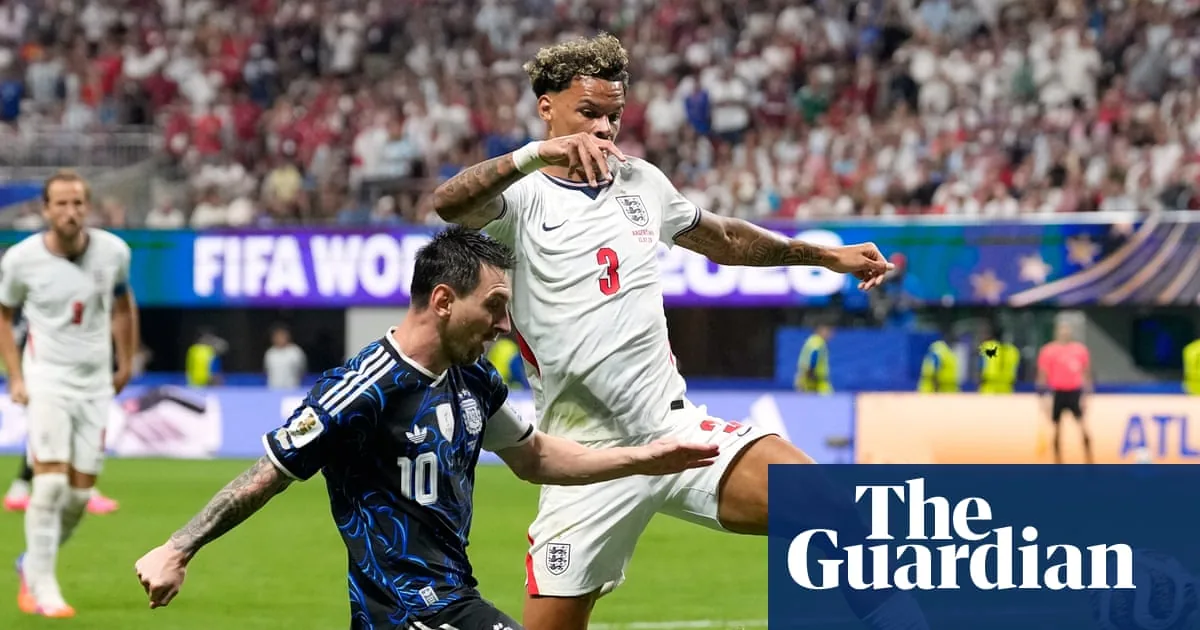
Following England’s 2-1 defeat to Argentina in the World Cup 2026 semi-final, discussions have emerged within Thomas Tuchel’s squad regarding the team’s tactical approach in the latter stages of the match. Reports indicate that several key players expressed disappointment with how the team handled the final moments of the game.
England had taken a 1-0 lead with 35 minutes remaining, appearing to be on course for their first men’s World Cup final since 1966. However, the momentum shifted significantly, with Argentina increasing pressure. While it is natural for an opposing team to chase the game, England has faced criticism for seemingly ceding the initiative.
Tuchel set up his team with a back-five formation to defend the lead, but this strategy was overturned as Argentina scored two goals amid sustained pressure. Pundit Wayne Rooney attributed the defeat to the manager’s decisions.
Squad concerns over defensive strategy
After the loss in Atlanta, players reportedly discussed the team’s setup after taking the lead, with some believing it contributed to their downfall. At least three senior players have privately voiced concerns about the team’s approach in the closing stages of the match.
While acknowledging that players instinctively drop deeper when defending a lead, there is a perceived consensus among some players that Tuchel’s tactical changes and substitutions intensified this defensive retreat. These players felt the team should have been given more freedom to press the ball, aiming to push Argentina away from their goal and provide relief for the defenders.
Instead, some players viewed the tactic as merely clearing lines and regrouping defensively, a strategy they did not fully endorse. There is a sense among certain squad members that a bolder and braver approach could have been taken in the closing stages, not necessarily to seek a second goal, but to balance defensive resilience with an attacking threat. One source stated that the team “went too deep too early.”
It is not uncommon for professional footballers to carry out instructions even if they disagree with the direction. However, the reported consternation among players regarding England’s instructions for finishing the game could influence the player-manager dynamic as the team heads into the European Championship qualifying campaign.
Tuchel’s explanation and Messi’s impact
In comments to British newspapers, Tuchel addressed the tactical decisions, stating it was “never the plan” to drop deeper. He explained that after England’s goal, momentum dramatically shifted in terms of ball possession and chances. “We got too passive within our structure,” Tuchel said, adding that he tried to encourage players to be more active within the back-five formation, but the team struggled to win duels, leading to a deeper retreat.
Tuchel also commented on ball possession, suggesting it might not be in England’s “DNA” to control the game and the ball in the same way as teams with “Spanish DNA or Argentinian or Brazilian DNA.” He believes the team can still demonstrate their footballing quality, as he observes it in training.
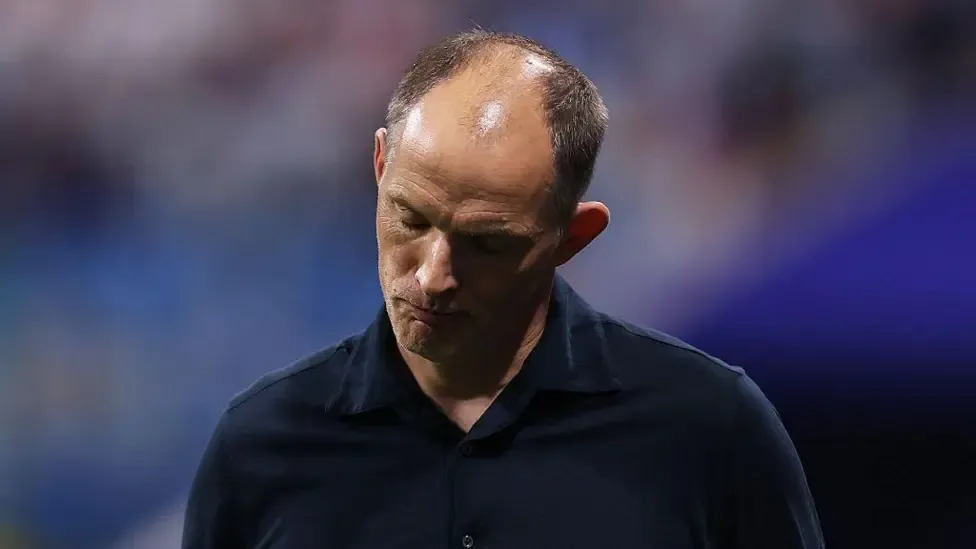
Before the match, Tuchel had prepared for various scenarios, including how to manage Lionel Messi. For the initial 60 minutes, Messi’s involvement in dangerous areas was limited, with data indicating England successfully contained him. His only possession in the centre of the penalty area was intercepted by Elliot Anderson shortly after Anthony Gordon’s goal. Messi’s sprinting speed percentage was lower than in previous rounds, and his only shot was from long range and blocked.
However, a subtle shift occurred in the second half. Messi began operating more from the flank between the edge of the penalty box and the touchline, attempting six open-play crosses from this region. This is a notably high number for him, as he typically averages 2.3 crosses per 90 minutes in league football since 2015. One of these deliveries led to a header from Nico González, which Jordan Pickford saved.
This moment may have influenced Tuchel’s decision to introduce Ezri Konsa and later Dan Burn, switching to a back five. While this strategy had worked against Mexico, Messi’s crossing ability proved to be a different challenge. His cross for Lautaro Martínez’s winning goal generated 0.53xG, which was more than England managed throughout the entire match. This was Messi’s second World Cup assist with his right foot.
Tuchel was appointed with the expectation that he could guide England to success, following Gareth Southgate’s achievements of one World Cup semi-final and two European Championship finals. Despite the criticism, Tuchel continues to have the support of Football Association chief executive Mark Bullingham. The FA will conduct a review of England’s tournament performance after the team returns home following Saturday’s bronze medal match against France.
Read Also
- London: Police rescue Argentina fan from large crowd in Piccadilly Circus
- Argentina defenders respond to Gary Neville's 'stupid' comments after England win
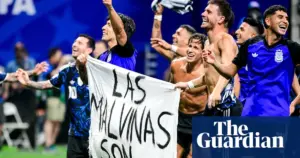
- Fifa assessing reports after Argentina players display Falklands banner
- Cardiff: Joe Root guides England to victory against India, highlights young batters' learning curve
Source: bbc.co.uk