Introduction
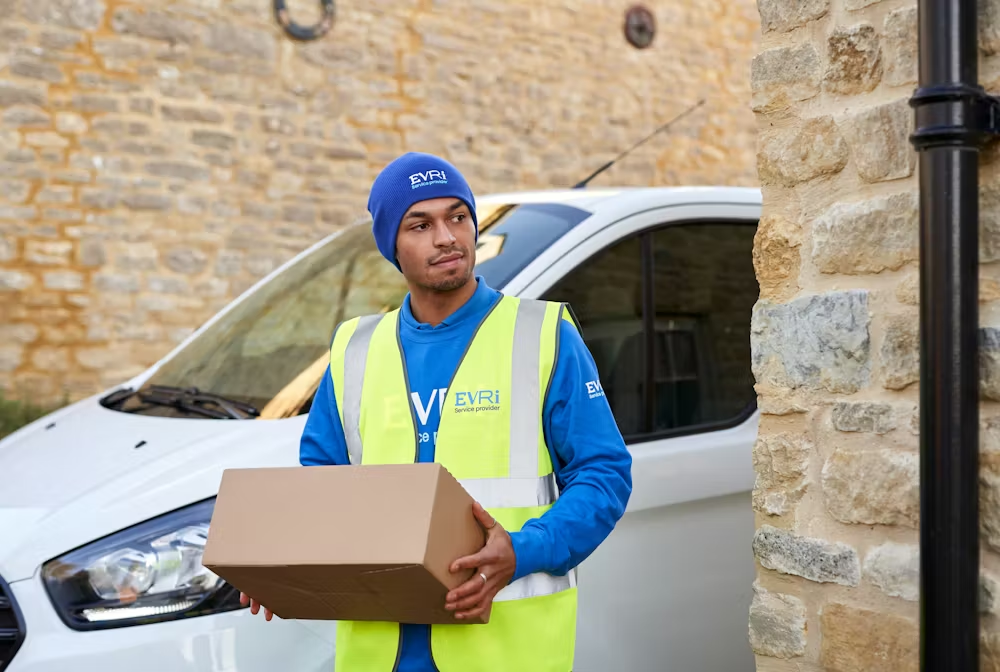
Evri, formerly known as Hermes, has quickly gained traction in the UK logistics and delivery sector since its rebranding in 2022. As e-commerce continues to thrive, the relevance of efficient parcel delivery services has sharply increased, making companies like Evri integral to the market. With the rise in online shopping—exacerbated by the pandemic—understanding Evri’s strategies and services becomes crucial for both consumers and businesses.
Evri’s Growth and Adaptation
Since its inception, Evri has undergone significant transformation, focusing on meeting the changing needs of consumers and businesses alike. According to recent reports, the company has expanded its service network, establishing over 7,000 parcel shops across the UK. This accessibility allows customers to conveniently send and receive parcels from numerous locations, doubling up on the customer-centric approach that the brand promises.
Evri has also embraced technology, investing in a robust digital platform that enhances user experience. The introduction of real-time tracking and a streamlined mobile app ensures that consumers can monitor their deliveries with ease, an essential feature as patience wanes in today’s fast-paced society.
Sustainability Initiatives
In light of growing environmental concerns, Evri is making concerted efforts to enhance its sustainability practices. The company has committed to achieving net-zero carbon emissions by 2035, which includes transitioning to a fully electric courier fleet. These initiatives not only underscore Evri’s dedication to reducing its carbon footprint but also align with the increasing demand from consumers for environmentally responsible services.
Challenges Ahead
Despite its rapid growth, Evri faces challenges typical of the logistics sector, such as rising operational costs and the need for continuous innovation. Recent reports indicate that the global supply chain issues and labour shortages could impact service reliability and delivery times. Furthermore, maintaining quality service while scaling operations will be paramount as the competition in parcel delivery heats up with players like Royal Mail and DPD.
Conclusion
Evri’s evolution from a local courier service to a prominent player in the UK’s parcel delivery landscape showcases the company’s adaptability and commitment to customer service. As e-commerce continues to flourish, the role of companies like Evri becomes even more pivotal in enhancing logistics efficiency. Looking forward, the emphasis on technology and sustainability will likely shape the future of parcel delivery in the UK, making Evri an essential subject of interest for consumers and industry stakeholders alike.