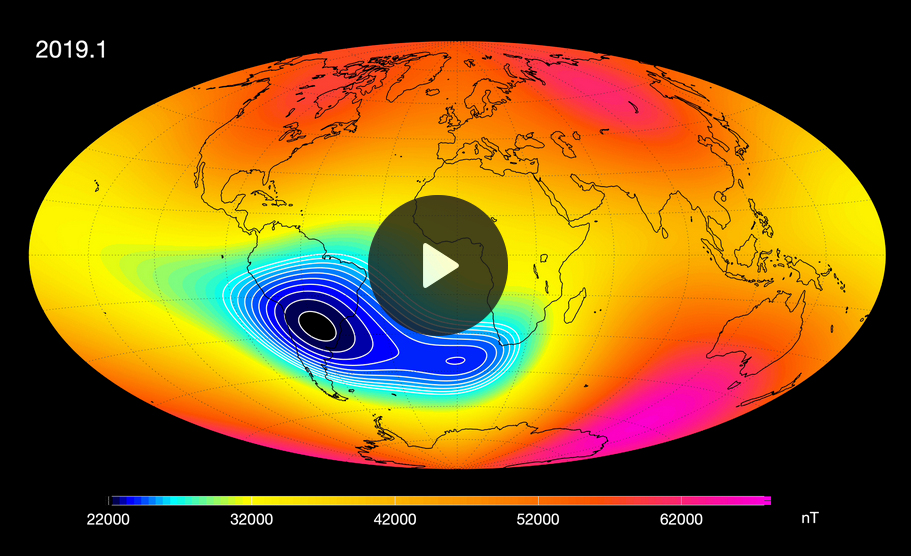
Introduction to the South Atlantic Anomaly
The South Atlantic Anomaly (SAA) is a region where the Earth’s magnetic field is significantly weaker than usual. This peculiar phenomenon has garnered attention from scientists and space agencies worldwide due to its potential impact on satellites and spacecraft operations. Understanding the SAA is crucial, especially considering the increasing reliance on satellites for various applications, including communication, navigation, and Earth observation.
What is the South Atlantic Anomaly?
The SAA is located over the southern part of South America and the surrounding Atlantic Ocean, extending across several countries, including Brazil, Argentina, and parts of the southern Atlantic. This area experiences a magnetic field intensity that is approximately 30% weaker than the average strength elsewhere on Earth. This anomaly is primarily caused by fluctuations in the Earth’s magnetic field and the influence of the inner Van Allen radiation belt.
Significance of the South Atlantic Anomaly
The weakening of the magnetic field in the SAA poses unique challenges for satellites and spacecraft passing through the region. Electronics in satellites can be adversely affected by increased particle radiation, leading to malfunctions and increased radiation exposure for astronauts aboard the International Space Station (ISS). For instance, the European Space Agency (ESA) has reported instances of abnormal data from satellites traversing this region, necessitating precautionary measures like adjusting satellite orbits and shutting down specific instruments to mitigate risks.
Recent Developments and Research
Recent research has indicated that the SAA may be expanding in size and intensity, which could lead to increased operational challenges for future space missions. Scientists are closely monitoring its evolution to better understand its implications for space exploration and satellite technology. Advances in satellite shielding and design are crucial in providing resilience against the effects of the anomaly. Research initiatives are ongoing, with the goal of developing more robust systems to ensure the longevity and functionality of space assets.
Conclusion: Implications for the Future
The South Atlantic Anomaly remains an intriguing area of study for researchers and space agencies alike. Its unpredictable nature not only complicates current satellite operations but may also shape future missions. Understanding the SAA will be vital as humanity continues to explore beyond our planet, requiring adaptive technology to keep pace with changing magnetic phenomena. Continued investigation into the anomaly will provide crucial insights that inform the design and operation of space technology for years to come.