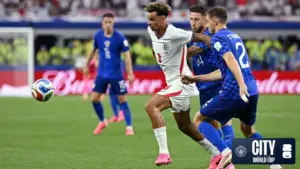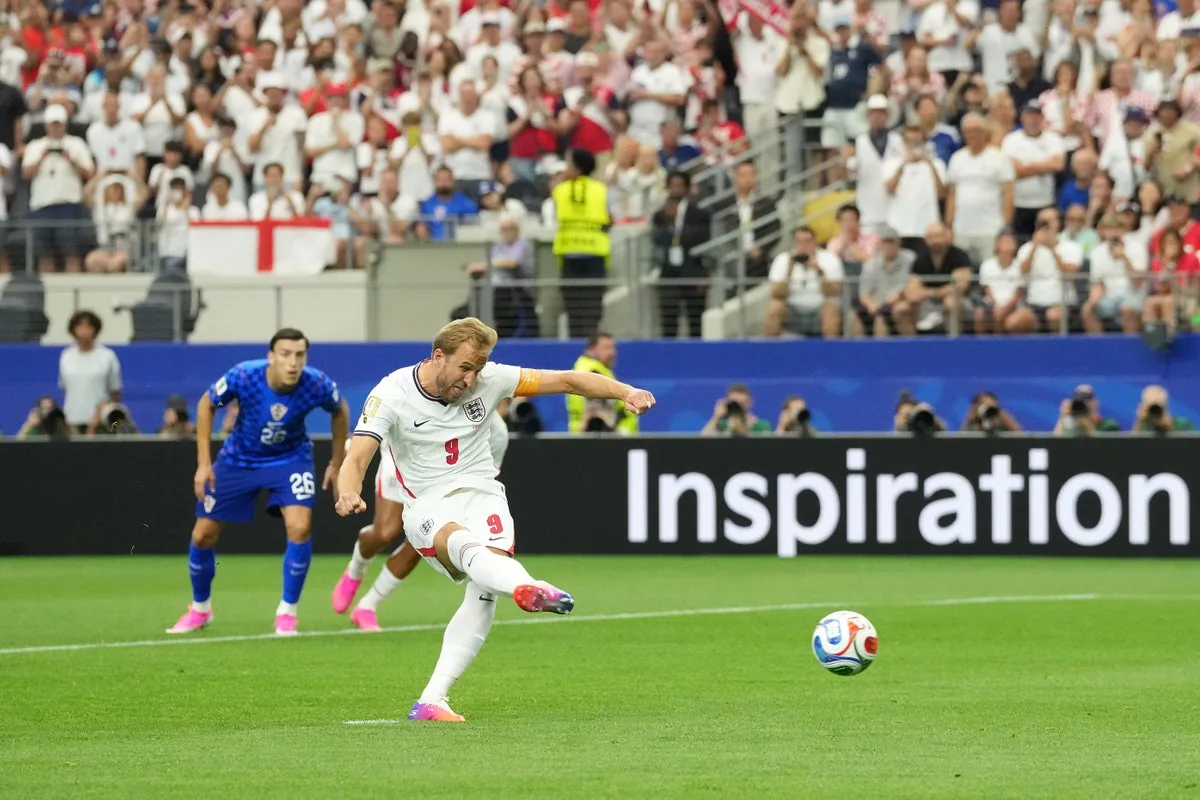
England captain Harry Kane was granted a second opportunity to convert a penalty against Croatia, ultimately giving his side the lead in their opening World Cup fixture. The initial spot-kick, awarded in the ninth minute following a foul by Luka Modric on Noni Madueke, was saved by Croatia goalkeeper Dominik Livakovic.
However, the video assistant referee (VAR) intervened, leading to a retake of the penalty. Replays indicated that Livakovic had moved off his line prematurely before Kane struck the ball. Goalkeepers are required to have at least one foot on or above the goal line when a penalty kick is taken, and images showed Livakovic had advanced slightly too soon.
Beyond the goalkeeper’s movement, another infringement contributed to the decision for a retake. Croatia defender Josko Gvardiol had encroached into the penalty area before Kane’s first attempt. After Livakovic saved the initial shot, Gvardiol was the first to make contact with the loose ball, clearing it away. This action prevented Madueke, who was positioned behind Gvardiol, from potentially getting a shot from the rebound.
The rules stipulate that if a defending player encroaches and then impacts an opposition attacker, such as by clearing the ball after a save, a retake is warranted. This scenario, combined with Livakovic’s early movement, led to the VAR’s decision to order a second attempt for Kane.
Kane’s penalty technique and previous experiences
Kane successfully converted his second penalty, striking the ball confidently. This incident brought to mind a similar situation earlier in the season when Kane, playing for Bayern Munich in the Champions League against Atalanta, had a penalty saved but was also granted a retake. Following that match, Kane had commented on observing goalkeepers’ tendencies to move off their lines, suggesting a deliberate strategy in his approach.
Former England defender Conor Coady praised Kane’s penalty-taking ability, highlighting his cleverness in observing goalkeepers’ movements. Coady suggested that Kane’s technique, which involves studying how keepers react, is a testament to his practice and understanding of the game. Former Tottenham Hotspur and England goalkeeper Paul Robinson echoed these sentiments, noting that Kane’s confidence allowed him to stick with a similar technique for the second attempt, despite the first being saved.
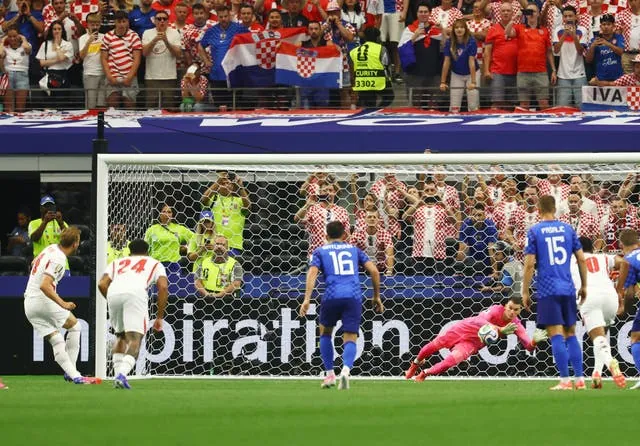
Robinson observed that the initial strike was too close to the goalkeeper, suggesting Livakovic might have saved it even without moving off his line. However, he also pointed out Kane’s ability to learn from the first attempt, bravely aiming for a similar spot but placing the second shot much closer to the corner. This demonstrated an adaptation in his approach between the two attempts.
The Bayern Munich striker has a strong record from the penalty spot, having scored 10 penalties in the Bundesliga during the current season. He has employed a mix of run-up styles, including a stutter and a more direct run-and-shoot technique, contributing to his total of 36 goals this season.
Impact and historical context
The retaken penalty provided a significant moment of relief for Kane, especially considering his last World Cup appearance. In the previous tournament, four years ago in Qatar, Kane missed a crucial penalty against France, which contributed to England’s exit at the quarter-final stage. This successful conversion against Croatia marks a different outcome for the England captain on the world stage.
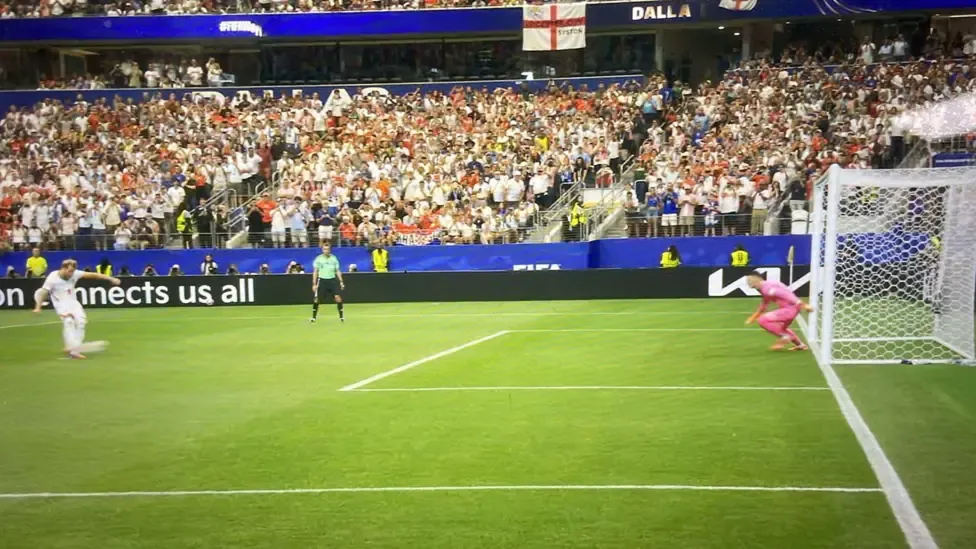
The intervention of VAR in such situations underscores its role in ensuring adherence to the rules, particularly regarding goalkeeper and defender positioning during penalty kicks. The incident highlights the precision required from all players during these critical moments in a match. Referee Clement Turpin was responsible for pausing the game and announcing the retake after the VAR review.
Kane’s ability to convert the second attempt, striking the ball without the stutter he sometimes employs, showcased his composure under pressure. This early goal provided England with a crucial lead in their opening match of the World Cup 2026 tournament.
Read Also
Source: bbc.com