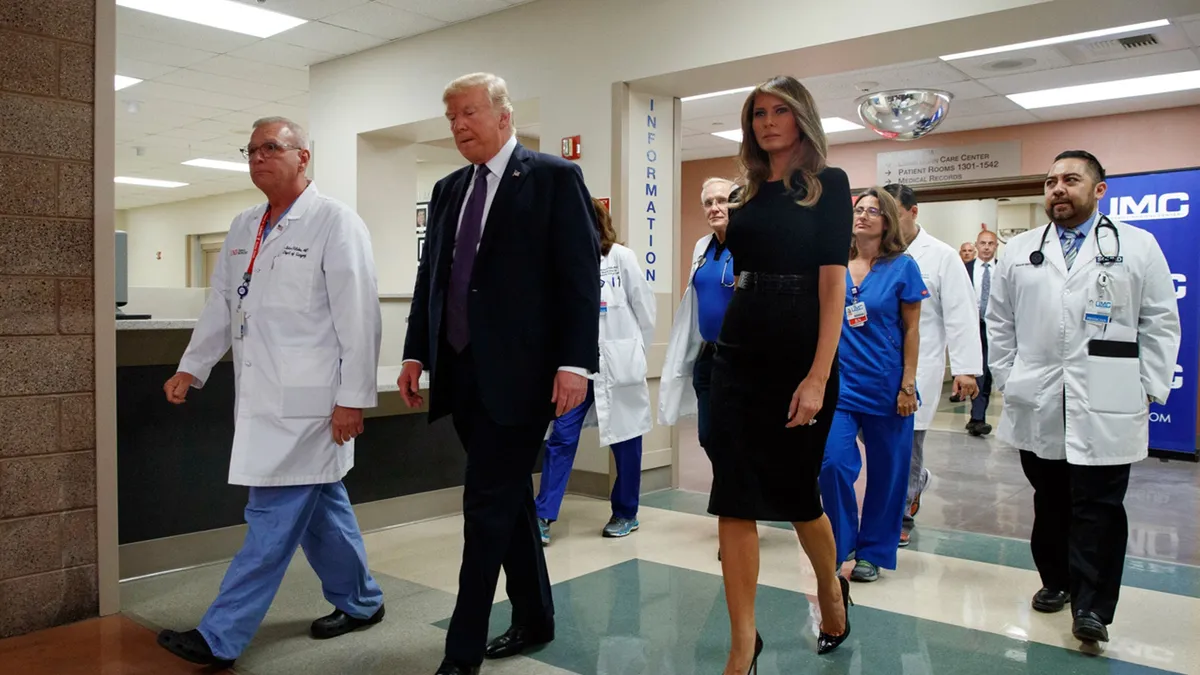
Before the recent developments, there was a growing concern regarding Donald Trump’s health, especially given his age of 79. Speculation had been fueled by previous health issues, including mystery lumps and skin flare-ups. However, the atmosphere shifted dramatically on April 4, 2026, when rumors began circulating that the former president was hospitalized at Walter Reed National Military Medical Center.
In a decisive moment, the White House swiftly denied these claims. A spokesperson stated that Trump had been working nonstop in the White House and Oval Office, countering the narrative that he was incapacitated. This response came amid unverified reports of road closures and potential flight restrictions near the medical center, which only intensified the speculation.
Trump’s spokesman, Steven Cheung, reinforced the message, declaring, “There has never been a President who has worked harder for the American people than President Trump.” This assertion aimed to reassure the public of Trump’s commitment and ongoing efforts despite his age.
The White House did not hold back in criticizing those spreading the rumors, labeling them as “deranged liberals” who were creating conspiracy theories. This strong response highlights the contentious political climate surrounding Trump, where even health rumors can become a battleground.
As the situation unfolded, it became clear that the rumors had significant effects on public perception. Many supporters expressed concern for Trump’s well-being, while detractors seized the opportunity to question his fitness for office. The divide in opinion reflects the polarized nature of current American politics.
Despite the swift denials from the White House, uncertainties linger. It remains unclear if Trump was ever hospitalized, and details remain unconfirmed. This ambiguity leaves room for continued speculation, which may further complicate the narrative surrounding his health.
In a world where information spreads rapidly, the incident serves as a reminder of the importance of verifying facts before jumping to conclusions. The White House’s proactive approach in addressing the rumors emphasizes the need for clear communication in times of uncertainty.
As Trump continues his work for the American people, the focus will likely shift back to his policies and actions rather than his health. Nevertheless, the incident underscores the community’s concern for the well-being of public figures, especially those in leadership roles.