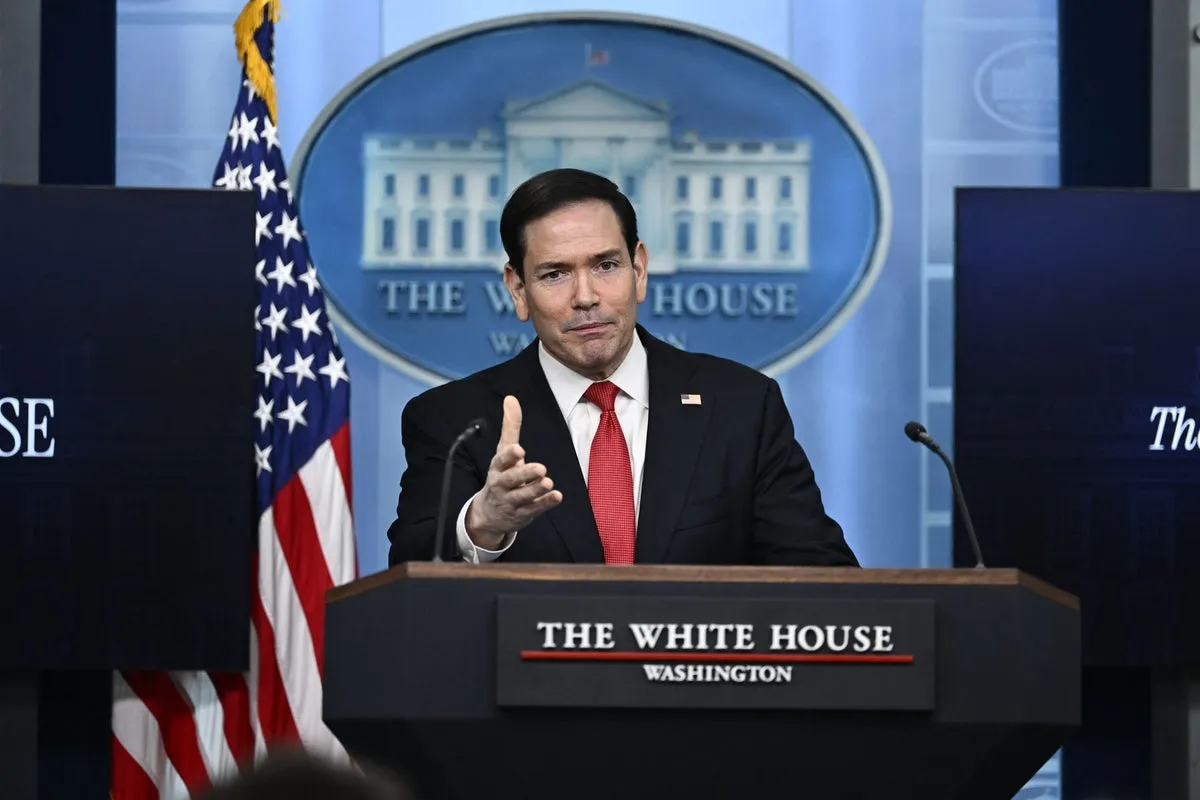
“I think what the president basically said is Iran can’t have a nuclear weapon because they would use it in places where there’s a lot of Catholics and Christians and others, for that matter,” said Marco Rubio ahead of his upcoming visit to the Vatican from May 6-8, 2026.
Rubio’s trip aims to address the complex situation in the Middle East, particularly focusing on mutual interests in the Western Hemisphere. His dialogue with Pope Leo XIV comes at a time when relations between the Trump administration and the Vatican have been strained over various foreign policy issues, especially concerning Iran’s nuclear ambitions.
Recently, President Trump publicly criticized Pope Leo XIV, alleging that the Pope supports Iran acquiring nuclear weapons. In response, Rubio defended the Pope’s position, stating that Trump’s characterization was “not an accurate description.” The tension highlights a broader conflict over how religious and political leaders view Iran’s role in regional stability.
Rubio also quoted Cypress Hill’s song “Insane in the Brain” to illustrate his thoughts on Iran’s leadership—an unusual choice that reflects his colorful approach to diplomacy. He remarked, “There is no scenario here in which, if they decide to join a ladder of escalation, they wind up getting the last say.” This statement underscores his concerns about escalating tensions.
The Pope has consistently called for peace amid ongoing conflicts involving Iran. He labeled Trump’s threats against Iran as “unacceptable,” further complicating their relationship. As Rubio prepares for this significant meeting, he becomes the first high-level official from the Trump administration to engage with the Pope since May 19, 2025.
Key points regarding Rubio’s visit:
- Rubio will discuss Middle East peace efforts and U.S.-Vatican relations.
- The meeting marks a crucial diplomatic engagement amidst rising tensions.
- The Pope has emphasized the importance of peaceful resolutions in international conflicts.
The next few days promise to be pivotal as Rubio seeks to bridge gaps between U.S. policies and Vatican perspectives on global issues. His discussions may influence future diplomatic efforts concerning Iran and its impact on both religious communities and international relations.