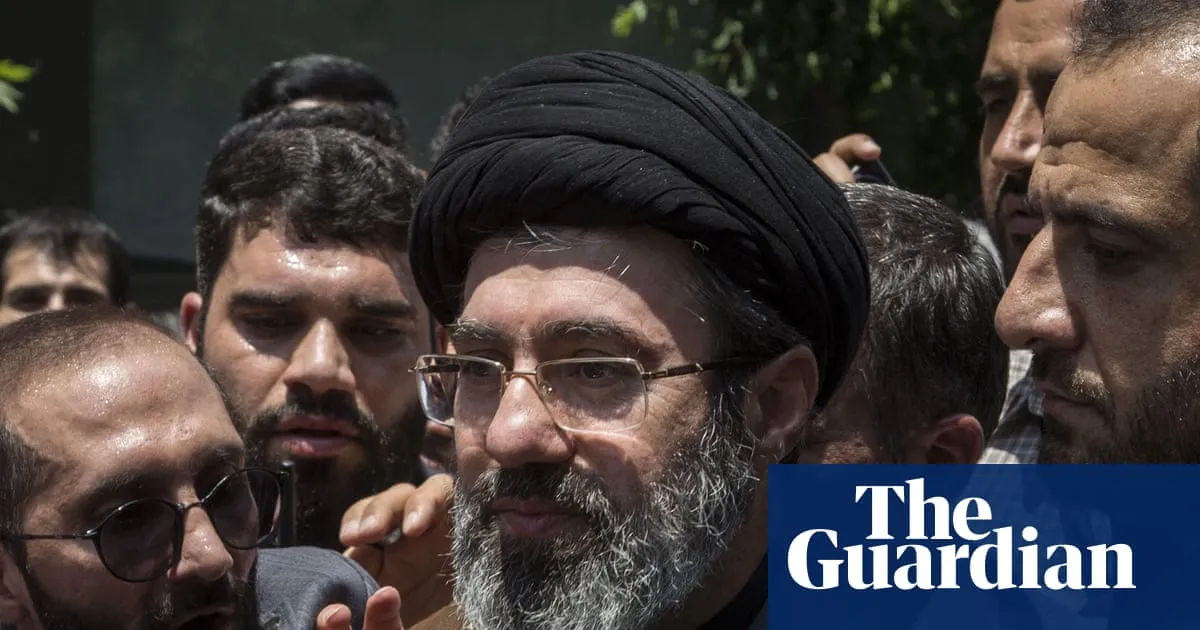
Mojtaba Khamenei: A New Era in Iranian Leadership
What does the succession of Mojtaba Khamenei signify for Iran’s political landscape? The recent announcement of Mojtaba Khamenei as the successor to his father, the late Ayatollah Ali Khamenei, marks a pivotal moment in Iran’s history, particularly as it is the first time since the 1979 Islamic Revolution that the supreme leadership has transitioned from father to son.
Mojtaba Khamenei, born in 1969 in Mashhad, Iran, has been a figure of interest within Iranian politics, even before the assassination of his father on February 28, 2026, during a US-Israeli strike on Tehran. Despite having never held elected office or a formal senior position within the government, he has spent much of his life at the center of power, cultivating close relationships with conservative clerics and elements of the Islamic Revolutionary Guard Corps (IRGC).
The announcement of his succession came on the ninth day of an ongoing war in Iran, a context that adds urgency to his leadership. The 88-member Assembly of Experts, responsible for selecting Iran’s supreme leader, has now placed Mojtaba in a position to navigate the country through its most significant crisis in 47 years. His leadership will be closely scrutinized as Iran faces unprecedented challenges.
Former U.S. President Donald Trump has weighed in on Mojtaba Khamenei’s ascension, stating that the new supreme leader would not last long without his approval. This comment underscores the international implications of Iran’s leadership change and the geopolitical tensions that surround it.
In the wake of his father’s death, Mojtaba Khamenei is expected to follow a path aligned with the legacy of both Imam Khomeini and his father, as indicated by various Iranian officials. The IRGC spokesperson has remarked on the economic challenges ahead, suggesting that if oil prices exceed $200 per barrel, the current political game may become untenable.
As Mojtaba Khamenei steps into this role, he will have to address not only the internal dynamics of Iranian politics but also the broader implications of his leadership on international relations. The fate of Iran, described as more precious than life by Mohammad Bagher Ghalibaf, will be determined by the Iranian nation, rather than external influences.
Details remain unconfirmed regarding the specific policies Mojtaba Khamenei will pursue, but his connections and background suggest a continuation of conservative governance. The coming months will be critical in assessing how he will respond to both domestic and international pressures as he leads Iran into an uncertain future.