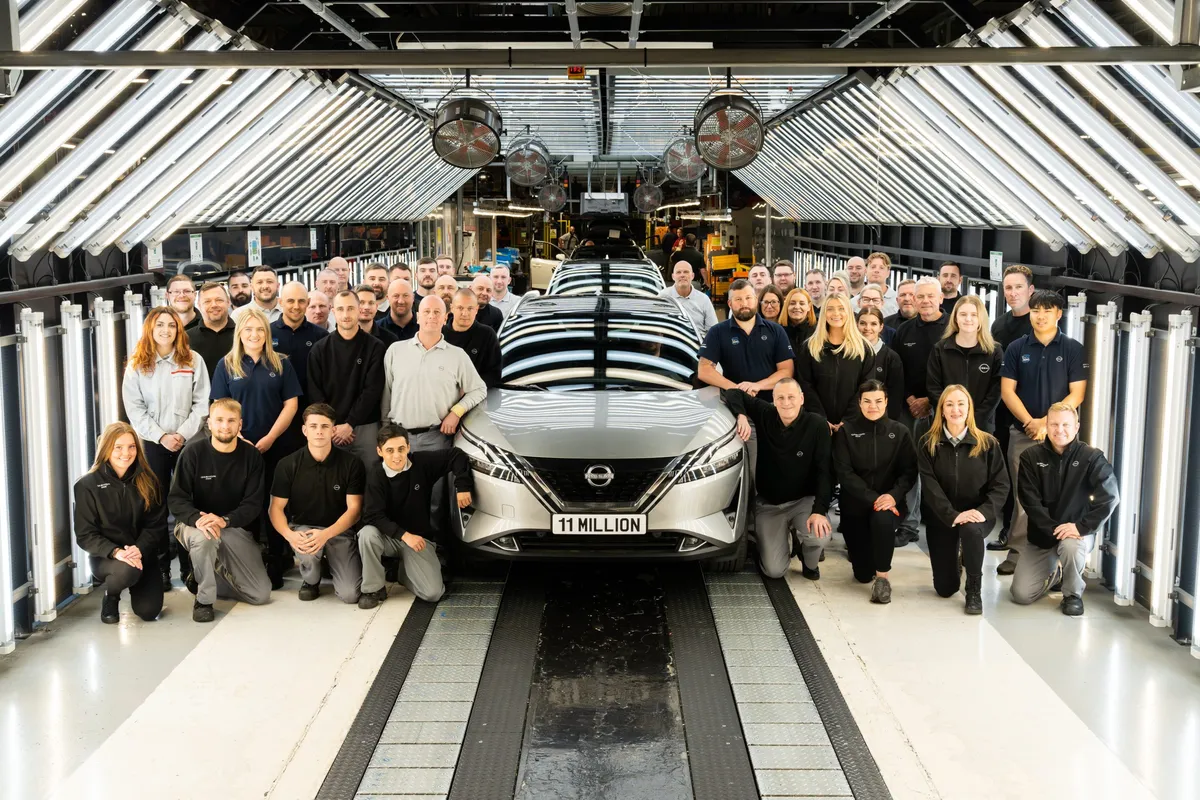
Nissan’s decision to close one of its two production lines at the Sunderland plant underscores the ongoing challenges faced by the company amid increasing competition in Europe. The closure, part of a cost-cutting exercise, is set to eliminate 900 positions in Europe, although no jobs will be lost at the Sunderland facility itself.
The Sunderland plant has been operating at roughly half its capacity, producing 273,174 cars last year, down from a peak of over half a million. Nissan, which employs around 6,000 workers at this site, has been making significant investments—about £450 million—to transform it for electric vehicle production. Despite these efforts, Nissan’s market share in the UK has dwindled from 5.6% in 2016 to 3.7% in early 2026.
A Nissan spokesperson stated, “We will consolidate production from two lines to one at the Sunderland plant as we assess future opportunities to secure full plant utilisation.” This move comes as Nissan seeks to attract another car maker to take over line one in Sunderland.
Andy Palmer, an industry analyst, remarked, “Any reduction in capacity is bad news for Nissan and bad news for Sunderland.” The sentiment reflects concerns within the community about job security and the implications of workforce reductions.
Nissan has been slashing costs globally and has closed seven plants as part of this strategy. While no immediate layoffs are expected at Sunderland, uncertainties linger regarding how these changes will impact local workers.
In addition to potential job losses elsewhere in Europe, Nissan plans to cut roughly 10% of its 9,500-strong European workforce. These decisions have stirred discussions among employees and local officials about the future of manufacturing jobs in the region.
The skills and dedication of Sunderland’s workforce have been pivotal to its success. Adam Pennick, a local union representative, emphasized that “the skills, expertise and teamwork of our people have powered Sunderland’s success.” As Nissan navigates these turbulent waters, many hope that future opportunities can emerge from this consolidation.
Looking ahead, it remains unclear what specific opportunities await line one at the Sunderland plant or how long it will take for new partnerships to materialize. For now, Nissan continues to explore options while managing its critical transition towards electric vehicle production.