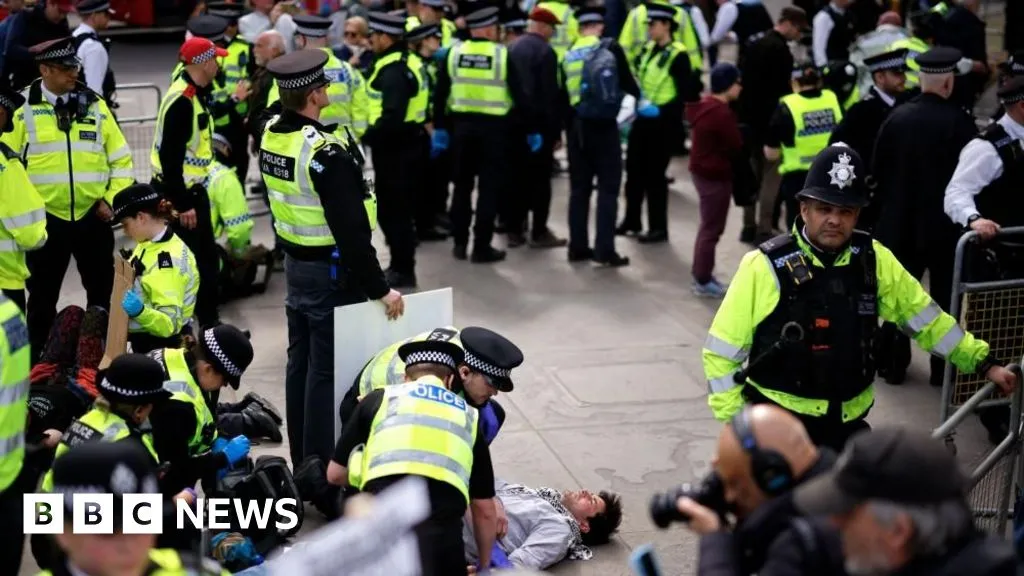
In recent years, the landscape of public protests in London has evolved dramatically, particularly concerning the rights of citizens to express their views. Prior to the latest developments, many believed that the UK upheld a strong tradition of free speech and peaceful assembly. However, this perception faced a significant challenge during a mass vigil held in Trafalgar Square on April 11, 2026, where police arrested 212 individuals, ranging in age from 27 to 82.
The vigil, which attracted an estimated 1,500 participants, was organized in response to the UK government’s controversial decision to classify Palestine Action as a terrorist organization in July 2025. This classification placed the group in the same category as notorious armed factions, including al-Qaeda and Hezbollah, sparking outrage among activists and civil rights advocates. The decisive moment came when the High Court ruled on February 13, 2026, that the government’s proscription of Palestine Action was unlawful, a ruling that the government is currently appealing.
The immediate aftermath of the vigil saw a stark contrast between the intentions of the demonstrators and the actions of the Metropolitan Police. Many participants expressed their discontent with the government’s stance on free speech. One unnamed demonstrator poignantly remarked, “I think Britain has now descended into a non-democratic situation and I think that is very dangerous [for] free speech.” This sentiment echoed throughout the crowd, highlighting the growing frustration over perceived governmental overreach.
On the other hand, police officials defended their actions, emphasizing the need to maintain public order amidst rising tensions. Justin Kelly, a representative of the police, stated, “We will not tolerate this any longer,” indicating a firm stance against what they deemed unlawful gatherings. The police operation to manage the vigil was swift, resulting in a significant number of arrests that many activists viewed as an infringement on their rights.
The implications of these events extend beyond the immediate arrests. The ongoing appeal against the High Court ruling is set for April 28 and 29, and its outcome could reshape the legal landscape for protest rights in the UK. Meanwhile, the situation in Ireland adds another layer of complexity, as An Garda Siochana has vowed to intensify enforcement against fuel-cost protesters blocking critical infrastructure, further demonstrating the government’s hardline approach to dissent.
As the dust settles from the vigil, voices from both sides continue to clash. Qesser Zuhrah, a prominent activist, criticized the Metropolitan Police, stating, “It just shows that the Met police, they don’t serve us, they don’t protect us, they work only to reinforce what the government wants.” This perspective underscores the deepening divide between law enforcement and community activists, raising questions about the role of police in a democratic society.
In the wake of these events, experts are weighing in on the broader implications for civil liberties in the UK. The juxtaposition of public safety and the right to protest is a delicate balance that many believe is tipping towards suppression. As discussions unfold, the community remains vigilant, advocating for their rights while navigating the complexities of a changing political landscape.