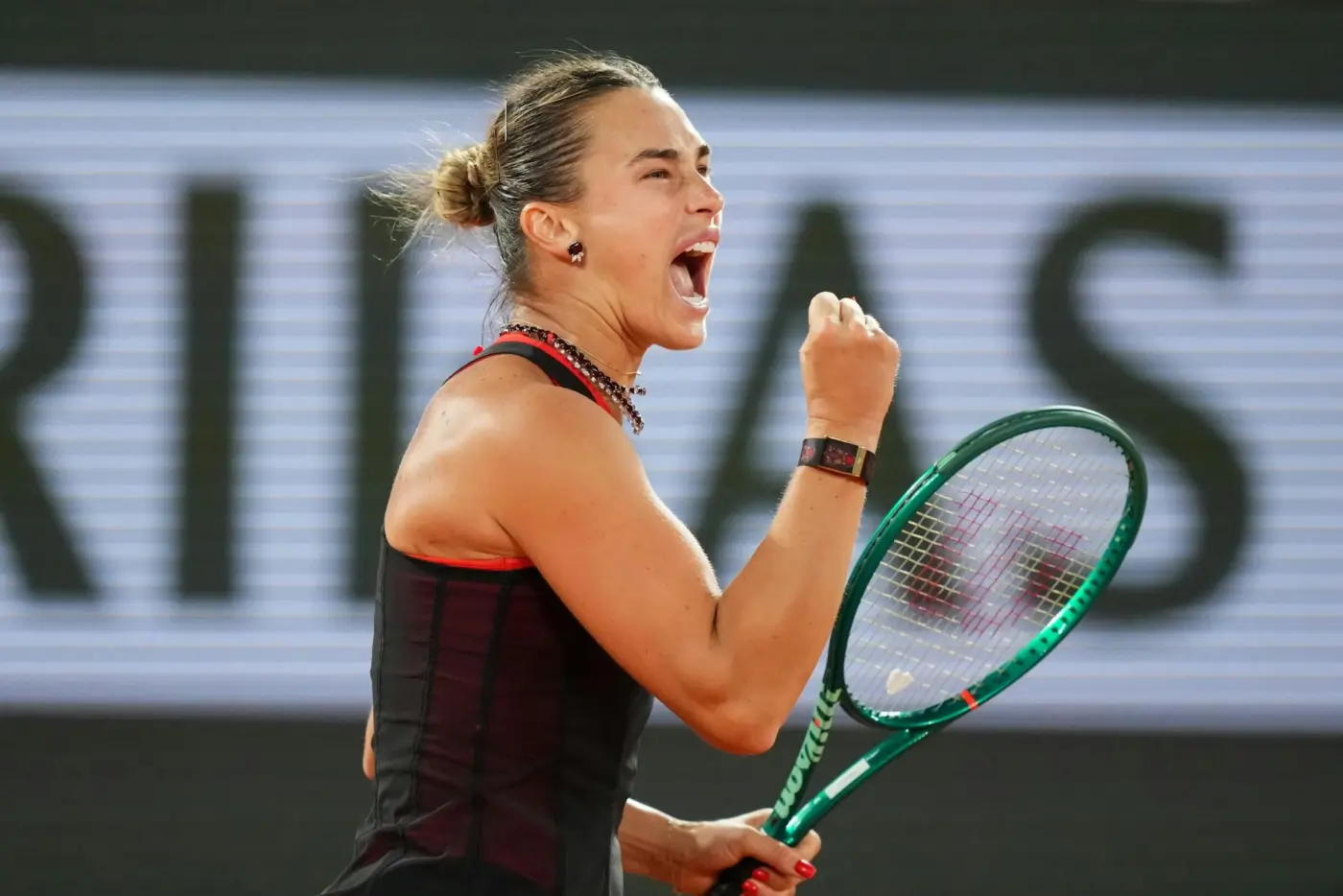
Aryna Sabalenka, the world number one, secured her place in the French Open quarter-finals by defeating Naomi Osaka in straight sets. The match, which took place on Court Philippe Chatrier, concluded with a score of 7-5, 6-3 in Sabalenka’s favour. This victory marks Sabalenka’s third win against Osaka in the past three months.
The encounter was a significant event, being the first women’s singles match held in the night session on Court Philippe Chatrier since 2023. Sabalenka expressed her satisfaction with the win and the atmosphere provided by the crowd, noting that it was a challenging match against a formidable opponent.
Match Dynamics and Performance
Sabalenka’s performance was characterised by her accurate serving and effective drop shots. In contrast, Osaka landed only 53% of her first serves, which allowed Sabalenka to apply consistent pressure by stepping inside the baseline to receive second serves.
Despite Osaka breaking Sabalenka in her opening service game, it was the only moment of uncertainty for the top seed on her serve during the first set. Sabalenka conceded only four points on her own delivery for the remainder of the set. Her strategic shot selection was also evident, winning 10 of 11 points at the net and executing five drop shots among her 39 winners.
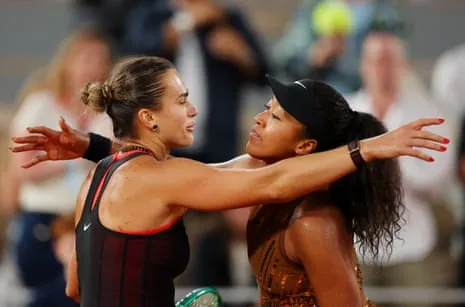
The decisive break in the opening set occurred in the 11th game, which Sabalenka followed by holding serve to love. In the second set, Sabalenka maintained her relentless pressure. Although Osaka managed to save a break point in the fifth game, she was broken to 15 in her subsequent two service games. Sabalenka ultimately converted match point with a powerful forehand.
Significance and Next Steps
This victory is particularly important for Sabalenka, who has now reached the quarter-finals of her last 14 tournaments. She entered the French Open after a period of less consistent form on clay earlier in the year, but has consistently found her best level at Grand Slams. As a four-time Grand Slam singles champion, Sabalenka is the only player remaining in the women’s draw with experience in a major final.
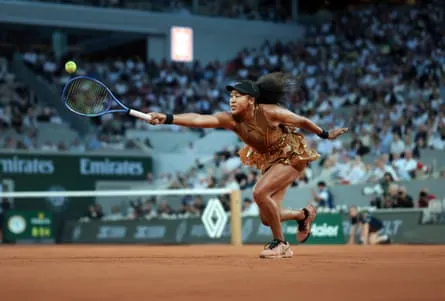
Osaka, also a four-time Grand Slam champion, should find encouragement in her performance, having reached the second week at Roland Garros for the first time in her career. Despite the loss, she expressed a positive outlook on her progress, focusing on daily improvement rather than solely on results.
Sabalenka will now face 25th seed Diana Shnaider in the quarter-finals. The winner of that match will advance to play either Anna Kalinskaya, the 22nd seed, or Maja Chwalinksa in the semi-finals.
The decision to feature a women’s match in the night session was also highlighted by Sabalenka, who believes it is a positive step for the tournament. She hopes this will encourage organisers to consider more women’s matches for night sessions in the future, citing the atmosphere and attention generated by the match.
Sabalenka’s victory against Osaka marks her fourth consecutive French Open quarter-final appearance.