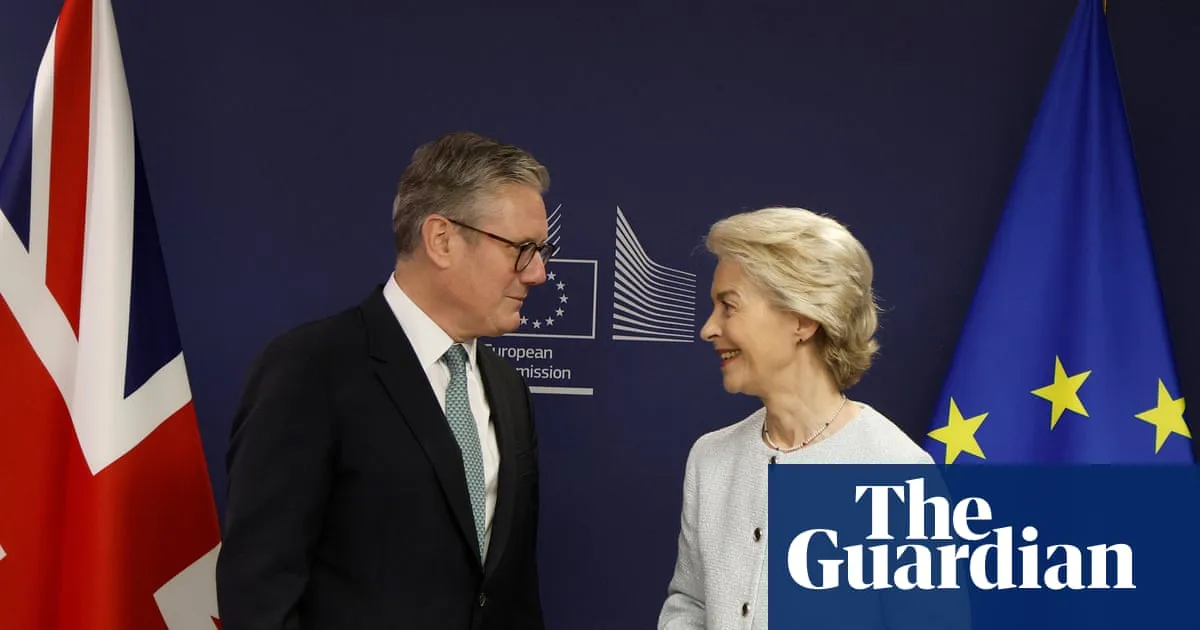
The UK is seeking to improve diplomatic and economic ties with the EU after the ‘reset’ deal was announced last May. In a significant development, ministers are planning to reshape Britain’s relationship with the EU through new legislation that could enable the UK to adopt EU single market rules without a parliamentary vote.
This proposed bill will allow the UK to swiftly implement evolving single market regulations if deemed in the national interest. Such a move is facilitated by the so-called Henry VIII powers, which empower ministers to enact laws without full parliamentary scrutiny through secondary legislation.
While Parliament retains the ability to approve or reject this secondary legislation, it cannot amend it. This approach has raised concerns among opposition parties, who argue that it reduces Parliament to a spectator role in significant legislative decisions.
Critics of the government’s strategy warn that this could lead to what they describe as ‘integration with the EU by stealth.’ Prof Anand Menon remarked, “The reality of this is we are signing up to a deal with the European Union that commits us to follow their rules, whether we like it or not.”
Supporters of the bill, however, claim that it will streamline processes and cut red tape for businesses. The government is currently negotiating deals related to food and drink and emissions trading as part of this legislative effort, with an estimated £5.1 billion a year expected from the food and drink trade deal alone.
According to the Office for Budget Responsibility, Brexit is projected to reduce long-run productivity by 4% and decrease exports and imports by 15% compared to remaining in the EU. Notably, the EU remains the UK’s largest trading market, with nearly half of total trade in 2024 expected to occur with EU countries.
As the government prepares to introduce this sweeping legislation before the summer of 2026, the shadow business secretary has voiced strong opposition, stating, “Parliament reduced to a spectator while Brussels sets the terms is exactly what the country rejected.”
In the coming weeks, observers will be watching closely to see how this bill unfolds and what implications it may have for the future of UK-EU relations. The government insists that it will ensure Parliament has a role in new deals and in the application of new EU laws under those agreements.
As discussions continue, further clarification from the European Commission will be essential to ensure that the proposed measures can be implemented effectively and realistically, as highlighted by Christel Delberghe.