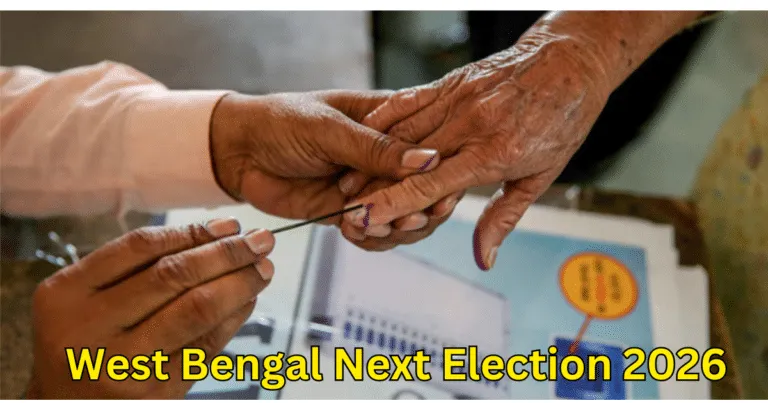
For the first time, the Bharatiya Janata Party (BJP) has crossed the majority mark in West Bengal, ending Mamata Banerjee’s long tenure. The elections held in April 2026 saw nearly 68.2 million people casting their votes, resulting in a remarkable voter turnout of about 92.93 percent.
Before this pivotal moment, many expected Mamata Banerjee’s All India Trinamool Congress (TMC) to maintain its stronghold. The TMC has been a dominant force in West Bengal since its founding in 1998. However, the BJP’s previous best performance was only 77 seats in the 2021 elections.
This time, the results were striking: the BJP won or was leading in 200 out of 294 seats, while the TMC managed only 87 seats. This shift marks a significant breakthrough for the BJP in eastern India and reflects growing Hindu-Muslim polarization among voters.
The implications for both parties are profound. Mamata Banerjee’s defeat diminishes her aspirations as a national challenger to Prime Minister Narendra Modi. Political analyst Praveen Rai noted that this outcome “substantially increases the national standing of Modi’s leadership” and extends BJP’s influence across India.
Experts suggest that anti-incumbency sentiment played a crucial role in this election. Rahul Verma pointed out that while there is still visible support for Mamata, there is also considerable discontent with TMC’s governance. Seema Das, a local voter from Kolkata, expressed her frustration: “Didi has lost the track and only appeases Muslims to stay in power.”
Moreover, controversies surrounding the Election Commission of India added to the electoral tension. Over nine million people were removed from the voting list before the elections—a move that sparked accusations from TMC leaders who claimed it favored the BJP.
In preparation for this high-stakes election, Modi’s government deployed 2,400 companies of paramilitary troops across West Bengal to ensure security and order during voting.
This election not only reshapes West Bengal’s political landscape but also raises questions about future governance and representation as parties adapt to these new dynamics.