Millions of viewers tuning into World Cup matches on the public broadcaster have encountered on-screen reminders regarding the TV licence fee. These alerts, which include a QR code, have appeared intermittently during live broadcasts of games, prompting reactions from audiences.
The reminders were notably present during the England versus Ghana match on Tuesday, June 23, and also during Brazil‘s game against Morocco. Viewers reported seeing the prompts, which urged them to ensure they possessed a valid TV licence.
The standard UK TV Licence fee is £180 annually, applicable to both homes and businesses. This fee is a requirement for anyone watching or recording live television on any channel, or for those utilising the broadcaster’s streaming service, BBC iPlayer.
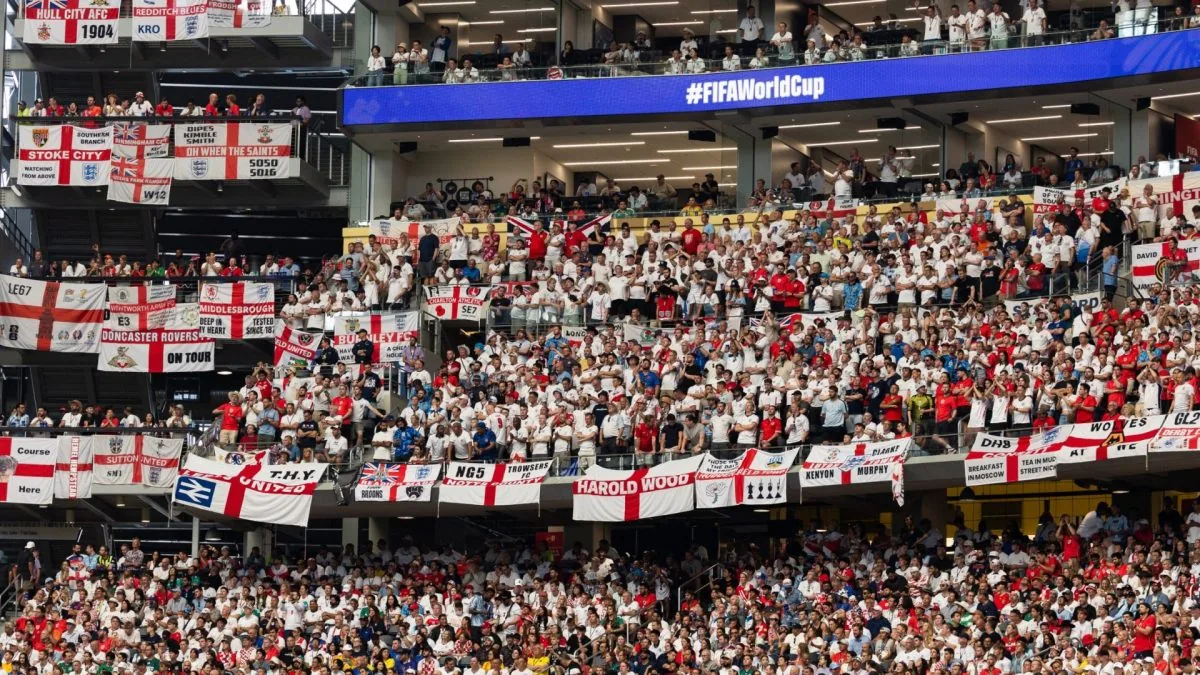
The deployment of these interactive QR codes during live match airings, such as the one at Boston Stadium, has led to significant discussion among viewers. Many took to social media platforms, including X (formerly Twitter), to express their opinions, with some describing the tactic as ‘cringy’ and ‘desperate’.
Audience Reaction and Broadcaster’s Stance
An insider from the broadcaster indicated that the prompts were intended as a ‘very soft reminder’ for all viewers to pay the fee if they were consuming any of the programming. The expectation was that a broad audience would be watching the football, including some who do not frequently engage with the broadcaster’s content.
Social media users shared varied responses to the on-screen alerts. One user on X commented, “That ‘buy a TV Licence’ QR Code is killing me, [broadcaster] better behave.” Another post read, “[Broadcaster] begging people to buy a TV licence at half time is so desperate and cringy…” A fourth user noted, “[Broadcaster] putting a QR code in the corner telling us to buy a TV licence. Absolutely no shame.”
The use of these on-screen QR codes is understood to have been tested in previous World Cup fixtures, following a successful pilot during the FA Cup final. A spokesperson for TV Licensing stated that new methods are regularly tested to support individuals in obtaining and maintaining correct licensing.
Prior to the England vs Ghana match, TV Licensing also issued a reminder on social media, stating, “England take on Ghana tonight at 9pm on BBC One. Remember, you need a TV Licence to watch the game live. Buy your licence here.”
Funding Challenges and Future Considerations
The public broadcaster is reportedly facing financial challenges and is exploring various strategies to recover unpaid TV licence fees. The organisation is primarily funded through the licence fee, which is mandatory for households watching or recording live television, with an exception for those aged 75 or over who receive pension credit.
Non-payment and evasion of the TV licence are significant concerns for the broadcaster. The number of licences has reportedly decreased by 1.5 million since 2020, costing the corporation a substantial amount last year. According to the latest data from TV Licensing, an estimated 12.5 per cent of UK households who are required to pay for a TV licence do not. Evasion is considered a crime, and non-payment can lead to prosecution.
The broadcaster has indicated that the charge is in ‘irreversible’ decline and has appealed to the government for a ‘fairer’ funding mechanism. Some have voiced irritation at the repeated reminders, with one X user commenting, “The constant reminders of the TV licence is new to this World Cup and shows how desperate they are. People are leaving in droves.”
Another user suggested that the broadcaster might not expect additional revenue from these advertisements but rather aims to make a political point about viewers watching World Cup football courtesy of the public broadcaster and their licence. The corporation has previously suggested that the cost of the licence fee could be reduced if more people paid it.
Reports have also suggested that the charge could potentially be extended to cover streaming services. The Culture Secretary, Lisa Nandy, has rejected proposals to fund the broadcaster through a levy on streamers or direct taxation, but has not ruled out the possibility of subscribers to services like Netflix and Amazon Prime being required to pay the licence fee. These developments occur as the broadcaster aims to achieve savings over a period of two years, which includes plans for job cuts, decommissioning television programmes, and axing radio shows.
Read Also
- Norway secure World Cup last 32 spot with Erling Haaland double against Senegal
- Liverpool rejects transfer bid for midfielder as Mohamed Salah comments raise questions
- Scotland faces Brazil with World Cup knockout stage within reach
- Portugal Secures Dominant Victory Over Uzbekistan with Ronaldo Brace
Source: uk.sports.yahoo.com