Understanding the Annular Solar Eclipse
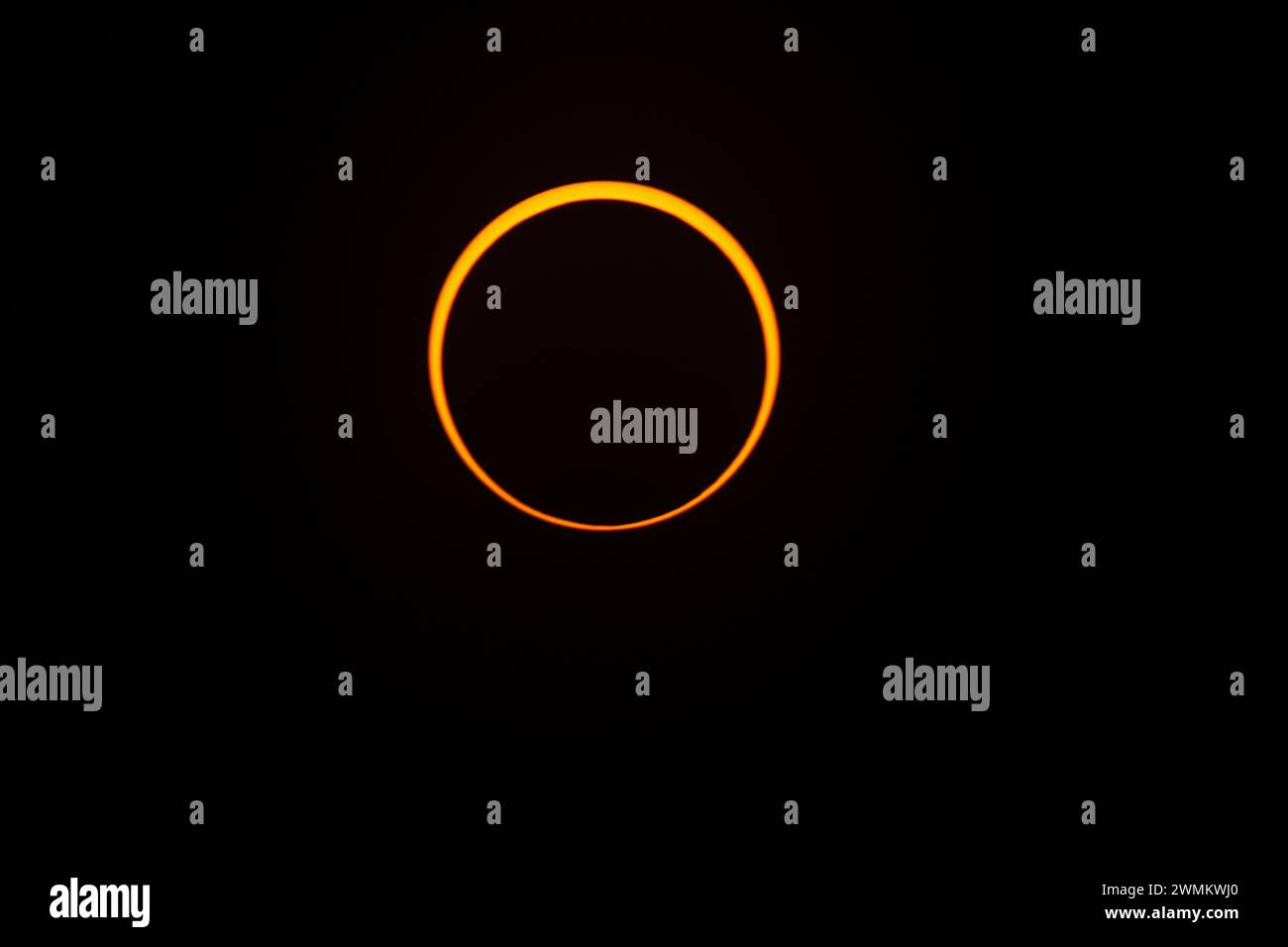
On October 14, 2023, the world witnessed a spectacular astronomical event known as the annular solar eclipse. This event occurred when the Moon passed between the Earth and the Sun, but due to its distance from Earth, it only covered the central part of the Sun, leaving a ring-like structure known as the ‘ring of fire.’ Such events are not only a treat for sky watchers but also hold significant scientific importance.
The Path of the Eclipse
The annular solar eclipse was visible from a narrow path that crossed parts of the United States, Central America, and Colombia. Key locations such as Oregon, Texas, and several areas in Mexico experienced a remarkable view where the ring of fire could be seen perfectly. In total, the eclipse could be glimpsed in over 20 states across the US, attracting astronomers, photographers, and curious onlookers keen to witness this rare phenomenon.
Public Reception and Safety Measures
With the event being widely publicised, many communities organised viewing parties and educational sessions to promote safe viewing practices. Astronomers emphasized the importance of using proper solar filters and eclipse glasses to protect eyes from harmful solar radiation. Many local schools also took advantage of this astronomical event, incorporating it into their science curriculum to engage students in the wonders of space.
Scientific Significance and Future Events
The study of solar eclipses, including annular types, plays a crucial role in enhancing our understanding of solar activity and its effects on Earth’s atmosphere. Experts believe studying these events can provide insight into solar flares and their impact on technology on Earth. For those who missed the 2023 event, fear not; a total solar eclipse is set to grace North America on April 8, 2024, providing another chance for sky-watchers to marvel at the beauty of celestial mechanics.
Conclusion
The annular solar eclipse of October 14, 2023, was not just a captivating visual display; it served as a reminder of our place in the cosmos. Such celestial events encourage learning and curiosity about the universe. Sky enthusiasts are encouraged to mark their calendars for future eclipses and continue exploring the wonders beyond our planet.