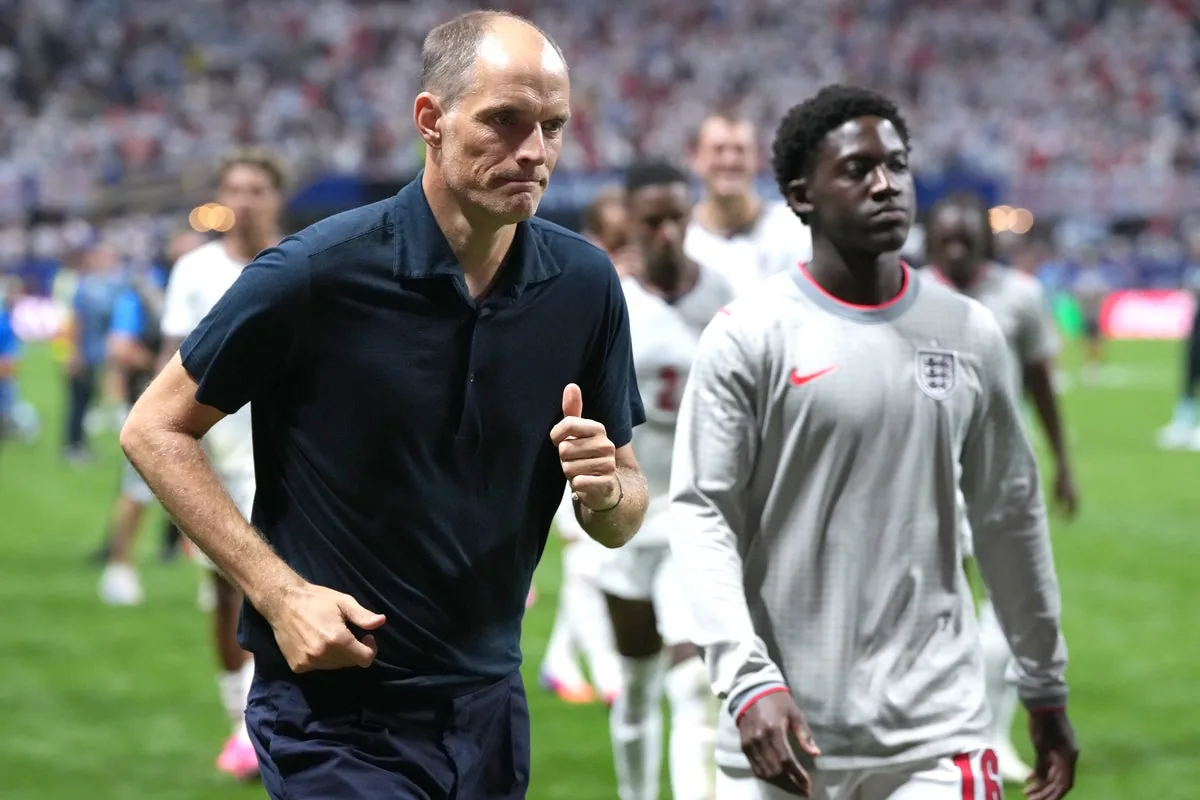
England’s World Cup journey ends in semi-final
England‘s aspirations for a World Cup final appearance were cut short following a 2-1 defeat to Argentina in a semi-final match. The loss meant England missed out on reaching a men’s World Cup final, with Argentina advancing to their second consecutive final. The match saw Argentina come from behind to secure the victory.
The decision to switch to a five-at-the-back formation during the second-half hydration break, specifically in the 67th minute, drew criticism. This tactical change occurred while England held the lead and seemingly had momentum. Some observers suggested this move nullified England‘s advantages, including their pace and athleticism, against Argentina.
Despite the tactical shift, England initially took the lead through a well-executed goal by Anthony Gordon. His effort, following a long pass from Harry Kane and an assist from Morgan Rogers, was a highlight for England. Djed Spence also contributed with a crucial tackle to stop Giuliani Simeone, which was noted as a memorable moment.
Key performances and tactical decisions
Several players delivered strong performances for England. Spence, who continued his impressive form from a previous substitute appearance, was highlighted for his one-v-one defending and pace. Elliot Anderson also had a notable game, frequently getting on the ball and breaking up play, despite receiving a yellow card in the first half. Jordan Pickford made a significant save from Nicolás González, though it ultimately wasn’t enough to secure a win.
For Argentina, Lionel Messi played a pivotal role, providing assists for both goals. His ability to create opportunities in dangerous areas, particularly after England‘s tactical adjustments, was crucial. Enzo Fernández scored a stunning equaliser, and substitute Lautaro Martínez secured the winning goal with a header. Alexis Mac Allister was also active, hitting both posts in his efforts to score.
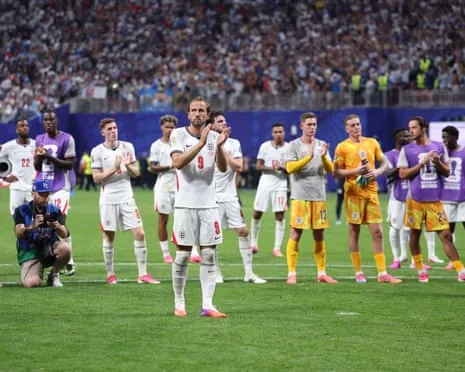
The match also featured several substitutions that impacted the game’s flow. For England, Ezri Konsa, Dan Burn, Nico O’Reilly, Ivan Toney, and Marcus Rashford were introduced. Konsa, who came on as England shifted to a back five, was involved in a defence that conceded two late goals. O’Reilly was brought on to help maintain possession, but the change did not yield the desired outcome.
Argentina‘s substitutions proved effective, with Nicolás González adding impetus to their attacks and Gonzalo Montiel providing an upgrade on the flank. Rodrigo de Paul, a surprise omission from the starting lineup, helped change the game after his introduction. Lautaro Martínez‘s winning header was the culmination of these changes, sending Argentina to the final.
Aftermath and reflections
The defeat has led to questions regarding the tactical decisions made during the match. The shift to a defensive formation while holding a lead was seen by some as a contributing factor to England‘s loss. This particular tactical choice was compared to a previous match against Mexico, but with the key difference that Argentina, featuring a player like Lionel Messi, presented a different challenge.
The match was described as an attritional game, with England showing discipline to score their opening goal. However, the subsequent tactical changes were highlighted as having reduced the team’s chances and created space for Argentina‘s key players. The outcome means Argentina will compete in the final, with Lionel Messi still having the opportunity to win another World Cup.
The final score of 2-1 in favor of Argentina marked the end of England‘s campaign in the semi-finals.
Read Also
Source: theguardian.com