Anticipating a challenging semi-final
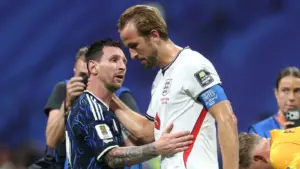
England is preparing for what has been described as their most challenging match of the World Cup so far, facing Argentina in the semi-final. Football legend Sir Geoff Hurst, known for his hat-trick in the 1966 World Cup final, stated that the upcoming game will be “the toughest, physical game of the competition for us so far.” He acknowledged the enduring threat posed by Lionel Messi, despite discussions about his age, noting Messi’s continued performance and scoring ability.
Sir Geoff dismissed notions that Argentina might be past their prime, warning against underestimating them. He predicted a “very tough” match with “knife edge” tension, suggesting that a comfortable win for England is unlikely. Despite the anticipated difficulty, Sir Geoff affirmed his strong support for the England team, emphasizing the immense significance of success in a World Cup. He highlighted that the event transcends mere football, becoming a national and international occasion involving two countries.
The sentiment surrounding the match extends beyond the pitch, with significant emotional and historical weight. The game is viewed as more than just a sporting contest, resonating deeply within both nations. Sir Geoff’s own experiences, including his time playing for Stoke City FC between 1972 and 1975, where he scored 30 goals in over 100 appearances, give him a unique perspective on the pressures and importance of such high-stakes football.
Tactical approaches and emotional intensity
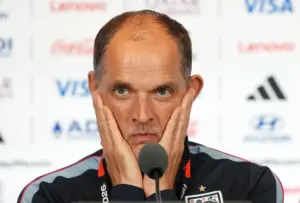
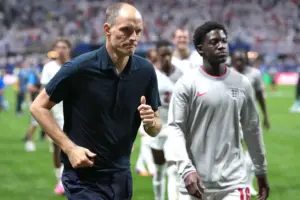
The match is set against a backdrop of heightened emotions and geopolitical discussions, with the FBI reportedly discussing the fixture in relation to new geopolitics concerning oil around the Falklands. This intense atmosphere has led to a “siege mentality” within the England camp, a strategy employed by manager Thomas Tuchel. Players are reportedly aggravated by certain questions, which has fostered a sense of an “external enemy,” a tactic compared to Michael Jordan’s approach in The Last Dance.
Argentina, on the other hand, naturally operates with a siege mentality. Reports from Argentina indicate widespread excitement and even “hysterics” about the game. This fervor has seen supporters engaging in passionate displays, such as a fan playing a trombone on a motorbike amidst a throng. However, the intensity has also prompted the Federacion de Veteranos de Guerra de Malvinas to issue a statement calling for calm and respect, asserting that “Sport is not war” and that the semi-final is a sporting event, not a form of retaliation.
Both coaching staffs are making tactical adjustments. Argentina’s staff, aware of England’s pace on the break, have focused on making their compact midfield even tighter, with Nicolas Otamendi training in the place of Rodrigo De Paul. Tuchel’s staff, in turn, are considering how Argentina’s midfield numerical superiority, which allows them greater control of territory and possession, can be countered. There is an expectation that Messi will drop deeper to act as a playmaker, adding another layer of danger.
Despite England potentially having more players at a higher level and greater squad variety, the match is anticipated to be chaotic, where traditional logic may not apply. Both teams have shown flaws throughout the tournament, leading to erratically entertaining games. The historical context, including the 1986 quarter-final involving Diego Maradona, adds to the emotional depth. The match has the potential for significant drama, possibly extending to penalties and even red cards, a possibility Tuchel has already discussed with his players. The match kicks off at 20:00 BST.

Historical context and national expectations
The historical rivalry between England and Argentina, particularly the 1986 quarter-final, frames the current encounter. The memory of Maradona and that match is a significant touchstone for both sides. This semi-final is seen as having the potential for epic drama, with some comparisons drawn to the 1998 match, particularly regarding the prospect of penalties. Tuchel has reportedly advised his players to be mindful of potential red cards, indicating the expected intensity of the contest.
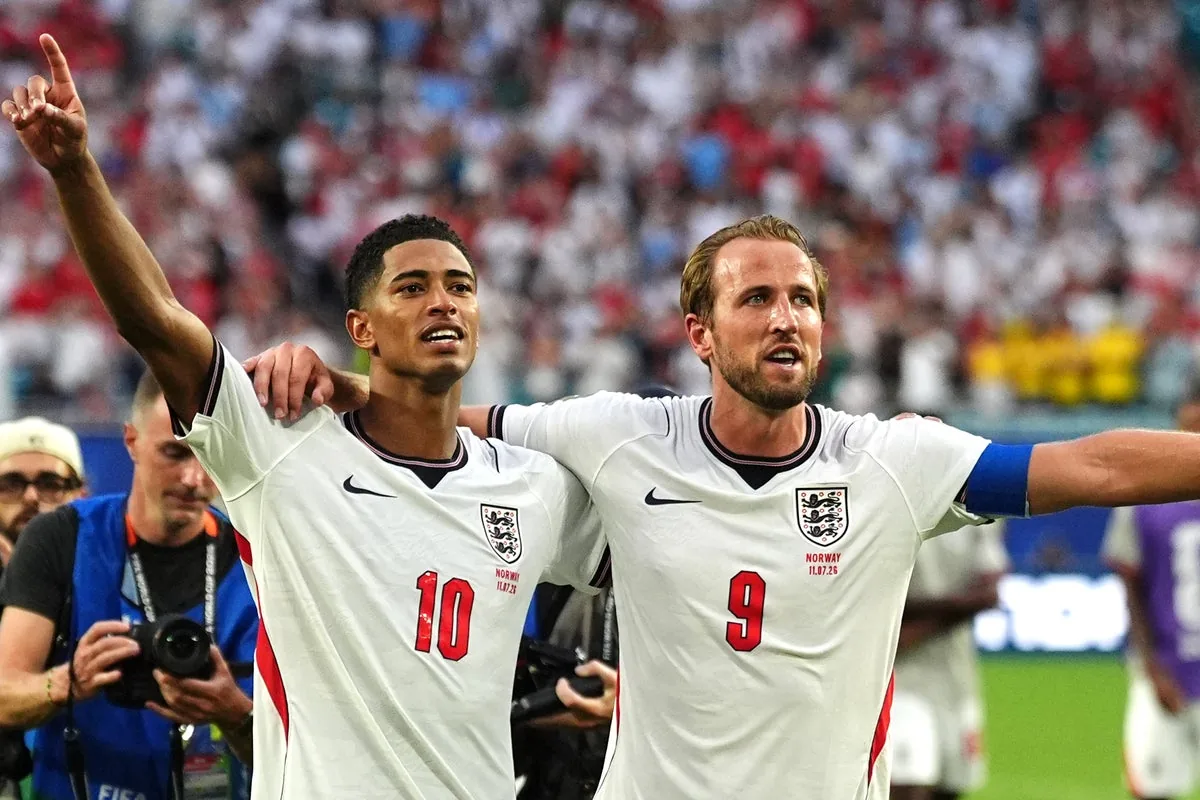
The English press has reflected the national anticipation, with headlines urging the team to succeed. The Daily Express encouraged readers to “Roar On” Thomas Tuchel’s men, while the Daily Mirror declared, “You can do this.” The Sun described the team as “Harry Kane’s brave band of heroes,” calling on them to “bring it home.” These headlines underscore the widespread hope and pressure on the England squad to advance to the final.
For England, there is a strong feeling that this tournament could end “60 years of hurt,” with the ghosts of past World Cup campaigns, including those from 40 and 30 years ago, looming large. While Messi’s tactical influence is expected to shape the game, the historical narrative of Maradona and the 1966 final provides a powerful emotional framework. The match is viewed as a privilege to witness, an epic encounter that will ultimately see one team earn the honor of reaching the final.
Read Also
Source: bbc.co.uk