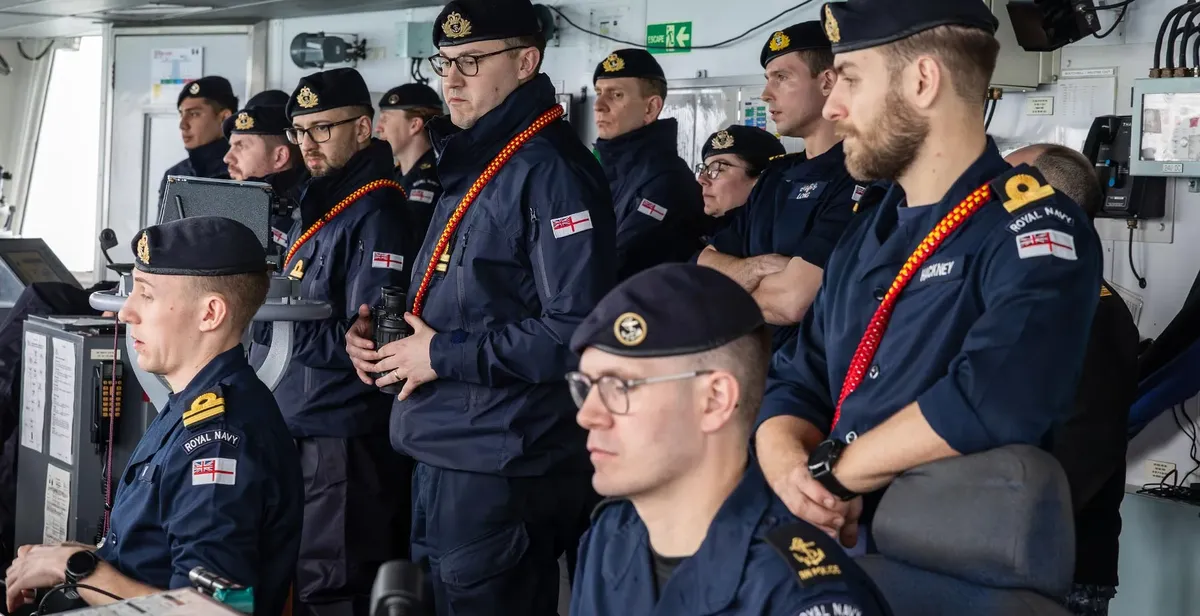
For the first time, all Royal Navy recruits will undergo a unified training program at HMS Raleigh, starting on June 1, 2026. This new approach reflects modern operational practices and aims to enhance the effectiveness of the fleet.
The new system will see recruits complete a 10-week Initial Naval Training course at HMS Raleigh before progressing to a redesigned 14-week commissioning course at the Britannia Royal Naval College in Dartmouth. This marks a significant change as it creates a shared starting point for both Officers and Ratings.
Previously, the Royal Navy maintained separate training pathways for Officers and Ratings. The new structure aims to streamline training and remove duplication across the pipeline. Rear Admiral Andrew Rose noted, “The Royal Navy has always adapted to maintain advantage over emerging threats.” He emphasized that this modernised system strengthens their ability to generate capable leaders.
The changes also support the First Sea Lord’s Warfighting Ready plan, which aims for operational readiness by 2029. Captain Andrew Bray stated, “Everyone completing all of our courses must meet the immovable high standard which the Royal Navy demands.” This indicates a commitment to maintaining rigorous standards amid evolving military needs.
Additionally, Royal Naval Reservists will follow an accelerated version of this pathway with an eight-week officer program. The Britannia Royal Naval College will continue its role as the leadership training center for officers.
Importantly, there will be no redundancies resulting from this realignment of training. The first officer cadet cohort is set to begin their initial training phase on June 1, 2026.
This move comes as the Royal Navy seeks to modernize its approach to create warfighting leaders equipped for future challenges. As Bray remarked, “This redesigned pathway supports the First Sea Lord’s Warfighting Ready plan by ensuring new Officers are better prepared for leadership in a fast-moving and contested environment.”