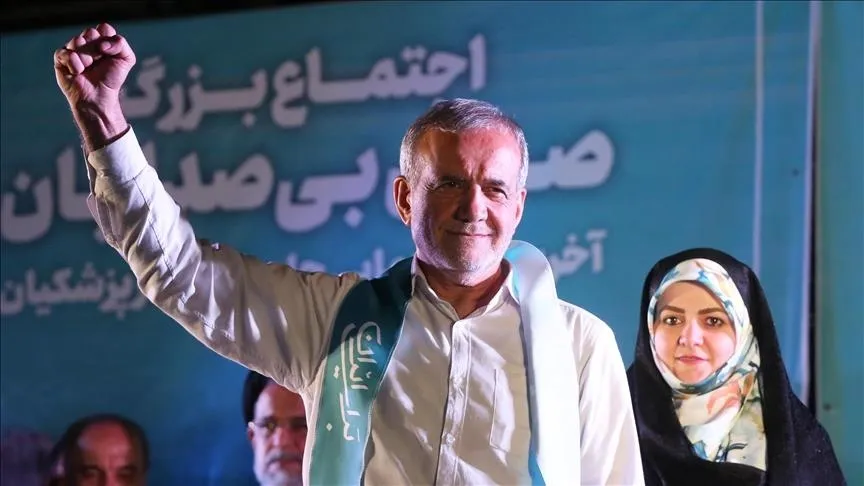
Controversial Offer from the Iranian President
On March 7, 2026, Iranian President Masoud Pezeshkian made a significant offer, stating that Iran would refrain from attacking neighboring countries if their airspace and U.S. bases were not utilized to launch attacks against Iran. This statement was made during a televised address, where Pezeshkian aimed to promote a message of peace amidst escalating tensions in the region.
Immediate Reactions and Internal Backlash
However, Pezeshkian’s offer has not been well-received domestically, leading to considerable backlash from various military and political factions within Iran. The Iranian foreign minister, Abbas Araghchi, emphasized the need for escalation rather than de-escalation, indicating a divide in the government’s approach to foreign policy. Furthermore, Pezeshkian’s remarks included an apology to the region, which some critics deemed inappropriate, especially in light of the recent killing of Ayatollah Ali Khamenei.
Wider Context of Tensions
The backdrop of Pezeshkian’s offer is marked by ongoing tensions in the Middle East, particularly following the U.S. attacks that have impacted numerous Iranian compatriots and regional stability. Reports indicate that at least 2,000 Iranians have been killed in various attacks, and the situation has led to calls for a new supreme leader to be appointed swiftly, reflecting the instability within Iran’s leadership.
Military Contradictions and Statements
In response to Pezeshkian’s offer, the Islamic Revolutionary Guard Corps (IRGC) issued a statement asserting that while they respect the interests and sovereignty of neighboring countries, they would continue to target U.S. bases in the region. This contradiction highlights the complexities of Iran’s military stance and the internal divisions regarding how to approach foreign threats.
International Reactions
Internationally, former U.S. President Donald Trump characterized Pezeshkian’s offer as a form of surrender, further complicating the narrative surrounding Iran’s military posture. The IRGC’s commitment to targeting U.S. interests in the region contradicts Pezeshkian’s more conciliatory approach, showcasing the challenges faced by the Iranian leadership in presenting a unified front.
Public Sentiment and Future Implications
Public sentiment in Iran appears to be divided, with some supporting Pezeshkian’s call for peace, while others view his apology and offer as a sign of weakness. Prominent figures, such as Ali Asghar Nakhaeirad, have criticized the president’s approach, stating that an apology to those perceived as accomplices in the martyrdom of Khamenei is unwise. This internal conflict raises questions about the future direction of Iranian politics and military strategy.
The situation remains fluid, with ongoing debates about the appropriate response to external pressures and the internal dynamics of power within Iran. As the country navigates these challenges, the implications of Pezeshkian’s offer and the subsequent backlash will likely shape Iran’s foreign policy and military actions in the coming months. Details remain unconfirmed.