A patent calculator helps players understand how a three-selection bet can turn into several possible outcomes. A patent is built from seven separate lines, so the final return is not judged only by whether all selections win. One correct pick can still create a return, while two or three winners can change the result more noticeably. This is why the tool is useful for checking total stake, possible return, and profit before reading a slip too quickly. A patent bet should always be treated as a structured bet type, not as a shortcut to a guaranteed result.
How the bet structure works
A patent uses three selections and combines them into singles, doubles, and one treble. This structure is the reason the bet has more coverage than a straight treble. The question what is a patent bet usually appears when a player sees seven lines on a slip and wants to know why the cost is higher than expected. A clear explanation helps separate the stake per line from the total stake. That distinction matters because the same three selections can produce different outcomes depending on how many of them win.
Singles, doubles and treble in one slip
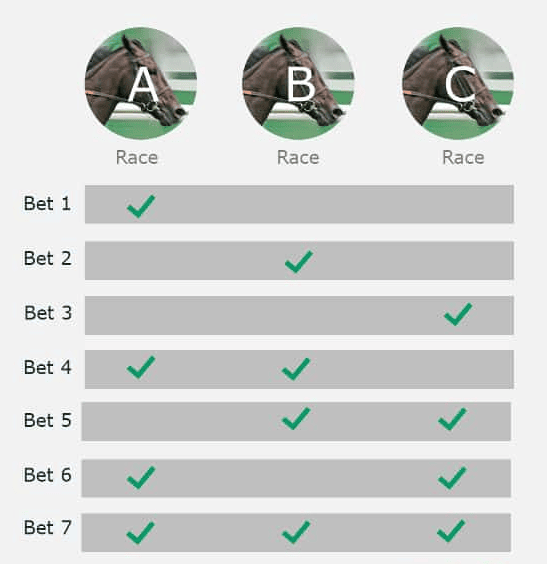
A patent includes several connected parts, but each part has its own role. The singles give the bet its basic coverage, the doubles add paired combinations, and the treble covers the full three-selection outcome. This is where patent bet explained content needs to stay practical, because the structure is easier to understand when each line is separated. Players should not read the treble as the whole bet. It is only one of seven total betting lines.
- Singles: three separate bets, one for each selection, so a single winning pick can still create a return even if the full combination fails.
- Doubles: three paired combinations built from the same selections, where each double needs both picks in that pair to win.
- Treble: one combined line that requires all three selections to win, usually creating the highest possible return in the patent.
- Total stake: seven betting lines multiplied by the stake per line, which means the final cost is higher than a single straight bet.
- Settlement: final returns depend on winning selections, losing selections, void outcomes, odds format, and any market-specific rules.
This structure makes the bet flexible, but it also makes the calculation more detailed. A player needs to know which lines are active before judging the final return.
Why one winning pick can still matter
One winning selection can matter because every pick has its own single line. If only one selection wins, the related single may return money while the doubles and treble lose. That does not automatically mean profit, because the total stake covers all seven lines. The return depends on the odds of the winning pick and the stake placed on each line. This is one reason patent bets can feel more forgiving than a straight treble, while still carrying a real cost.
Setting up the calculator correctly
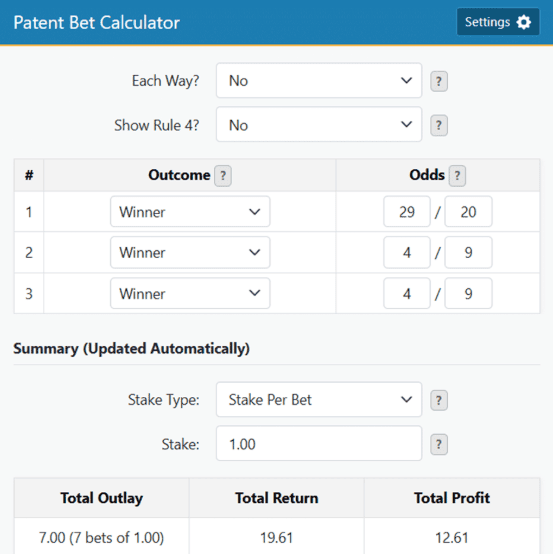
The inputs are only reliable when they are entered in the right order. The player should start with the three selections, then add odds, stake per line, and the result status for each pick. At this stage, a patent bet calculator should show total stake separately from potential return, because these figures are often confused. A clear setup also helps identify which parts of the patent are responsible for the return. When the form is filled carefully, the calculation becomes easier to read and compare.
Inputs to check before calculating
The player needs correct odds and a clear stake amount before checking the return. The stake should usually be entered per line, because a patent contains seven lines in total. At this stage, the tool can calculate a patent bet more accurately when the stake type, odds format, and selection details are all entered correctly. If the player enters total stake into a field meant for stake per line, the return estimate can become misleading. Voids, abandoned events, and changed prices can also affect the final settlement.
| Input field | Example | Why it matters |
| Selection one | First team, horse or market pick | Starts one single and several combinations |
| Selection two | Second team, horse or market pick | Builds doubles and the treble |
| Selection three | Third team, horse or market pick | Completes the seven-line structure |
| Stake per line | GBP amount | Determines the total cost of the bet |
| Result status | Win, lose or void | Changes which lines return money |
How result status changes the return
This matters because a void selection can change the way combinations are settled. Some tools reduce the affected lines, while others display a revised return after the result is applied. At this point, a patent betting calculator should allow the player to mark each selection as won, lost, or void without rebuilding the full slip. The player should also check whether the calculator supports different odds formats. A clean result field is especially useful when one selection settles differently from the others.
Reading returns, profit and stake
The tool should show more than a return figure when the player checks the slip. It should also show total stake and profit, because these numbers answer different questions. In the middle of this calculation, a patent calculator helps separate the amount paid back after settlement from the profit left after the original stake is deducted. This difference is important when only one or two selections win. Without that separation, a player may think a return is stronger than it really is.
Simple GBP examples for common outcomes
Stake examples work best when they show how many selections have won. A patent odds calculator helps by applying the selected odds to every active line. The key is not to promise a result, but to show how the structure behaves. One winner usually activates only a single, two winners can activate two singles and one double, and three winners activate all seven lines. This gives the player a clearer view of how outcomes build from the same three selections.
Common mistakes that change the calculation
A wrong-looking result often comes from entering the wrong stake type. One common mistake is confusing stake per line with total stake. In this situation, a patent calculator can make the error more visible by separating total stake, return, and profit.
- Stake type: entering total stake instead of stake per line can make the return look much higher or lower than expected.
- Odds format: copying fractional, decimal, or American odds into the wrong field can distort the estimate.
- Each way setting: switching it on without checking the total cost can double the stake quickly.
- Result status: marking a selection incorrectly as won, lost, or void changes several lines at once.
- Settlement rules: deductions, dead heats, and void outcomes can adjust the final return after the first estimate.
These checks make the final number easier to trust before the player compares return, profit and total cost. A careful review also prevents small input errors from changing several betting lines at once. The safest approach is to treat the calculator as a checking tool, not as a replacement for reading settlement rules.
Each way options and special settlement rules
Each way betting usually doubles the total stake because every selection has a win part and a place part. That extra coverage can be helpful for longer-priced selections, but it also makes the slip more expensive. In this situation, an each way patent bet calculator is useful when a player wants to understand both win and place parts before reading possible returns. The calculator should make this cost visible before showing any estimated payout. Clear stake visibility is more useful than a crowded screen full of unexplained numbers.
When each way settings increase total cost
Each way settings can change the whole calculation because the bet no longer has only win lines. The place part adds another layer, and the total commitment grows quickly. A patent bet calculator should show this clearly so the player understands the cost before comparing outcomes. Place terms, number of places, and market rules also need attention. If those settings are ignored, the estimate may not match the settled result.
| Pros | Cons |
| It separates win and place parts clearly, which helps the player understand why the total stake increases before returns are shown. | Place terms can be misunderstood when the player does not check the market rules before entering odds and stake. |
| It helps compare win-only and each way structures without rebuilding the full patent from the beginning. | Rule changes, deductions, or dead heats can make the settled return different from an early estimate. |
| It makes total exposure easier to read, especially when GBP stakes are spread across several lines. | |
| It can show how placed selections affect returns when longer-priced picks are included in the slip. |
Deductions, dead heats and void selections
Special settlement rules can change the return after the original estimate is made. A withdrawal may lead to a deduction, while a dead heat can reduce the payout on the affected selection. A void pick may also alter doubles or the treble rather than simply disappearing from the slip. The calculator can help, but it still depends on the accuracy of the rules entered or selected. This is why the final slip should always be compared with the market’s settlement terms.
FAQ about calculator use and patent bet basics
How should a player check the stake before using the tool?
The player should first confirm whether the stake is entered per line or as a total amount. This detail changes the final cost and can affect how the return is understood. A quick check before calculation helps avoid reading the result incorrectly.
Why can the total cost be higher than expected?
The total cost can rise because one slip may contain several connected betting lines. A small amount on each line can become larger once all parts are counted together. This is why the full stake should be reviewed before any result is compared.
What should be checked when one selection is void?
The player should check how the market settles a void outcome before trusting the final number. Some parts of the slip may be adjusted, reduced, or recalculated depending on the rules. The final return can therefore differ from the first estimate.
How should return and profit be read correctly?
Return is the amount paid back after settlement, while profit is what remains after the original stake is removed. These two figures should not be treated as the same thing. Reading them separately gives a clearer view of the actual result.