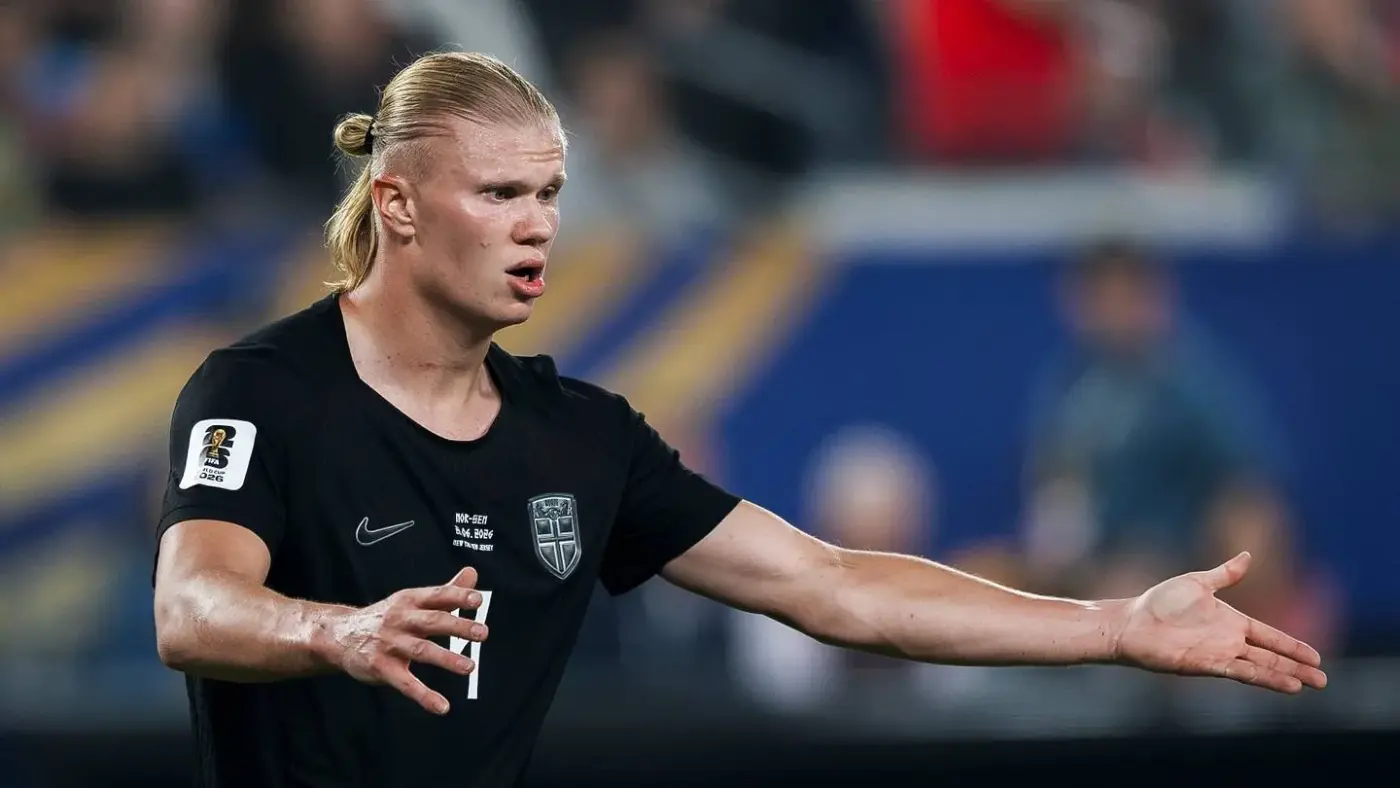
In a recent World Cup 2026 match, Norway faced France, with Norway’s manager, Ståle Solbakken, making substantial changes to the team’s lineup. These decisions included the absence of key players such as Erling Haaland from the starting XI, a move that surprised many observers.
Solbakken had previously indicated that difficult choices would be necessary in the intense environment of the tournament. Norway had already secured a spot in the round of 32 following victories against Iraq and Senegal, an achievement noted as significant for a nation that had not qualified for a World Cup group stage during Haaland’s lifetime. France also matched these results, setting up a contest for the top spot in Group I.
Strategic Team Changes
Solbakken’s strategy for the match against France involved numerous alterations to the starting lineup. He made 10 changes from the squad that played against Senegal. This meant that the entire frontline, including Haaland, was moved to the bench. Additionally, Martin Ødegaard, the nation’s captain, was among the substitutes.
The central defensive pairing also saw changes, with Torbjørn Heggem and Kristoffer Ajer being replaced. This altered what some considered an already vulnerable aspect of the team. In contrast, Didier Deschamps, the French manager, opted for his preferred starting lineup, featuring players such as Kylian Mbappé, Désiré Doue, Ousmane Dembélé, and Michael Olise.
Solbakken explained his approach, stating that while the game against France was important, the round of 32 was the primary focus. He emphasized the need for players to be rested both mentally and physically for the knockout stages, anticipating the possibility of extra time or penalties.
Despite arguments that players are accustomed to frequent matches, Solbakken highlighted the immense pressure of the World Cup. He also noted that Haaland was not solely focused on individual achievements like the Golden Boot, but rather on the team’s success, describing him as a team player who prioritizes the collective.
Match Events and Player Performances
During the game, France demonstrated an attacking style. Dembélé, who had been considered by some as a player who had not lived up to expectations, completed a hat-trick, becoming the third player in history to achieve this for France at the World Cup. This hat-trick was completed on the 29-minute mark, taking 22 minutes to score.
Early in the match, Mbappé hit the bar after 22 seconds, which, had it gone in, would have been among the fastest goals in World Cup history. Later in the second half, Doue scored, guiding a header into the top right corner after a cross from Barcola.
Norway had opportunities to score, including a penalty taken by Strand Larsen, which was parried by Maignan. Bobb also had a chance, but his shot was weak and easily saved. Aasgaard was involved in setting up Bobb’s opportunity. Tchouameni received a booking for a late challenge on Aasgaard.
Substitutions were made by both teams. For Norway, Falchener was replaced by Langas, while Nusa and Hauge came on for Bobb and Schjelderup. France brought on Barcola for Dembélé and Cherki for Olise. Upamecano was replaced by Konate.
The hydration break during the match provided an opportunity for players to regroup. Solbakken’s decision to rest key players was based on the team having already secured six points in the group stage, aiming to be strategic rather than overly ambitious.
Read Also
Source: theguardian.com