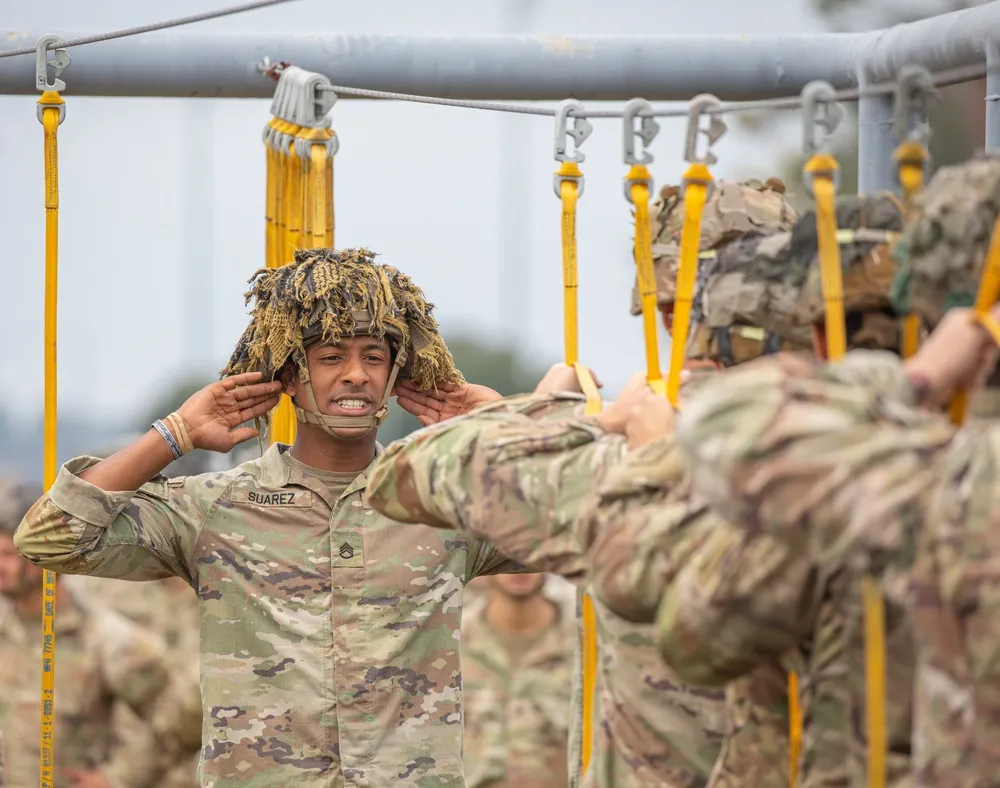
Who is involved
The 82nd Airborne Division, based at Fort Bragg, North Carolina, has a storied history, having been involved in nearly every major U.S. conflict since its establishment in 1917. Known for its rapid deployment capabilities, the division is specially trained for high-risk missions, including parachuting into contested areas. This elite unit contains around 18,000 paratroopers, with approximately 3,000 soldiers forming the Immediate Response Force (IRF), which can deploy within 18 hours of notification.
Before the recent announcement, expectations surrounding military involvement in the Middle East were cautious, with many analysts predicting a restrained approach to escalating tensions, particularly with Iran. However, the situation has taken a decisive turn, as the Pentagon prepares to deploy approximately 1,000 soldiers from the 82nd Airborne Division’s 1st Brigade Combat Team to the region.
This shift in military strategy comes in response to rising tensions and potential threats in the area. The decision to mobilize these troops underscores the U.S. commitment to maintaining stability and readiness in a volatile environment. White House spokeswoman Anna Kelly emphasized, “President Trump always has all military options at his disposal,” highlighting the administration’s willingness to act decisively.
The immediate effects of this deployment are multifaceted. For the soldiers and their families, this means a sudden shift from routine life at Fort Bragg to the uncertainties of a conflict zone. The soldiers of the 82nd Airborne Division, known for their bravery and skill in joint forcible entry operations, are prepared to parachute into hostile territory to seize key objectives. This capability is crucial for the U.S. military’s strategic interests in the region.
Experts suggest that the deployment of the 82nd Airborne Division could serve as a deterrent against potential aggressors in the Middle East. The presence of such a capable force may influence the calculations of adversaries, particularly in light of the division’s rapid response capabilities. The 82nd Airborne specializes in operations that require swift action, which could be pivotal in any emerging crisis.
As the situation unfolds, the implications for U.S. foreign policy and military strategy will be closely monitored. The deployment of the 82nd Airborne Division not only reflects a shift in military posture but also raises questions about the long-term strategy in the region. Will this deployment lead to further military engagement, or will it stabilize the situation? Details remain unconfirmed.
In summary, the mobilization of the 82nd Airborne Division to the Middle East marks a significant moment in U.S. military history. With its rich legacy and rapid deployment capabilities, the division is poised to play a crucial role in addressing the challenges that lie ahead. As communities rally around the troops and their families, the nation watches closely, hoping for a peaceful resolution to the tensions that have prompted this decisive action.