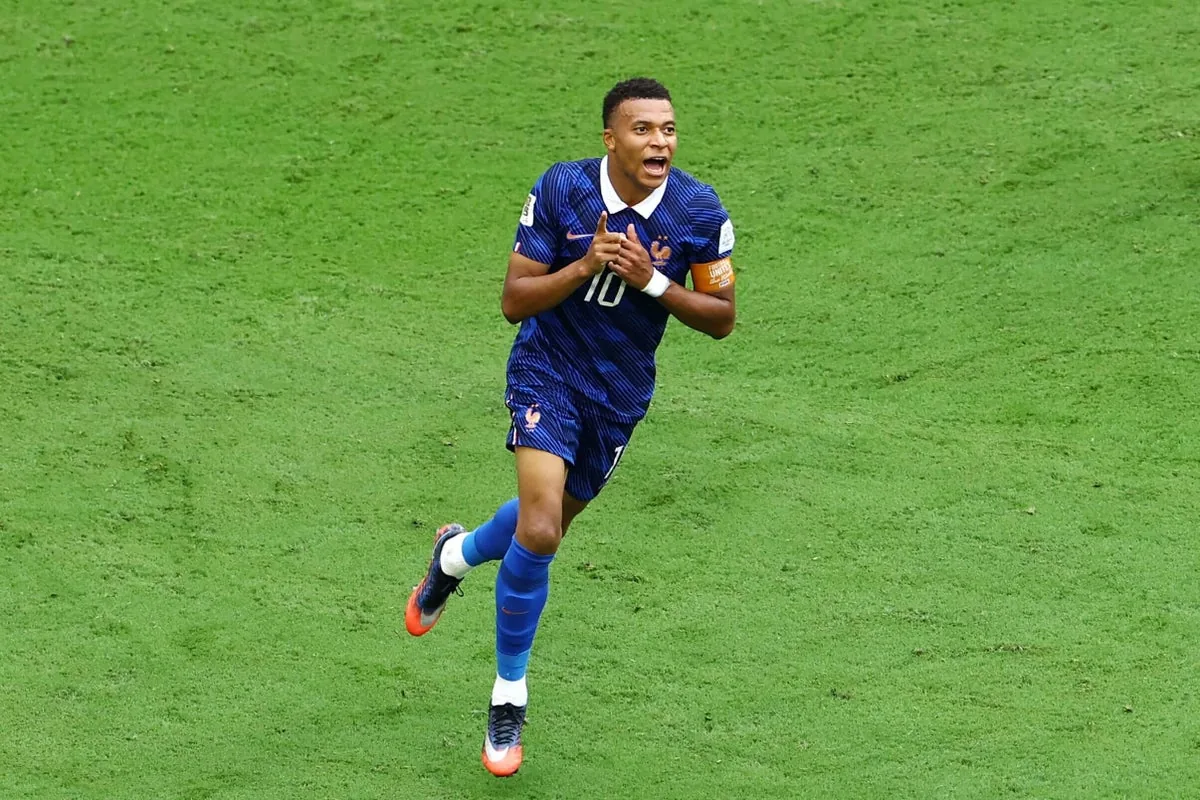
The World Cup Golden Boot race is reaching its conclusion, with several top players vying for the award. Among the leading contenders are Kylian Mbappe of France and Lionel Messi of Argentina, both of whom have delivered strong performances throughout the tournament. The competition for the Golden Boot has been described as one of the most exciting in the tournament’s history, captivating fans with high-scoring displays from renowned athletes.
The criteria for winning the Golden Boot are straightforward: the player with the most goals claims the award. In cases where players are tied on goals, the number of assists serves as the primary tie-breaker. Should a tie persist after considering assists, the award is then determined by the goals-per-minute ratio, favoring the player who scored their goals in fewer minutes played.
Current Standings and Key Contenders
As the tournament progresses, the standings show Kylian Mbappe currently in the lead. Mbappe has accumulated 10 goals and 4 assists, playing 769 minutes. Following him closely is Lionel Messi, who has scored 8 goals and provided 4 assists over 712 minutes. These two players have been central to their respective teams’ campaigns.
Other notable players who have performed well include Jude Bellingham of England, with 7 goals and 1 assist in 698 minutes. Erling Haaland of Norway also scored 7 goals, though without any assists, in 537 minutes. Ousmane Dembele of France has contributed 6 goals and 2 assists across 648 minutes, while England’s Harry Kane has 6 goals and 1 assist in 732 minutes. Mikel Oyarzabal of Spain has scored 5 goals and made 1 assist in 599 minutes.
Haaland’s campaign concluded with Norway’s elimination, meaning he will not have further opportunities to add to his goal tally. Similarly, Oyarzabal, despite a respectable performance, faces a challenging path to claim the award, as Spain’s overall goal count in the tournament has been comparatively lower.
Tie-Breaker Rules Explained
The tie-breaker rules are crucial in a tightly contested race like this. The first criterion, assists, has been in place since 1992. An example of this was in 2010 when Thomas Muller won the award over other players who had the same number of goals, due to his higher assist count. In 2006, the goals-per-minute ratio was introduced as a secondary tie-breaker, to be used if both goals and assists are identical.
This system means that even if Messi were to match Mbappe’s goal count, the number of assists and minutes played would become decisive. Currently, if the tie-breaker rules were applied to their present statistics, Mbappe would have an advantage over Messi due to his goals-per-minute ratio, assuming Messi plays the full duration of the final match.
The Golden Boot award has a rich history, with past winners including Just Fontaine, who holds the record for most goals in a single tournament with 13 goals in 1958. Other iconic recipients include Gerd Muller, Ronaldo, and Miroslav Klose. Mbappe himself was the winner in 2022 with 8 goals. No player has ever won the Golden Boot twice, and Messi has yet to claim this particular award.
The final stages of the tournament will determine who ultimately secures the Golden Boot, with the outcome potentially hinging on the performances in the remaining matches.
| Year | Golden Boot Winner | Goals |
|---|---|---|
| 1930 | Guillermo Stábile (Argentina) | 8 |
| 1934 | OldÅich Nejedlý (Czechoslovakia) | 5 |
| 1938 | Leônidas (Brazil) | 7 |
| 1950 | Ademir (Brazil) | 9 |
| 1954 | Sándor Kocsis (Hungary) | 11 |
| 1958 | Just Fontaine (France) | 13 |
| 1962 | Flórián Albert (Hungary) Valentin Iva… | 4 |
| 1966 | Eusébio (Portugal) | 9 |
| 1970 | Gerd Müller (West Germany) | 10 |
| 1974 | Grzegorz Lato (Poland) | 7 |
| 1978 | Mario Kempes (Argentina) | 6 |
| 1982 | Paolo Rossi (Italy) | 6 |
| 1986 | Gary Lineker (England) | 6 |
| 1990 | Salvatore Schillaci (Italy) | 6 |
| 1994 | Oleg Salenko (Russia) Hristo Stoichkov… | 6 |
Read Also
Source: independent.co.uk