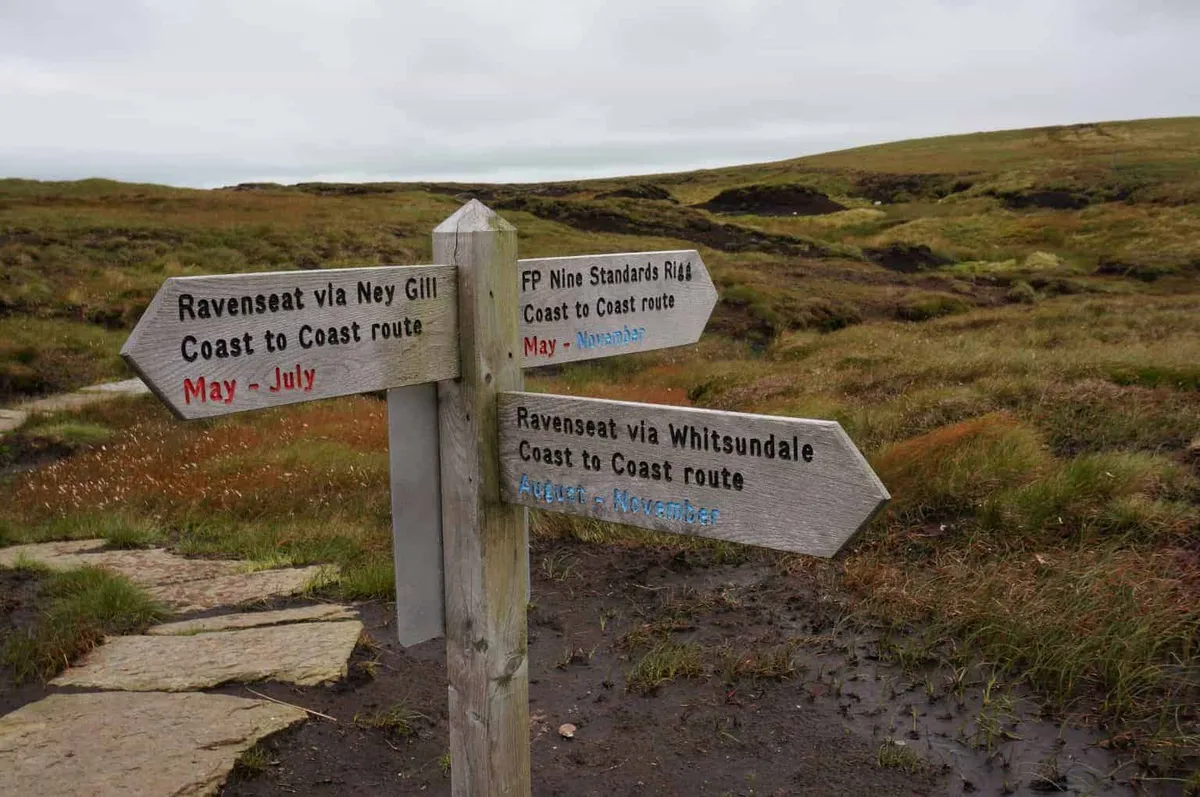
The Coast to Coast Walk, first envisioned by Alfred Wainwright in 1973, has long been a cherished route for walkers seeking to traverse the stunning landscapes of Northern England. Previously, this 190-mile (305.7 km) path, which begins at St Bees in Cumbria and concludes at Robin Hood’s Bay in North Yorkshire, was celebrated but lacked official recognition as a national trail.
However, a significant shift occurred recently when the path was officially designated as England’s newest national trail. This momentous change came after a £5.5 million investment aimed at upgrading the trail to meet National Trail standards. Such an upgrade not only enhances the walking experience but also solidifies the path’s status as a must-visit for outdoor enthusiasts.
The immediate effects of this recognition are already being felt. Each year, over 6,000 people complete the full Coast to Coast Walk, and with the new status, this number is expected to rise. Notably, 99% of these walkers take advantage of local food services, and 77% choose to stay in local accommodations, directly benefiting the communities along the route.
Marian Spain from Natural England remarked, “The Coast to Coast Path showcases some of Northern England’s most treasured landscapes and today marks the completion of four years of work to give this iconic route the status it deserves.” This sentiment echoes the long-held belief that the path is not just a trail but a vital connection between communities and nature.
Baroness Hayman added, “The Coast to Coast Path gives the public the opportunity to explore some of our country’s most beautiful scenery.” This upgrade not only enhances the walking experience but also fosters a deeper appreciation for the diverse landscapes that the path traverses, including mountains, valleys, and sea-cliffs.
As the path gains popularity, local businesses are poised to thrive, creating a ripple effect that supports the regional economy. The investment in the trail is not merely about enhancing a walking route; it is about revitalizing local communities and encouraging sustainable tourism.
Alfred Wainwright once described the countryside as “beautiful almost everywhere, yet extremely varied in character.” With the Coast to Coast Walk now officially recognized, more people will have the chance to experience this beauty firsthand.
As the trail continues to attract walkers from near and far, the future looks bright for both the Coast to Coast Walk and the communities it connects. Details remain unconfirmed regarding the long-term impacts of this upgrade, but the initial signs are promising for both tourism and local economies.