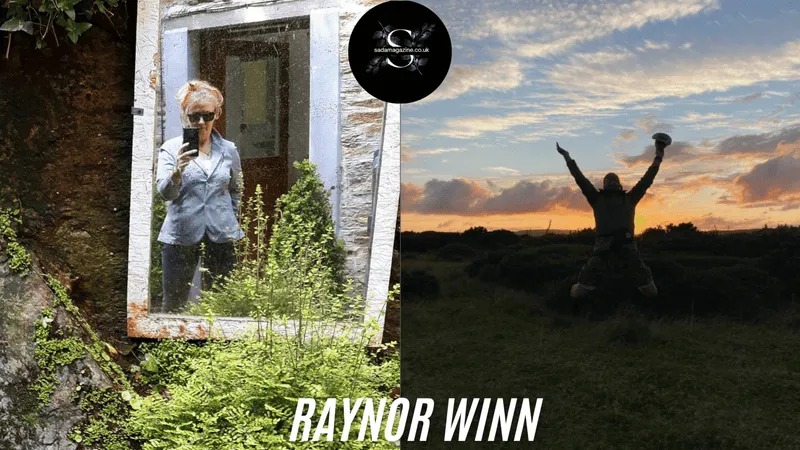
Raynor Winn, an author who captured hearts with her memoirs, particularly The Salt Path, has recently found herself at the center of a growing controversy. This comes after revelations about her past, including an embezzlement incident that led to a significant financial burden. In 2008, Winn, whose real name is reported to be Sally Walker, embezzled approximately £64,000 from her former employer, Martin Hemmings. To address this debt, she and her husband took a loan from a family member.
Winn’s literary journey began with a book published in 2012 under the alias Izzy Wyn-Thomas, which was sold as part of a prize draw to win their home in north Wales. This initial foray into writing was a significant step for her, as she noted, “It’s the first thing I’ve written since I was a teenager leaving school – the first thing.” However, the motivations behind her choice of a pseudonym remain unclear, and details remain unconfirmed.
In 2018, Winn’s life took a transformative turn with the release of The Salt Path, which documented a poignant 630-mile coastal walk taken after losing their home. This memoir not only resonated with readers but also earned her a £10,000 prize for debut writers. The book’s success led to its adaptation into a film featuring Gillian Anderson and Jason Isaacs, further solidifying Winn’s place in the literary community.
However, an investigation by The Observer in 2025 raised questions about the accuracy of the life story presented in The Salt Path. Critics allege that it contained misleading information, prompting further scrutiny of Winn’s narrative. In response to these claims, the BBC Sounds podcast Secrets of the Salt Path has begun to explore the truth behind her memoir, inviting listeners to engage with the complexities of her story.
Winn’s journey has sparked a dialogue about the nature of storytelling and authenticity. As she stated, “When you tell a story, the first person you must convince is yourself; if you can make yourself believe it’s true, then everyone else will follow.” This sentiment resonates deeply within the community, as many grapple with the implications of her past and the impact of her writing.
As the conversation around Raynor Winn continues to unfold, observers are keenly watching how this will affect her future endeavors and the reception of her works. The literary community remains engaged, eager to see how Winn will navigate this challenging chapter of her life.