Spain claims second World Cup
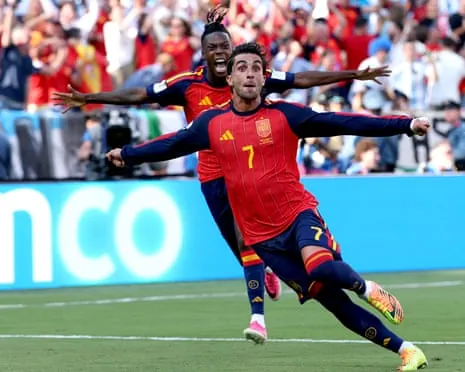
Spain has secured its second World Cup title, defeating Argentina 1-0 in extra time. The decisive goal came from Ferran Torres in the 106th minute of a match marked by Argentina’s defensive tactics and a late red card. Spain dominated possession throughout the game, registering 20 shots compared to Argentina’s two.
The winning goal originated from a cross by Pedro Porro, which Nico Williams kept in play before Torres fired past Argentina’s goalkeeper, Emi Martínez. Martínez had made several saves to keep his team in contention, but Spain’s persistent pressure eventually paid off.
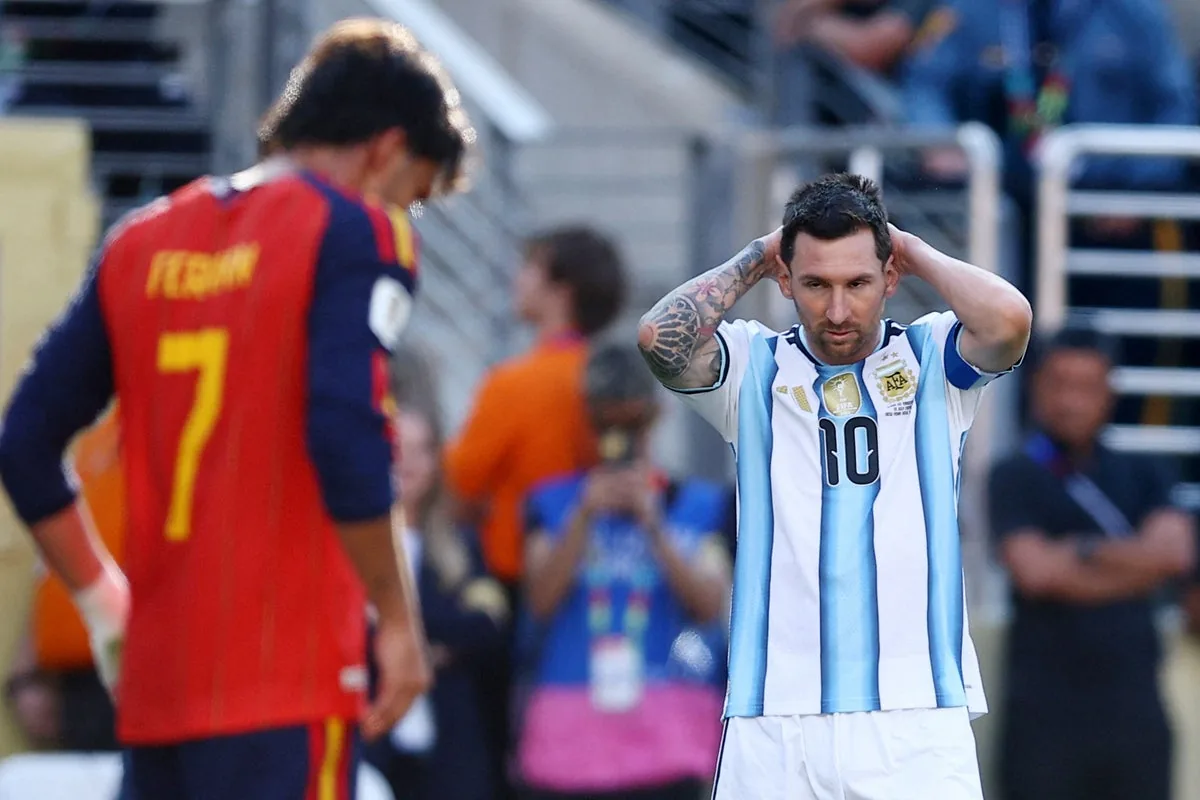
Argentina’s strategy, which involved breaking up play and committing fouls, ultimately backfired. Enzo Fernández received two yellow cards, leading to his dismissal shortly before extra time began, leaving Argentina with 10 men. The team did not register a shot on goal until the 115th minute, when Lionel Messi, in what was described as his final World Cup appearance, directed a shot towards Mikel Merino.
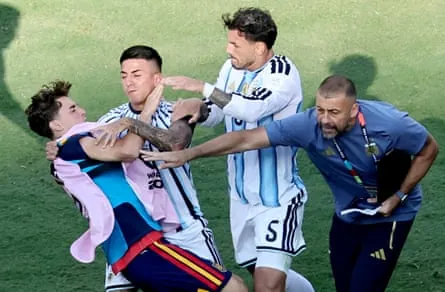
Following the final whistle, tensions escalated, leading to confrontations between players. Nahuel Molina and Leandro Paredes of Argentina were notably aggressive. Paredes was sent off after shoving Spain’s Gavi to the ground, contributing to what some described as a dismal end to the tournament for Argentina.
Match delays and pitch conditions
The final experienced several unusual delays. The match kicked off six minutes late due to extensive pre-game entertainment. This included a rendition of the Star Spangled Banner by Jennifer Hudson, a performance of the Fifa anthem by Robbie Williams, and a speech by Tom Cruise. The half-time interval was also significantly extended, lasting 27 minutes and 20 seconds, well beyond the standard 15 minutes stipulated by the game’s laws. This extended break featured performances by artists such as Madonna and Justin Bieber, marking the first time pop stars were permitted on the pitch during a World Cup final.
Concerns were also raised about the playing surface at the New York New Jersey Stadium. Reports indicated that the pitch was ‘bobbly and dry,’ with some critics, including former England captain Wayne Rooney, describing the half-time show as ‘crap.’ The condition of the pitch was criticised by figures like Ian Wright, who called it ‘ridiculous, poor, terrible,’ suggesting it was not conducive to fluid attacking play. Earlier in the tournament, Brazil star Vinicius Jr had also commented on the pitch, noting that the weather and heat caused the grass to dry out quickly, slowing down the game.
Atmosphere and broader context
The World Cup final was described as a blend of showbiz and sport, with the spectacle off the pitch often overshadowing the game itself. Fifa president Gianni Infantino watched the match from Donald Trump’s private box, joined by notable figures including the Canadian prime minister, Mark Carney, Mexico’s president, Claudia Sheinbaum, and King Felipe of Spain. Fifa also released an 11-page list of celebrities who attended, many of whom were scheduled to perform.
The 3pm ET kick-off time in New Jersey, corresponding to 8pm BST, was reportedly chosen with the European television market in mind, alongside local and South American audiences. However, playing in the afternoon’s hottest part, with temperatures reaching 27C / 80.6F, may have impacted the players. Unlike the air-conditioned semi-final venues such as Atlanta’s Mercedes Benz Stadium and the Dallas Stadium, the New York New Jersey Stadium is an open-air venue exposed to the elements.
Despite the overall excitement of the tournament, some observers noted that finals often do not deliver the same level of drama as earlier matches, citing previous examples like Germany’s 1-0 victory over Argentina in 2014 and Spain’s 1-0 win over the Netherlands in 2010, both decided in extra time. The 2022 World Cup final between Argentina and France was highlighted as an exception, remembered for its exceptional quality within the high-pressure environment of a final.
Read Also
Source: theguardian.com