Understanding Solar Storms and Their Effects
Solar storms, also known as coronal mass ejections (CMEs), are significant bursts of solar wind and magnetic fields rising above the solar corona. When these storms erupt from the sun, they can have profound effects on Earth’s atmosphere, particularly when they collide with the planet’s magnetic field.
These solar events can lead to space weather phenomena that are crucial not only for satellite operations and communication systems but also for creating some of the most breathtaking natural displays on Earth, notably the Aurora Borealis, commonly referred to as the Northern Lights.
The Science Behind the Aurora Borealis
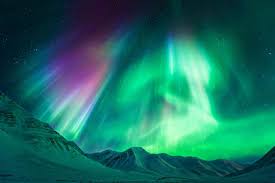
The Aurora Borealis occurs when charged particles emitted from the sun during solar storms interact with Earth’s magnetosphere. This interaction causes the particles to collide with gases in Earth’s atmosphere, leading to the creation of vibrant lights that dance across the polar night skies. The colours of the aurora can range from greens and pinks to reds, yellows, blues, and violets depending on the type of gases involved and the altitude at which the interactions take place.
In particular, oxygen at high altitudes can produce red and green colours, while nitrogen can create blue and purple hues. These displays are best viewed in high-latitude regions near the magnetic poles, making them a popular attraction in countries like Norway, Canada, and Alaska.
Recent Solar Storm Events
In recent weeks, the sun has experienced heightened levels of solar activity, prompting the National Oceanic and Atmospheric Administration (NOAA) to issue alerts for geomagnetic storms. Reports indicate that a series of solar flares have reached Earth, creating ideal conditions for larger-than-usual displays of the Aurora Borealis. Particularly during the recent CMEs, sightings of the aurora have been reported further south than usual, thrilling stargazers across multiple states in the US and parts of Europe.
Conclusion: The Importance of Monitoring Solar Activity
The relationship between solar storms and the Aurora Borealis highlights the importance of monitoring solar activity not just for scientific inquiry but for mitigating potential risks to technology we rely on. Space weather can disrupt satellite signals, navigation systems, and even power grids.
As more extreme solar weather events are anticipated due to the solar cycle, it becomes increasingly important for researchers to observe these phenomena. For readers, witnessing the Aurora Borealis serves not only as a reminder of nature’s beauty but also of the dynamic and interconnected systems that influence life on Earth.