Introduction
The periodic table is one of the most pivotal tools in chemistry, providing a systematic framework for understanding the elements that constitute matter. Since its conception in the 19th century, the periodic table has not only organized the known elements but has also revealed the patterns and relationships among them. In recent years, its relevance has extended beyond traditional chemistry education, influencing fields such as biology, physics, and material science.
The Structure of the Periodic Table
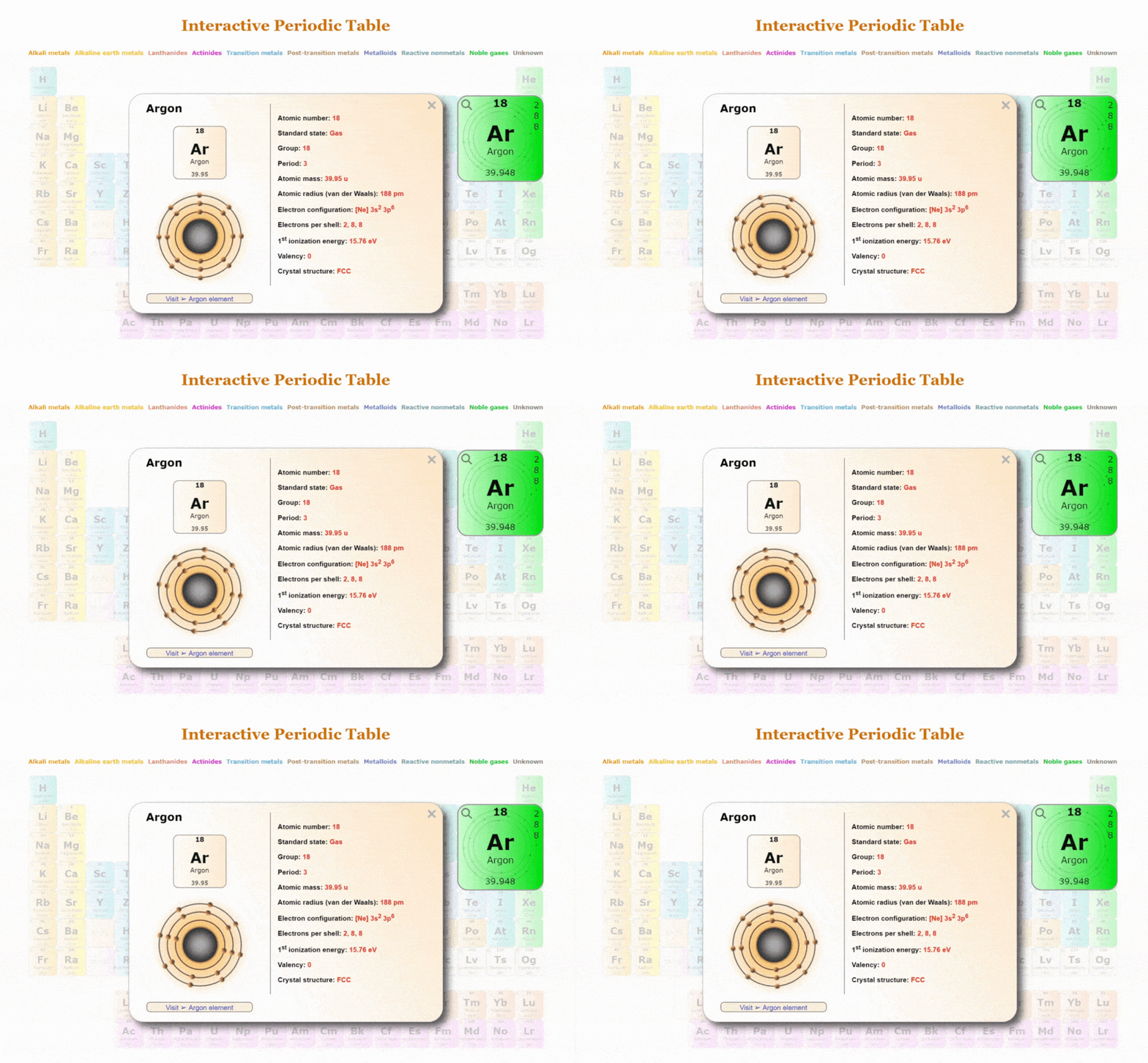
The periodic table arranges elements in order of increasing atomic number, which corresponds to the number of protons in an atom’s nucleus. The layout of the table is crucial; it consists of rows known as periods and columns called groups or families. Elements within the same group typically share similar properties, making it easier for scientists and students to predict behavior. For example, alkali metals, found in group 1, are known for their high reactivity, while noble gases in group 18 are characterized by their inertness.
Recent Developments
Recent advancements in chemistry and materials science have reignited interest in the periodic table. The discovery of new elements, such as Tennessine and Oganesson, has prompted debates about the potential for a revised table that includes undiscovered or theorised elements beyond the current 118. Moreover, research into the properties of elements continues to yield valuable insights, particularly in nanotechnology and renewable energy.
Significance for Education and Research
The periodic table serves not only as a teaching aid but also as a foundational resource for scientific research. Educators employ it to explain elemental concepts, bonding, and chemical reactions. The table’s design promotes critical thinking and problem-solving skills as students analyse and predict the behaviour of elements. Researchers rely on the periodic table for guidance in experiments and innovations, making it an integral tool in advancing scientific knowledge.
Conclusion
In conclusion, the periodic table remains a vital component of modern science, encapsulating the essence of chemical and physical properties of elements. As educational methodologies change and scientific research progresses, the periodic table adapts to continue reflecting the ever-evolving understanding of the natural world. Its importance cannot be overstated, particularly as society increasingly relies on advanced materials and sustainable solutions driven by chemical knowledge.