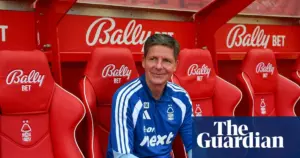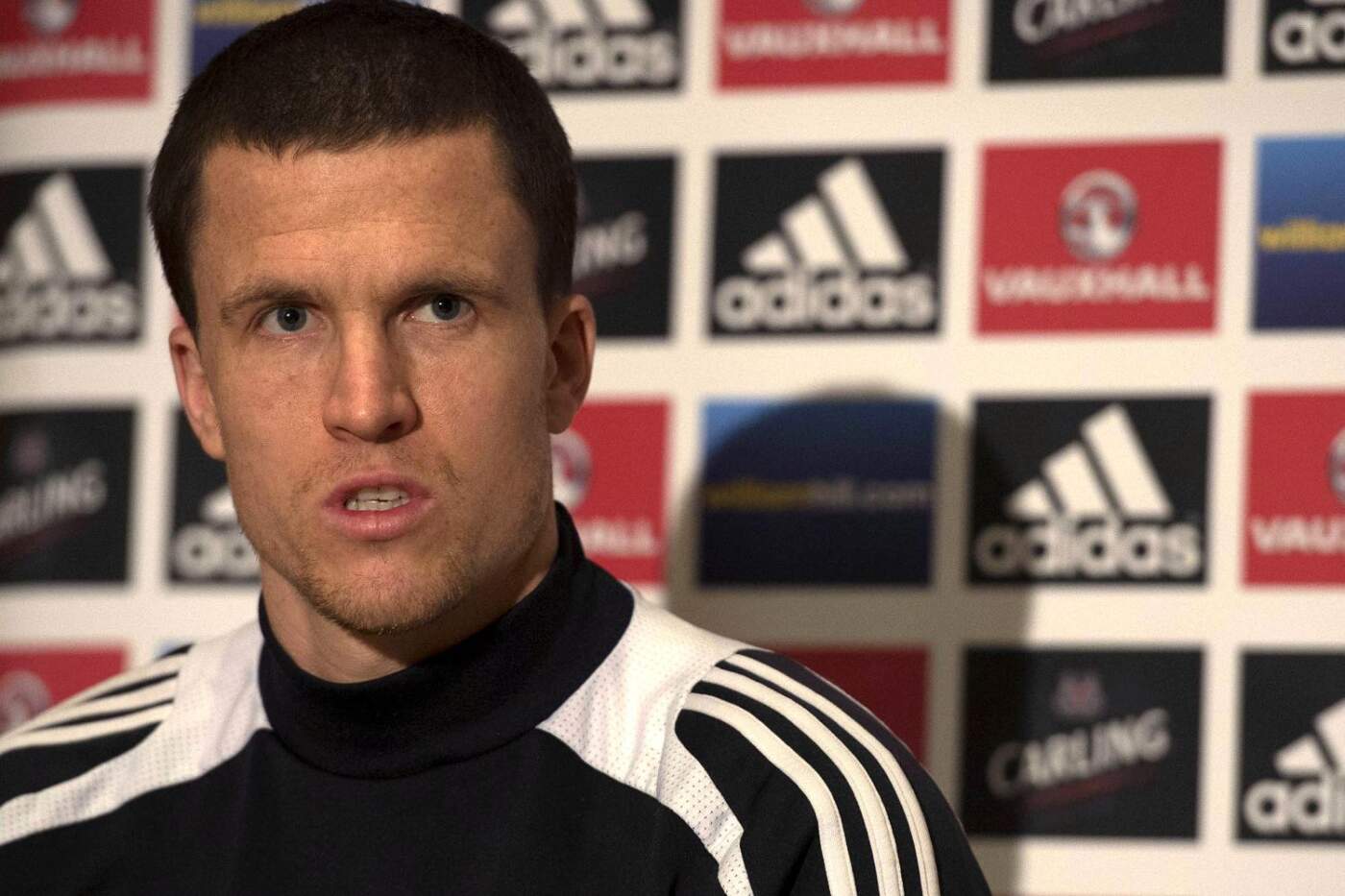
Gary Caldwell’s football career has come back to Wigan, the club where his playing days ended and his senior managerial career began. The former Scotland defender returned to Wigan Athletic as head coach in February 2026, adding another chapter to a career built across Celtic, Scotland, Exeter City and the Latics.
For readers searching for Gary Caldwell, the story is not only about a former centre-back moving into the dugout. It is about a player who learned leadership the hard way, won major honours, took early knocks as a manager, and then rebuilt enough credibility to earn another shot at a familiar club.
Gary Caldwell’s career at a glance
| Category | Detail |
| Full name | Gary Robert Caldwell |
| Born | 12 April 1982, Stirling, Scotland |
| Playing position | Defender |
| Senior Scotland caps | 55 |
| Major clubs as a player | Newcastle United, Hibernian, Celtic, Wigan Athletic |
| Current role | Wigan Athletic head coach |
| Previous senior managerial roles | Wigan Athletic, Chesterfield, Partick Thistle, Exeter City |
| Notable managerial honour | League One Manager of the Year, 2015/16 |
Caldwell’s route has rarely been neat. He moved south young, had to wait for a proper first-team foothold, became a decorated Celtic defender, captained Scotland, lifted silverware at Wigan and then entered management earlier than many former players.
That early move into coaching shaped the rest of the story.
From Newcastle prospect to Scotland regular
Caldwell left Scotland for Newcastle United as a teenager, joining one of English football’s most visible clubs at a time when breaking into the first team was a serious ask. He did not become a Newcastle regular. Few young centre-backs do at that level without a long apprenticeship.
His senior identity formed elsewhere. Hibernian gave him regular football, and that period helped turn him from a prospect into a defender trusted in the Scottish game. Caldwell was not sold as a glamour player. His value came from reading the match, organising those around him and being comfortable enough on the ball to play out rather than simply clear his lines.
Those traits followed him into his international career. Scotland used him as a centre-back who could defend aggressively but also pass into midfield. His national-team spell lasted more than a decade and included 55 caps.
One moment still stands out: his winner against France at Hampden Park in 2006. For a defender, especially one often judged more by reliability than highlights, it became the kind of goal that fixed his name in Scottish football memory.
Celtic made him a title-winning defender
Celtic was the stage where Caldwell became a higher-profile figure in British football. He arrived in 2006 and played through a demanding period at Parkhead, where centre-backs are measured not only by defending but by how they handle expectation.
He won two Scottish league titles with Celtic, along with Scottish Cup and Scottish League Cup medals. His best individual recognition came in 2009, when he was named Scottish Football Writers’ Association Player of the Year.
That award mattered. Caldwell was never a player built around flair or headline moments every week. Recognition from writers reflected the consistency of his performances and the role he had in a side expected to win.
Celtic also hardened the scrutiny around him. Mistakes at Old Firm level do not pass quietly. Neither do strong performances. In that environment, Caldwell developed a public profile that was more complicated than a simple “solid defender” label.
Wigan Athletic changed the shape of his career
Caldwell joined Wigan Athletic from Celtic in January 2010. The move took him into the Premier League and into a club where his leadership qualities quickly became part of his identity.
He was named Wigan captain ahead of the 2010/11 season and was part of the club’s most memorable era. Wigan’s FA Cup triumph in 2013 remains one of the great shocks in modern English football, and Caldwell was club captain during that historic run.
His playing career ended at Wigan in 2015. The transition from player to coach came quickly. For some former players, retirement creates distance from the dressing room. Caldwell barely had any.
That speed had benefits and risks. He knew the club, knew the standards, and had already been seen as a leader. But managing a squad is different from captaining one. The authority is not the same. Neither is the pressure.
How Gary Caldwell became a manager
Wigan gave Caldwell his first senior management job in 2015. It was a difficult starting point. The club was heading towards relegation from the Championship, and the new manager had little time to change the direction of the season.
The next campaign changed the conversation. Caldwell led Wigan back up from League One in 2015/16 and was named League One Manager of the Year. It remains the clearest early proof that he could organise a team over a full season and deliver promotion-level results.
But the rise did not settle everything. Wigan dismissed him in October 2016 after a poor start back in the Championship. It was a sharp reminder of how little credit survives a bad run once expectations move.
Caldwell’s managerial career after that did not move in a straight line. Chesterfield and Partick Thistle brought short, difficult spells rather than steady progress. Those jobs are part of the record, not footnotes. They showed the other side of early management: limited time, pressure from the table, and very little room for theory.
Exeter City rebuilt his reputation
Exeter City was the job that gave Caldwell space to develop again. He was appointed in October 2022, taking over a supporter-owned club trying to establish itself in League One.
That context matters. Exeter do not operate like a club trying to buy their way through the division. Their model leans on development, recruitment discipline and giving younger players a route into the first team. Caldwell had to manage within that reality, not around it.
Across three-and-a-half seasons, he helped keep Exeter competitive in League One and managed the club 180 times. His final record there was not a simple promotion story, but the club credited him with building a competitive squad, giving young players opportunities and strengthening Exeter’s place in the division.
There was also cup progress. In 2024, Caldwell became the first Exeter manager since 1981 to take the club to the fourth round of the FA Cup, where they pushed Nottingham Forest to a penalty shootout.
That spell did something important for him personally. It moved the conversation away from the difficult exits at Chesterfield and Partick Thistle and back towards coaching detail, player development and steady League One work.
Gary Caldwell returns to Wigan
Caldwell left Exeter in February 2026 to return to Wigan Athletic, this time as head coach. It was not just another appointment. Wigan is the club where he played Premier League football, captained the side, ended his playing career and first stepped into senior management.
There is sentiment in that. There is pressure too.
A second spell at a former club can be awkward. Supporters remember the good parts, but they also remember the ending. Caldwell’s first time as Wigan manager included promotion from League One, then a dismissal a few months into the following Championship campaign. The new version of Caldwell arrives with more scars and more evidence behind him.
Exeter gave him a longer stretch in one job. Wigan now tests whether that experience can translate back into a club with bigger memories of him and sharper expectations.
What defines Gary Caldwell as a manager?
Caldwell’s managerial identity is still developing, but some themes are clear.
He comes from a defender’s background, so structure and organisation have naturally followed him into coaching. His teams have often needed to be clear about roles without losing the courage to play. At Exeter, he worked in a setting where developing players was not optional; it was part of the club’s survival plan.
He has also had to manage failure in public. That matters in football management. Caldwell’s early promotion with Wigan could have made his career look smooth on paper. The jobs that followed made it more realistic. He has been sacked, questioned and forced to rebuild.
The return to Wigan is therefore not the story of a young coach getting a romantic homecoming. It is a more interesting test: whether a manager shaped by difficult jobs can make better decisions the second time in a place that already knows him.
Why his journey still attracts attention
Gary Caldwell remains a familiar name to several groups of UK football fans. Scotland supporters remember the France goal and the 55 caps. Celtic fans remember a title-winning defender who split opinion but delivered enough to win major individual recognition. Wigan fans remember the captain, the FA Cup era and the promotion-winning manager.
That overlap gives his career unusual weight. He is not remembered in one place for one thing.
His story also fits a wider pattern in British football: former international defenders trying to translate authority on the pitch into authority in the technical area. Some make the shift easily. Most do not. Caldwell’s path sits somewhere more honest, with achievement and setbacks in roughly equal view.
FAQ
Gary Caldwell is a Scottish former professional footballer and football manager. He played as a defender for clubs including Hibernian, Celtic and Wigan Athletic, and won 55 senior caps for Scotland.
Gary Caldwell is head coach of Wigan Athletic, having returned to the club from Exeter City in February 2026.
Yes. Caldwell played for Celtic from 2006 to 2010 and won two Scottish league titles, the Scottish Cup and the Scottish League Cup during his time at the club.
Caldwell won 55 caps for Scotland and scored two goals for the senior national team.
His standout managerial achievement came at Wigan Athletic in 2015/16, when he led the club to promotion from League One and was named League One Manager of the Year.
A career still being judged
Caldwell’s football life has not followed the clean arc often attached to former internationals. He has won trophies, taken criticism, earned promotions, lost jobs and rebuilt.
That makes his return to Wigan worth watching. Not because it completes the story, but because it shows how much of Gary Caldwell’s managerial career is still being written.