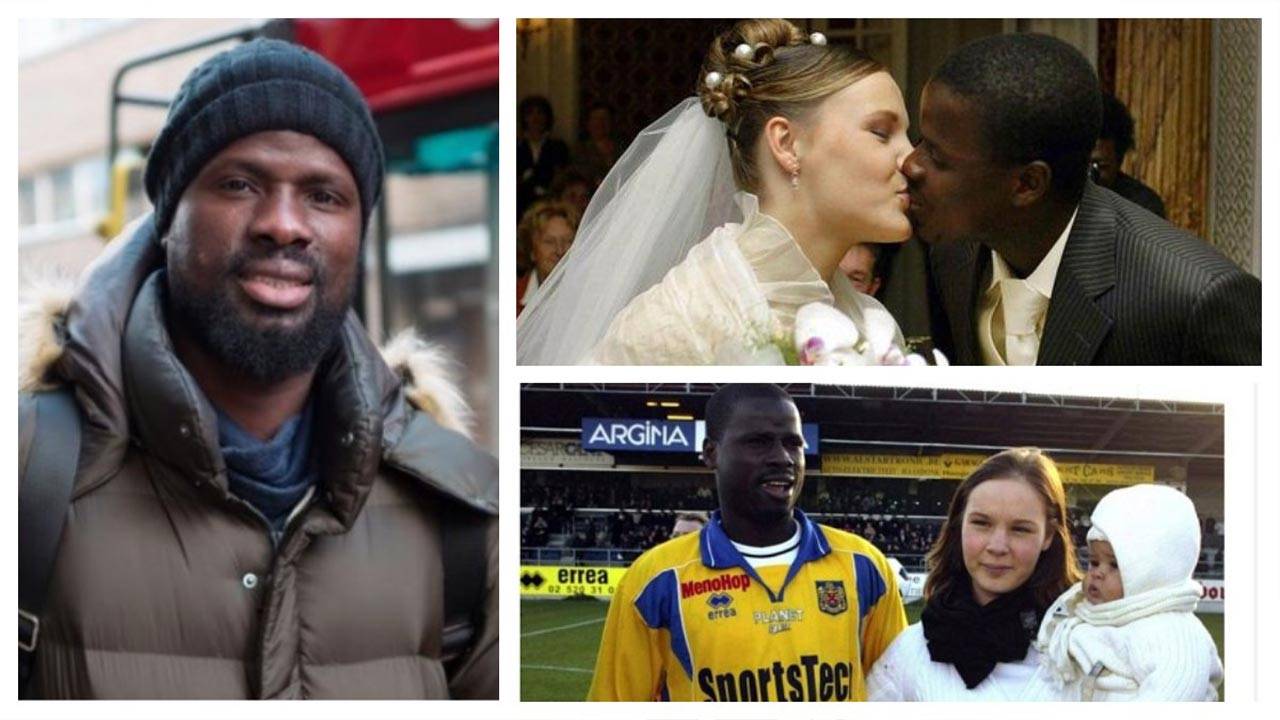
Emmanuel Eboue is remembered at Arsenal for more than the jokes, the smile and the crowd chants. He was a serious right-back in a serious team, part of the side that reached the 2006 Champions League final, and one of those players whose name still brings a reaction from supporters long after the medals and match reports have faded. Arsenal’s own profile calls him a cult hero at the Emirates, which is probably the simplest way to put it.
Why Emmanuel Eboue still matters to Arsenal fans
Emmanuel Eboue arrived at Arsenal in January 2005 from KSK Beveren. UEFA’s report at the time described him as Arsenal’s first signing of that year, a 21-year-old Ivorian defender joining on a five-year contract. It was not treated as a blockbuster move. It became more important than that.
At Arsenal, Eboue fitted a very specific Wenger-era need. He had pace, nerve and the appetite to run the right flank all afternoon. He could defend, push high, carry the ball and unsettle full-backs when used further forward.
He was not a polished, immaculate footballer. That is part of why people remember him.
Some players are respected because they make everything look controlled. Eboue made football look alive. A tackle, a burst down the line, a mistake, a grin, a recovery run — sometimes all in the same five minutes.
The Champions League run gave him a place in Arsenal history
The 2005/06 Champions League campaign still sits heavily in Arsenal memory. It was the final Highbury season, the year of Jens Lehmann’s clean sheets, Thierry Henry’s big European nights and a defence that held together against heavyweight opposition.
Eboue was in that story.
He started the 2006 Champions League final against Barcelona, a match Arsenal lost 2-1 after playing most of the night with 10 men. For supporters, the result still hurts. For Eboue, simply being there mattered: he had gone from Belgium to the biggest club match in Europe in little more than a year. Sky Sports later noted that he helped Arsenal reach that final before his 2011 move to Galatasaray.
That is the first part of his legacy. Not nostalgia. Not personality. Performance at the top end of the game.
A right-back who often played like something else
Eboue was officially a defender, but that never quite told the whole story.
Wenger used him because he could stretch the pitch. When Arsenal’s midfield drifted narrow, Eboue gave them width. When the game opened up, he ran into it. He was not always tidy in possession, and he could be rash, but he carried risk in a side that often needed movement from deep.
That made him useful. It also made him unpredictable.
There were difficult moments with the crowd. Arsenal fans can be sentimental now, but they were not always gentle with him at the time. Eboue had to play through that, and his relationship with supporters became more complicated before it became affectionate again.
The affection lasted.
More than a cult figure
The phrase “cult hero” can sometimes make a player sound smaller than he was. With Eboue, that would be unfair.
He spent six years at Arsenal. The Guardian reported at the time of his departure that he had made 216 appearances in all competitions and scored 13 goals for the club. Those are not novelty numbers. That is a proper spell at a major Premier League side.
He was there during a turbulent Arsenal period too: the move from Highbury to the Emirates, the gradual break-up of the Invincibles era, the rise of Cesc Fabregas, the pressure around trophy droughts and expectations. Eboue was not the headline name. He was part of the fabric.
That is why his name still works on Arsenal crowds. It carries a whole period with it.
Galatasaray gave him another big-club chapter
Leaving Arsenal in 2011 could have been the slow end of the story. It was not.
Eboue joined Galatasaray on a four-year contract, with Sky Sports reporting that the Turkish club agreed a €3.5 million fee with Arsenal.
That move mattered. Galatasaray is not a soft landing. It is noise, expectation, derby pressure and European ambition. Eboue walked into all of that and became part of another demanding football culture.
For UK readers, his Arsenal years naturally dominate the memory. In Turkey, he added a second chapter: same energy, same emotional edge, same willingness to play on the front foot.
His Ivory Coast career belongs in the story
Eboue was also part of a strong Ivory Coast generation, one that became familiar to Premier League audiences through Didier Drogba, Kolo Toure, Yaya Toure and others.
He was not just attached to that group. He played in it.
Transfermarkt lists Eboue as a former Ivory Coast international and records him as a right-back who could also play right midfield. That positional flexibility mattered for club and country. He was the kind of player managers could move around without completely changing the shape of the team.
Ivory Coast had bigger names. Eboue still belonged there.
The hard end of his career changed how people talk about him
The later part of Eboue’s story is uncomfortable, and it should be handled carefully.
In 2016, Sunderland terminated his contract after FIFA imposed a one-year ban connected to a pay dispute with a former agent. Sky Sports reported that he had signed for the club earlier that month but had not played for them before the ban. The Guardian reported that the dispute involved around €1 million owed to his former representative.
That episode ended his Premier League return almost before it began.
The years after that brought public reports about financial and personal struggles. It is tempting for football coverage to turn that into a dramatic fall-from-grace tale. That misses the point. Eboue’s later difficulties are part of his story, but they do not erase the footballer he was.
They do something else. They make the story more human.
What Emmanuel Eboue’s legacy really is
Emmanuel Eboue’s legacy is not clean. That is why it still has weight.
He was a Champions League finalist. A long-serving Arsenal player. A Galatasaray player. An Ivory Coast international. A footballer who played with emotion written all over him.
He was also a reminder that careers can look secure from the outside while being fragile underneath. Contracts end. Legal disputes drag on. Support disappears. A player once watched by millions can be left trying to rebuild in private.
For Arsenal supporters, Eboue remains a cult hero because he felt real. Not perfect. Not distant. Real.
Short FAQ
Emmanuel Eboue is a former Ivory Coast international best known in the UK for his time at Arsenal, where he played as a right-back and right-sided midfielder.
Arsenal fans remember him for his energy, personality, long service and role in the club’s 2006 Champions League final run. He became one of the most recognisable cult figures of the early Emirates years.
Yes. Eboue joined Galatasaray from Arsenal in 2011 after the clubs agreed a deal reported at €3.5 million.
Eboue was never the most decorated Arsenal player of his era. He did not need to be. Some footballers stay in memory because they win everything. Others stay because they made the game feel vivid. Emmanuel Eboue belongs firmly in the second group.