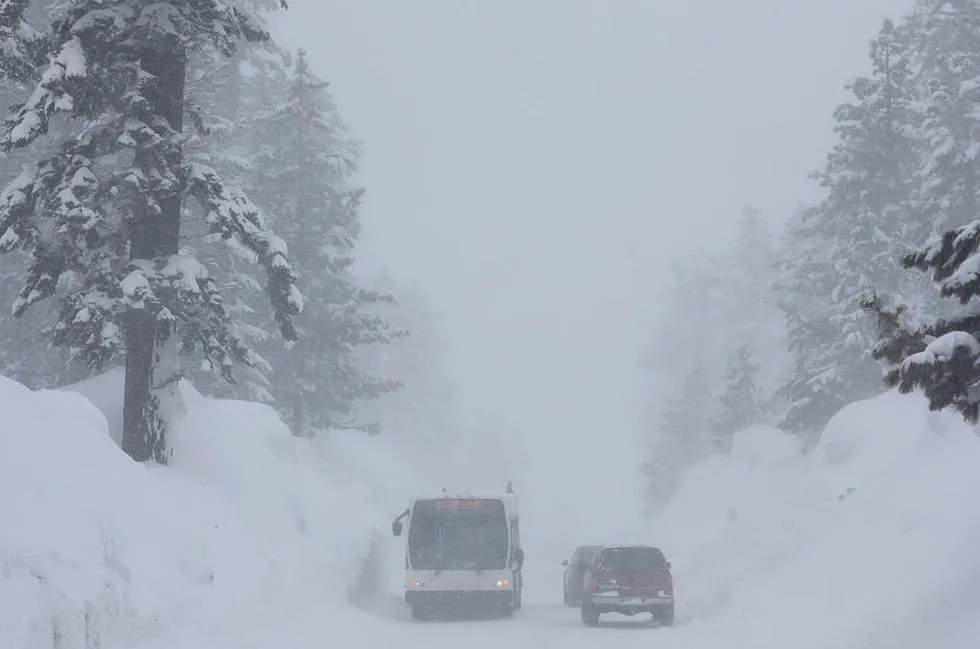
A powerful late-season snowstorm is sweeping across the United States, prompting the National Weather Service to issue heavy snow warnings for several states. This storm is expected to bring life-threatening cold and heavy snow, with some areas anticipating up to 10 inches of snow.
New York and Vermont are currently experiencing the strongest snowfall, particularly in higher elevations, where totals are reaching between 6 to 10 inches. Meanwhile, in Maine and New Hampshire, heavy snow is forecasted to fall atop a layer of freezing drizzle, creating a hazardous light glaze of ice underneath.
In Alaska, the National Weather Service has warned residents of potential snowfall amounts reaching 6 inches in parts of the southeastern regions. On Hawaii’s Big Island, the summits are under a Winter Storm Warning, with additional snow and winds gusting up to 35 mph expected.
Snowfall rates during the peak of this storm may exceed one inch per hour, making travel extremely dangerous. The storm is linked to a volatile polar air mass moving south, which is responsible for the rapid snowfall, gusty winds, and plummeting temperatures.
The National Weather Service has highlighted that “periods of moderate snow and low visibility will be the biggest hazards” for those in affected areas. In Hawaii, NWS-Hawaii has also reported that “heavy snowfall and strong winds are forecast for the peaks.”
This sudden and unexpected change in weather, often referred to as ‘weather whiplash’, is affecting large swaths of the country and has caught many residents off guard.
As communities brace for the impact of this storm, local officials are urging residents to stay indoors and avoid unnecessary travel. Safety is paramount as conditions worsen across the affected regions.
Details remain unconfirmed regarding the full extent of the storm’s impact, but residents are encouraged to stay tuned for updates from local authorities and the National Weather Service.