How it unfolded
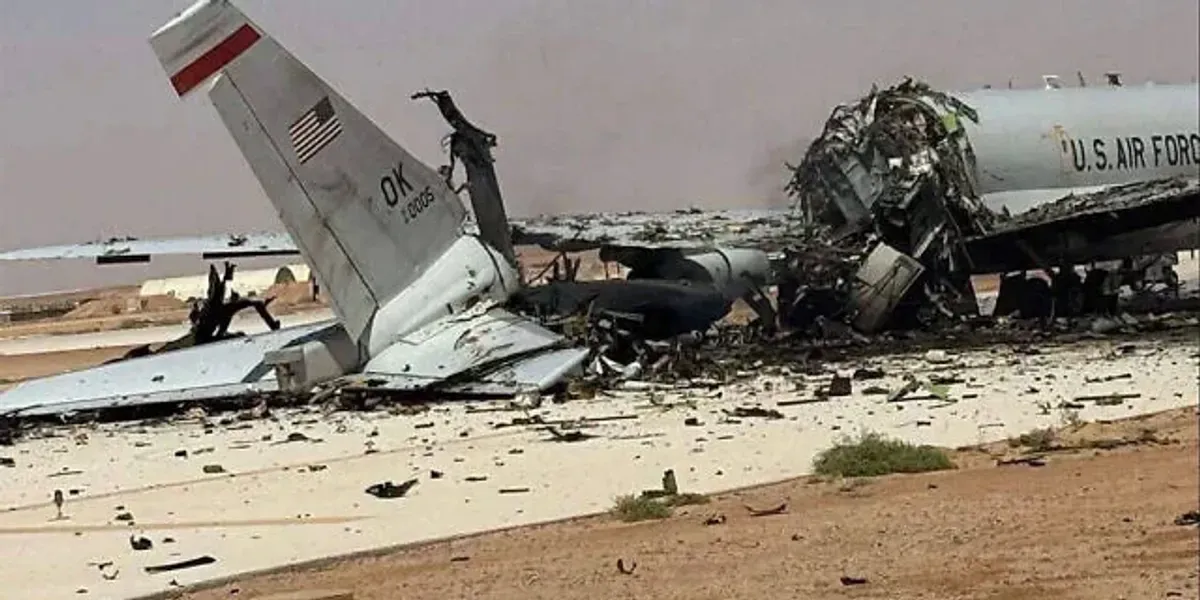
On March 30, 2026, a significant incident unfolded at Prince Sultan Air Base in Saudi Arabia, where an E-3 Sentry aircraft was completely destroyed following an Iranian missile and drone strike. This attack has raised alarms not only for the immediate impact on US military operations but also for the broader implications it holds for regional security.
The E-3 Sentry, known for its real-time surveillance and command capabilities, has been a cornerstone of the US Air Force’s aerial defense since it first entered service in 1977. The aircraft that was lost in this attack bore the tail number 81-0005 and was operated by the 552nd Air Control Wing. With only 16 E-3 Sentry planes remaining in the US arsenal, the destruction of this aircraft is particularly concerning.
Reports indicate that the attack involved at least one missile and a staggering 29 drones, showcasing the evolving tactics utilized by Iranian forces. The strike resulted in injuries to at least 12 American military personnel, five of whom sustained serious injuries. This incident not only highlights the vulnerabilities faced by US forces in the region but also underscores the risks associated with maintaining a limited number of operational aircraft.
Air Force Colonel John Venable remarked on the gravity of the situation, stating, “The destruction of the plane is a ‘huge deal’ as there are a limited number of E-3s in America’s arsenal and they are irreplaceable.” This sentiment resonates deeply within the military community, as the loss of such an essential asset could hinder the US’s ability to monitor and respond to threats effectively.
Experts have pointed out that Iran’s actions are gradually eroding the network of early warning systems that the US has painstakingly built over decades in the region. Andreas Krieg, a noted analyst, emphasized that this attack is part of a broader strategy by Iran to challenge US dominance and influence in the Middle East. Retired U.S. Army Lt. Col. Daniel Davis echoed these concerns, stating, “We’re not doing OK at all,” highlighting the precarious state of US military operations.
The E-3 Sentry model is expected to remain operational with the USAF until 2035, but with production having ceased in 1992, the dwindling number of these aircraft poses a significant challenge. The US operated 32 E-3 aircraft in 2015, but that number has since decreased, further complicating the military’s strategic capabilities.
As the situation develops, the implications of this attack will likely resonate beyond the immediate military context. The loss of an E-3 Sentry not only affects the operational readiness of US forces but also sends a message to allies and adversaries alike about the current state of US military power in the region. The community of military families and personnel stationed in Saudi Arabia will undoubtedly feel the impact of this incident, as it raises concerns about their safety and the ongoing commitment of the US to protect its interests abroad.
In a related note, President Donald Trump has previously commented on the complexities of US involvement in the region, stating, “To be honest with you, my favourite thing is to take the oil in Iran but some stupid people back in the US say: ‘Why are you doing that?’ But they’re stupid people.” Such remarks reflect the contentious nature of US foreign policy and the challenges faced in navigating relationships with nations like Iran.