What Happened
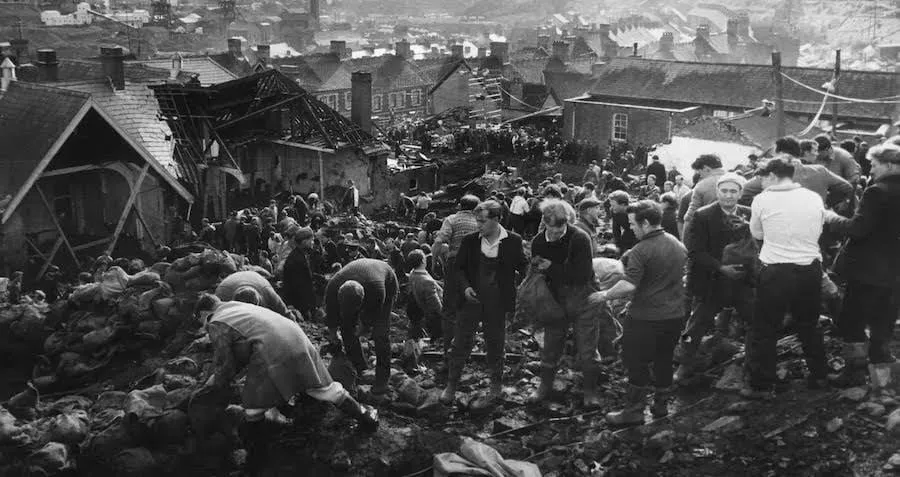
On the morning of October 21, 1966, the village of Aberfan was preparing for the final day of school before half-term. Children were hanging up their coats and teachers were calling the register when a disaster decades in the making unfolded. The origins of the tragedy can be traced back to 1916, when the nearby Merthyr Vale Colliery began piling waste on the mountainside overlooking the village due to a lack of tipping space on the valley floor. Over the years, seven spoil tips were constructed above homes, farms, and schools, with Tip 7 remaining active by 1966.
Tip 7 was built partly over natural underground springs, making it dangerously unstable. In the days leading up to the disaster, persistent heavy rain saturated the coal waste, transforming it into a dense, mobile slurry. Despite residents’ repeated warnings about the danger, including letters and complaints at meetings, their concerns were ignored. Shortly before 7:00 am, Tip 7 began to shift, and at approximately 9:15 am, it collapsed, sending around 140,000 cubic yards of liquefied coal waste rushing downhill with devastating force.
Why It Matters
The Aberfan disaster resulted in the tragic loss of 144 lives, including 116 children, and highlighted the severe consequences of negligence regarding safety regulations in mining operations. The event not only devastated the local community but also raised awareness about the importance of environmental safety and the need for stricter regulations to prevent similar tragedies in the future. The disaster remains a poignant reminder of the risks associated with industrial waste management and the necessity of listening to community concerns.
What’s Next
In the aftermath of the Aberfan disaster, significant changes were made to mining regulations and safety practices in the UK. The National Coal Board was compelled to reassess its policies regarding spoil tips, leading to the eventual removal of many tips across the country. The legacy of Aberfan continues to influence discussions on environmental safety and community engagement in industrial practices, ensuring that the lessons learned from this tragedy are not forgotten.