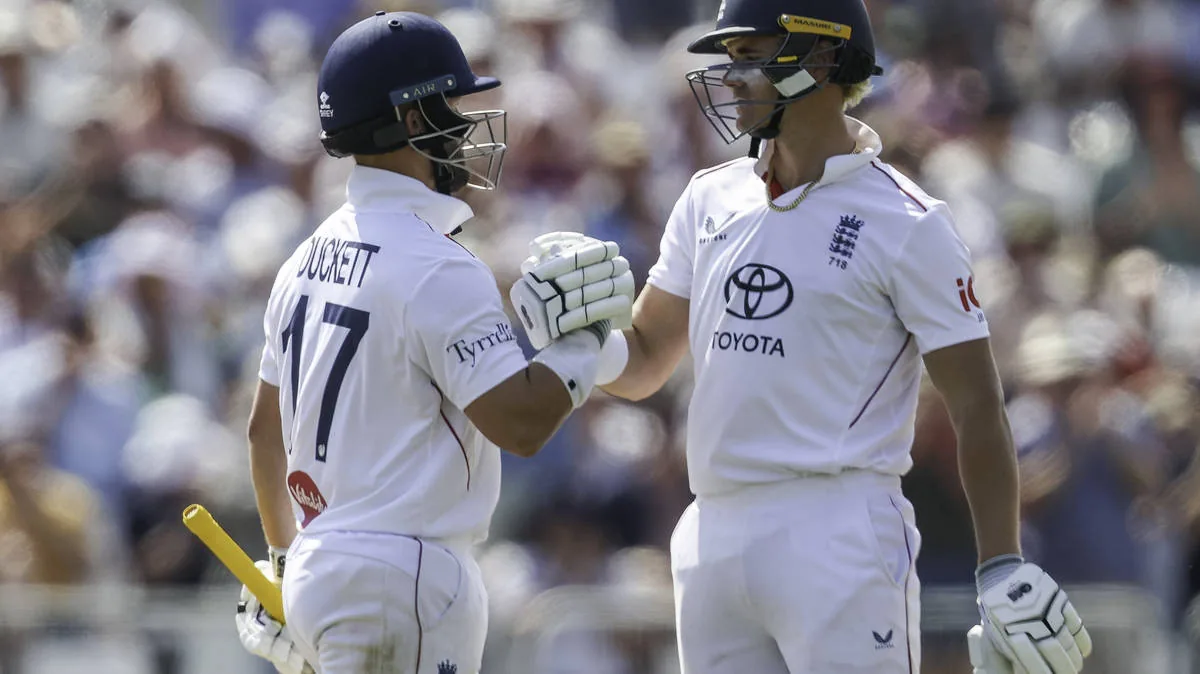
The decisive Third Rothesay Test between England and New Zealand at Trent Bridge hangs in the balance after a dramatic third day. New Zealand concluded the day with a lead of 204 runs, reaching 120-3 in their second innings, following England‘s earlier collapse.
The pitch, initially flat for the first two days, showed significant deterioration on Saturday, leading to 11 wickets falling. This change in conditions has placed England in a precarious position, with a challenging run chase anticipated.
New Zealand builds significant lead
New Zealand began their second innings at Trent Bridge with a first-innings lead of 84 runs. Despite an early setback, losing two wickets for 12 runs and later being 51-3, Rachin Ravindra‘s unbeaten 60 runs, supported by Daryl Mitchell‘s 26 not out, ensured the tourists maintained control. Their partnership contributed 69 runs, leaving New Zealand in a strong position to push for a series victory.
Jofra Archer provided a brief spark for England after tea, dismissing New Zealand‘s first-innings centurions, Tom Latham and Devon Conway, within 13 deliveries. Archer trapped Latham lbw and later had Conway caught at second slip after a blow to the helmet. However, this intervention followed England‘s own batting struggles earlier in the day.
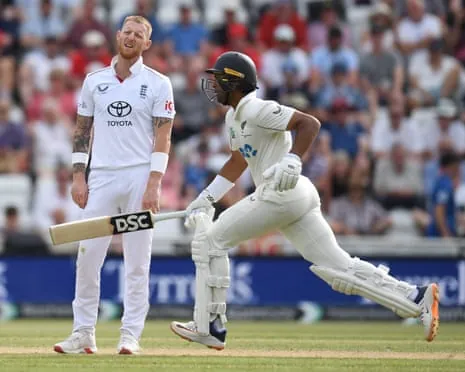
The Black Caps had entered the match without key players Matt Henry, Kyle Jamieson, and Glenn Phillips. Additionally, Blair Tickner was replaced by concussion substitute Zak Foulkes on day two. Despite these absences, the team has shown resilience, with Ravindra and Mitchell repelling England‘s bowling attack.
England’s batting collapse and bowling efforts
England started day three with an opportunity to reduce New Zealand‘s first-innings total of 438. However, they lost three crucial wickets for just 10 runs within the first six overs of the day. Joe Root and Jacob Bethell, who were unbeaten overnight, were dismissed without adding to their scores of 21 and 74 respectively. Jamie Smith managed only one run.
Nathan Smith removed Root lbw, while Bethell edged a delivery from Will O’Rourke. Jamie Smith was also dismissed by Nathan Smith, continuing a challenging match for the England wicketkeeper. Harry Brook contributed a calm 58 runs from 80 balls, but England‘s tail quickly collapsed, losing their last three wickets for four runs, resulting in a total of 354 all out.
Zak Foulkes, the concussion substitute, proved to be a significant factor for New Zealand, taking three wickets on Saturday, including those of Brook and England captain Ben Stokes. Stokes, playing his first match since being unavailable for the second Test, was bowled for 15 by Foulkes. Foulkes‘s slower seam deliveries have been effective on the deteriorating surface.
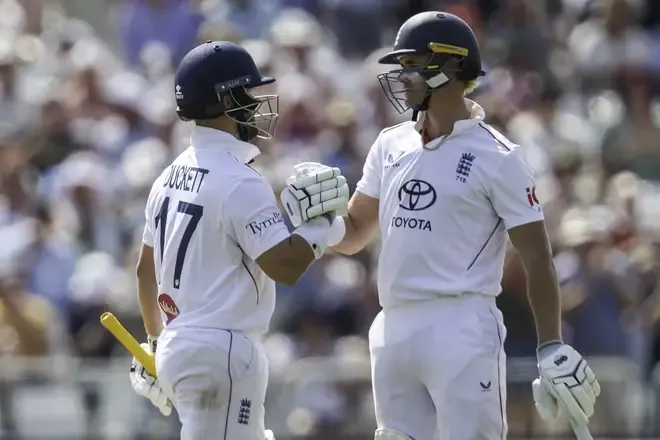
England‘s bowling efforts saw Jofra Archer unnerving Devon Conway with a blow to the helmet before dismissing him. Gus Atkinson also secured a wicket, getting Henry Nicholls to nick one to slip. However, the partnership between Ravindra and Mitchell proved difficult to break, with Stokes‘s six-over spell yielding no wickets.
Implications for England’s series hopes
The outcome of this match is crucial for England. A loss would extend their poor run, with only two wins in their last 10 matches. Captain Ben Stokes had previously stated that his team was under the “highest pressure” in his four years in charge, given the circumstances and off-field controversies.
The pitch conditions have played a significant role in the acceleration of the match, with 11 wickets falling on Saturday compared to 12 wickets over the first two days. The unevenness of the surface is expected to make the run chase particularly difficult for England. The team will need to secure seven more wickets on day four to have a chance at victory.
England has memories of a remarkable win against New Zealand at this ground in 2022, though on a very different pitch. The current situation suggests a challenging path ahead for the home side in their pursuit of a series win.
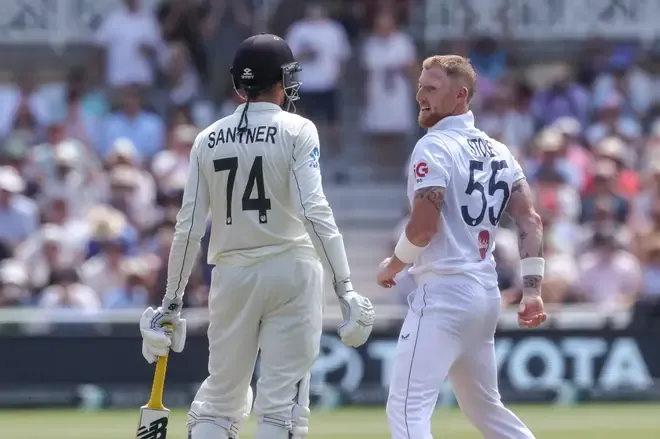
The match continues on day four, with New Zealand holding a substantial lead of 204 runs.
Read Also
Source: bbc.co.uk