Gas Prices Surge Amid Conflict
Gas prices have surged significantly in recent days, with the national average climbing to $3.54 per gallon on March 8, 2026, marking a 19 percent increase from just a day prior. This spike follows a 17 percent rise to $3.48 per gallon on March 7, 2026. California motorists are facing the highest prices, paying as much as $5.20 per gallon, while those in Kansas are seeing prices as low as $2.92.
Leavitt’s Statements on Temporary Increases
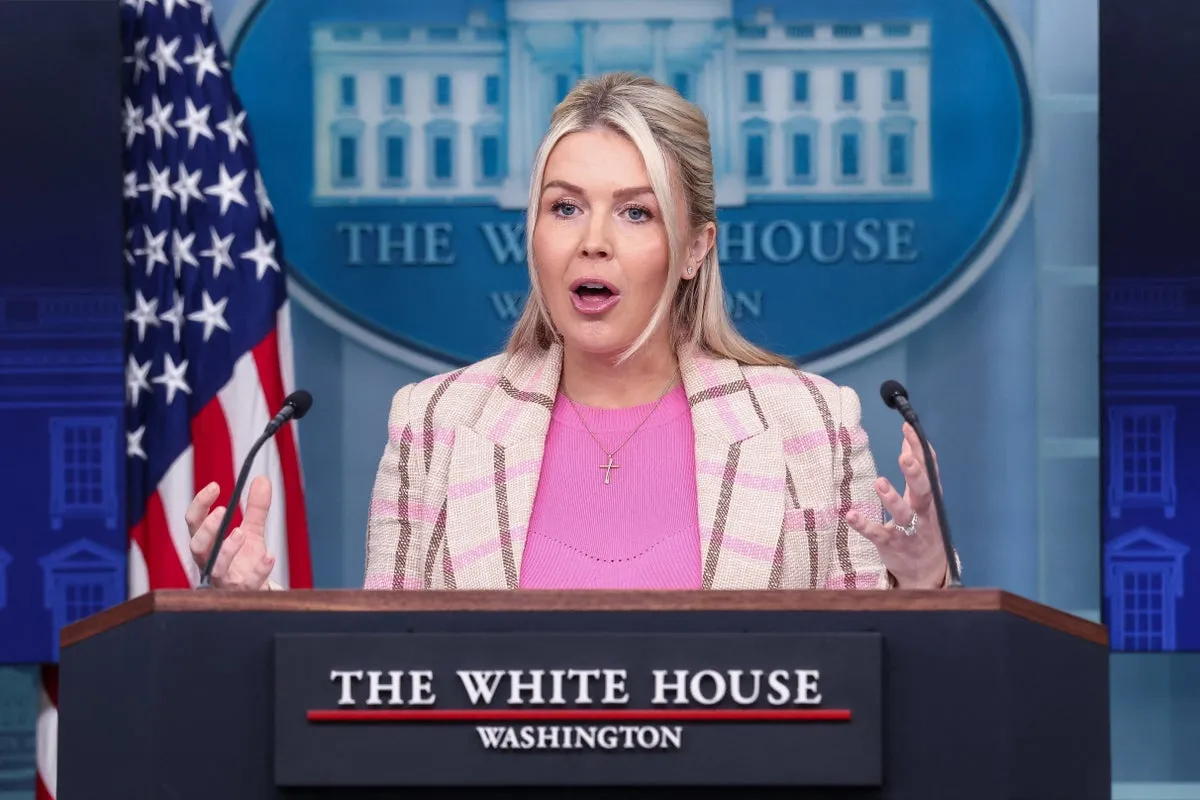
Karoline Leavitt, the White House Press Secretary, stated that the recent increases in gas prices are temporary. She emphasized that the ongoing war with Iran would ultimately lead to lower gas prices in the long term. “The ongoing war with Iran would ‘result in lower gas prices in the long term,'” Leavitt remarked, suggesting that the current situation is a phase that will pass.
Impact of Military Actions
The rise in gas prices is closely linked to the U.S.-Israeli bombing campaign against Iran, which has disrupted oil supplies and led to soaring oil prices beyond $100 per barrel. Leavitt pointed out that the U.S. military is actively drawing up options to keep the Strait of Hormuz open, a crucial passage for oil shipments. Iran has threatened shipping in this vital area, further complicating the situation.
Operation Epic Fury and Future Expectations
Leavitt referenced the military operation known as Operation Epic Fury, stating, “Once the national security objectives of Operation Epic Fury are fully achieved, Americans will see oil and gas prices drop rapidly.” This statement underscores the administration’s belief that military success will stabilize energy costs.
Government’s Role in Energy Monitoring
In her remarks, Leavitt assured the public that the President and his energy team are closely monitoring the markets and engaging with industry leaders to address the rising costs. She noted, “The President and his energy team are closely watching the markets, speaking with industry leaders, and the US military is drawing up additional options to continue keeping the Strait of Hormuz open.” This proactive approach indicates the administration’s commitment to managing the economic impact of the conflict.
Trump’s Strong Stance on Iran
Former President Donald Trump has also weighed in on the situation, warning of unprecedented military consequences for Iran. His administration’s offer to insure tankers attempting to cross the Strait of Hormuz highlights the ongoing tensions and the strategic importance of this region for global oil supply.
Historical Context of Rising Gas Prices
The current spike in gas prices is not an isolated incident but rather a continuation of the volatility seen in energy markets during times of geopolitical conflict. The U.S.-Israeli war on Iran has exacerbated these fluctuations, leading to increased costs for American consumers. Observers note that the historical patterns of energy pricing during conflicts suggest that prices may stabilize once tensions ease.
Looking Ahead
As the situation develops, the administration’s strategies and their effectiveness in stabilizing gas prices will be closely watched. Details remain unconfirmed regarding the long-term impact of military actions on energy costs, but the government appears committed to navigating these challenges in the coming months.